$ 44.09 € 51.26 zł 12.07
+25° Kyiv +13° Warsaw +17° Washington

Following Gibson's remarks, prescriptions for antiparasitic drugs surged in the U.S.
UA.NEWS 16 May 2026 14:46
Following Gibson's remarks, prescriptions for antiparasitic drugs surged in the U.S.

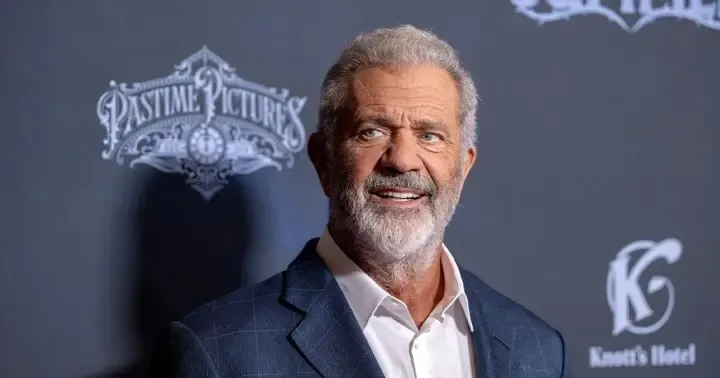
In the U.S., following actor Mel Gibson’s remarks on Joe Rogan’s podcast, demand for antiparasitic drugs has surged; social media users have begun linking these drugs to cancer treatment, despite the lack of scientific evidence. Doctors report that some cancer patients are beginning to demand these drugs instead of standard therapy, causing serious concern within the medical community, writes The New York Times.


 

A wave of medical misinformation has once again swept the U.S., spreading from podcasts and social media straight into real hospitals, and doctors are now warning of a dangerous shift in patient behavior, particularly among those battling cancer.

It all began after an episode of Joe Rogan’s podcast, where actor Mel Gibson shared stories about his friends’ alleged miraculous recoveries from cancer after taking antiparasitic drugs, including ivermectin and fenbendazole, and this video quickly racked up millions of views, spreading across the internet as a “simple explanation for a complex disease.”

A study published in JAMA Network Open showed that following this episode, the number of prescriptions for such drugs began to rise in the U.S., even though there is no scientific evidence of their effectiveness against cancer, and some of them are not even approved for use in humans.

Oncologists warn that the situation is becoming dangerous not only because of the drugs themselves, but also because patients are beginning to delay or completely abandon traditional treatments with proven efficacy, replacing them with advice from the internet and stories from influencers.

“There is a perfect combination of fear, urgency, uncertainty, information overload, and then this desperate need for hope,” said oncologist Shikha Jain, explaining why such stories “resonate” so quickly with patients.

Experts emphasize that ivermectin is indeed a registered drug for treating parasitic infections, but its use against cancer has no clinical evidence, and isolated laboratory experiments cannot be extrapolated to human treatment. “I always tell my patients that we are not mice. And isolated data from one or two patients is not proof,” emphasized oncologist Eleonora Teplinski.

Researchers also point out that even if some substances look promising in the early stages of experiments, in most cases—over 90%—they fail to pass clinical trials in humans or prove ineffective. “And then we conduct clinical trials of these drugs on humans, and in the vast majority of cases, these drugs are not beneficial or are not safe,” noted radiation oncologist Skyler Johnson.

Doctors say the hardest part isn’t the drugs themselves, but the trust of patients who come in with preconceived notions from social media and, in some cases, refuse treatment, only returning when the disease has already progressed significantly. “By the time they come to us, their cancer has progressed, and they are no longer responsive to treatment,” noted oncologist Sheikha Jaine, describing the real consequences of such decisions.

Doctors conclude that the problem has long since gone beyond isolated cases and become systemic, as health information in the digital age spreads faster than any official warnings, and emotional stories often sound more convincing than complex medical explanations.


Read us on Telegram and Sends

Завантажуй наш додаток