
Plastic may disrupt bioluminescence in deep-sea organisms — Mongabay
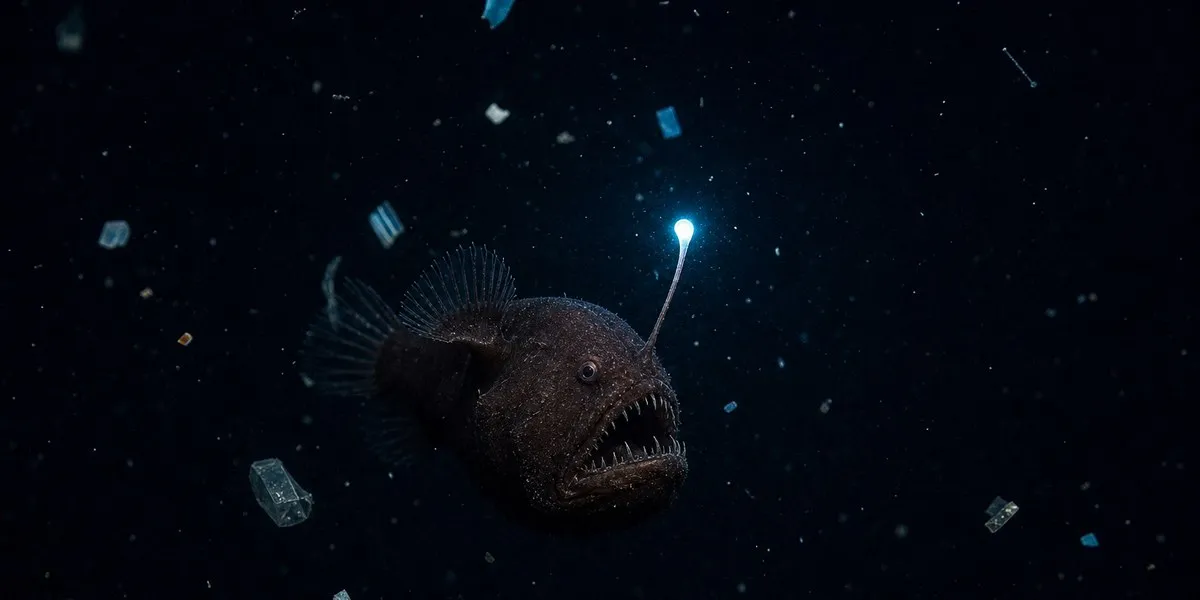
Plastic pollution may disrupt the bioluminescence of deep-sea organisms — light that is important for their survival and reproduction in the dark. This is stated in a letter by scientists published in the journal Cambridge Prisms: Plastics, Mongabay reports.
The authors note that ingesting plastic may affect the chemical processes that produce bioluminescence and may also damage organisms' tissues. This could potentially weaken their ability to find food and partners.
Light for survival
In deep-sea ecosystems, up to 80% of organisms with complex cells are estimated to possess bioluminescence. In the darkest areas of the ocean, it is the only source of light. Scientists warn that disruption of this mechanism could negatively affect food chains and the functioning of deep-sea ecosystems — Earth's largest and one of its least studied biomes.
Ranjith VishnuRadhan, a co-author of the letter from Amity University in India, cited the example of the deep-sea anglerfish. In females of these fish, a modified dorsal spine ends in a luminous lure — the esca. The light is produced by symbiotic bacteria; it helps attract prey and may also be important for recognition or communication in the dark.
More current news is available on the UA.News Telegram channel Telegram.
Lack of data on the impact
According to VishnuRadhan, pollutants may affect bacterial bioluminescence. The entry of toxic additives from plastic into an anglerfish's body could theoretically disrupt the bacterial symbiosis in the lure and its light signals.
At the same time, the researchers stress that the available high-quality data are insufficient to assess in detail the consequences of plastic pollution for deep-sea ecosystems. For a convincing study directly in the ocean, it is necessary to establish not only the presence of plastic and organisms in the same place, but also exposure, a biological response and, preferably, a causal relationship.
Deep-sea bioluminescence expert Edith Widder, who was not involved in the work, said that the threat posed by microplastics to organisms' glow remains uncertain for now. Studying it, she said, requires long-term monitoring. VishnuRadhan believes that such research is technically possible using modern technology and remotely operated underwater vehicles.




