
China cuts PSL rate and announces mortgage subsidies — Channel NewsAsia
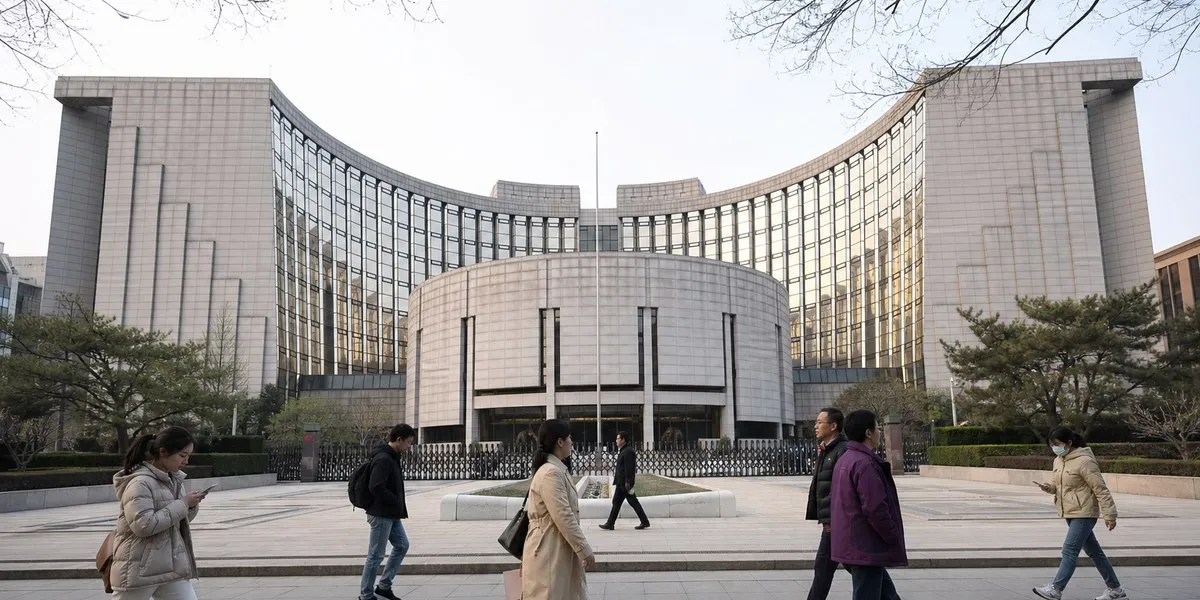
On September 29, China announced a 25-basis-point cut in the interest rate on the one-year Pledged Supplementary Lending (PSL) facility, from 1.75% to 1.5% per year. The People’s Bank of China will also expand the use of this instrument to support investment in water supply, power grids, computing and communications infrastructure, urban pipelines and logistics networks, Channel NewsAsia reports.
Support for lending
China’s central bank increased the quota for the relending facility for scientific and technological innovation and technological upgrading by 200 billion yuan, to 1.4 trillion yuan. The relending quota for the agricultural sector and small businesses was raised by 500 billion yuan, to 4.85 trillion yuan. For private enterprises, it was increased by 300 billion yuan, to 1.3 trillion yuan.
According to the outlet, the measures were announced a day after the Chinese government pledged to strengthen countercyclical policy support amid mounting economic pressure. China aims to achieve economic growth of 4.5–5% this year. In the second quarter, economic growth slowed to 4.3%, while industrial production, retail sales and investment indicators weakened at the beginning of the third quarter.
More current news is available on the UA.News Telegram channel Telegram.
Subsidies for homebuyers
Starting October 1, the Chinese government will subsidize interest payments on new commercial mortgage loans for eligible first-time homebuyers. This is the country’s first nationwide program of this type.
The annual subsidy will amount to one percentage point and will be provided for up to five years. The maximum loan amount eligible for support will be 1 million yuan per household. The housing must have an area of no more than 120 square meters and cost no more than 1.5 million yuan. The program will be introduced on a one-year trial basis.
Guotai Haitong Securities analyst Hao Zhou said the new decisions point to more coordinated support for economic growth through investment and household demand. The People’s Bank of China has so far taken a cautious approach to cutting benchmark rates because of higher U.S. rates, risks of capital outflows, high debt levels and shrinking bank margins. ANZ’s senior China strategist Zhaopeng Xing noted that higher U.S. rates limit room for further monetary easing.




