
Origins of people from ancient Xinjiang burials linked to the Yellow River — South China Morning Post
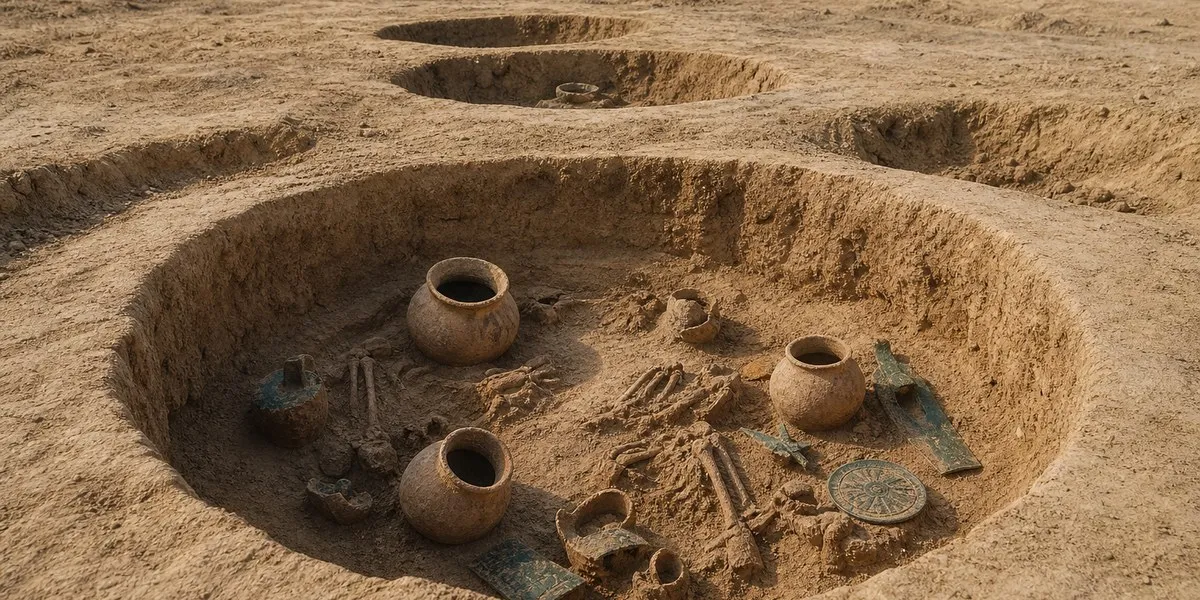
Researchers found that approximately half of the genetic ancestry of the population buried 3,600 years ago at the Tianshanbeilu cemetery in the Hami oasis in Xinjiang, China, was linked to Neolithic farming groups along the Yellow River. The other half came from populations related to the Chemurchek culture in Altai and Dzungaria.
Genomes of 135 ancient people
As South China Morning Post reports, the study results were published in the journal Science. Scientists obtained whole-genome data from 135 ancient people from 11 sections of the Tianshanbeilu cemetery. The oldest person studied lived about 3,580 years ago.
For the analysis, these data were compared with 735 previously published ancient genomes and 2,850 modern samples from available databases. Most Bronze Age people from the eastern Tianshan belonged to a distinct, recently identified genetic group with similar ancestry.
Compared with other ancient populations of Xinjiang, this group was genetically closer to modern East Asian populations. At the same time, its members had a combination of East Eurasian and West Eurasian genetic ancestry.
More current news is available on the UA.News Telegram channel Telegram.
Burials in the Hami oasis
The Tianshanbeilu cemetery is the oldest known burial site in the region. It is located about 500 kilometers east of Urumqi. More than 700 Bronze Age burials were discovered there, previously linked to Eurasian nomads who migrated eastward from the steppes.
The burials date from 3,000 to 4,000 years ago. They consist of evenly arranged circular pits or rectangular burial plots with one or several skeletons. Bronze and ceramic items were also found in the circular burial chambers.
The genetic composition of the Tianshanbeilu samples was nearly identical, which may indicate the widespread presence of this mixed population in the eastern Tianshan. From around 1000 BCE, more genetic material from other groups began to enter the local gene pool. At the same time, the Bronze Age population remained the genetic foundation for the Xinjiang population of the Iron Age, which formed through mixing with groups from East Asia, the Eurasian Steppe, and Central Asia.


