
More than 40 countries have called for advance notice of ballistic missile launches
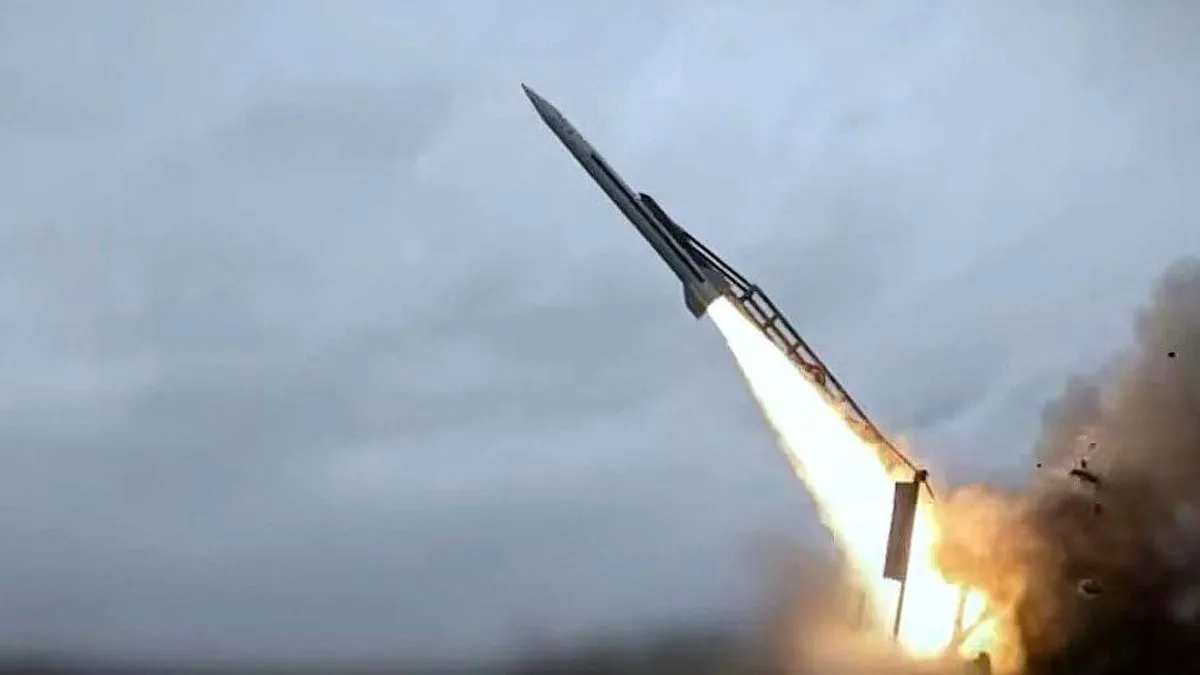
The United States, Ukraine, Japan, South Korea, the United Kingdom, Germany, France, and more than 30 other countries have called on nations to provide advance notice of ballistic missile launches.
In the document, the countries called on states that conduct launches of intercontinental ballistic missiles (ICBMs), submarine-launched ballistic missiles (SLBMs), and space launch vehicles to provide such notifications at least 24 hours prior to launch.
According to the authors of the statement, such notifications should include:
- the general class of the missile or launch vehicle;
- the planned launch time;
- the launch area;
- the flight path.
In addition, states must provide advance notice to pilots and sailors in accordance with international standards.
“Conducting tests of ballistic missiles capable of carrying nuclear weapons without sufficient advance notice and detailed information is dangerous and undermines the peace and security of the countries concerned,” the statement reads.
The signatories emphasized that the lack of warnings increases the risk of miscalculations and undermines global stability and security.
At the same time, the states noted that transparent notification mechanisms do not restrict military development or the operational needs of countries.
“Instead, they reduce the risk of miscalculation, build trust, and reflect a shared commitment to security,” the document emphasizes.
The joint document also mentions recent missile tests in the Pacific region, which, according to the authors of the statement, did not comply with standard practices for advance notification and conflict prevention.
However, the statement did not name a specific country. According to Deutsche Welle, this refers, in particular, to China’s test launch of a strategic missile from a nuclear submarine in the Pacific Ocean.
In the summer of 2026, China conducted its first test launch of an intercontinental ballistic missile from a nuclear submarine in the Pacific Ocean. Beijing stated that these were routine activities as part of its annual military exercises. At the same time, neighboring countries in the region expressed concern over this display of military force.
This is stated in a joint statement released on August 11 by the U.S. Mission in Geneva.
Ukraine and its partners should focus not only on intercepting Russian ballistic missiles but also on destroying production facilities and launch sites. To implement such a strategy, Kyiv needs Western weapons and intelligence data to identify targets.
On the morning of August 11, a fire broke out at an industrial facility in Orsk, Orenburg Oblast, Russia. According to reports, the fire started following an attack. The facility produces about 30 types of petroleum products, including gasoline, diesel fuel, jet fuel, fuel oil, bitumen, and lubricants.
As a reminder, a gas station and a facility were damaged as a result of a Russian attack on the Poltava region.
In Dnipro on Friday, August 7, a World Health Organization humanitarian warehouse was destroyed as a result of an attack. There were no people on the premises at the time of the strike, and no casualties were reported.


