
Rush and Controversy: Trump's Ballroom Enters the Final Stage of Construction
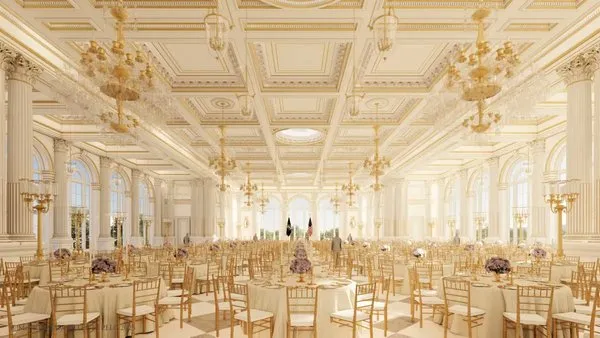
The National Capital Planning Commission is set to hold a final vote on Thursday to approve the ballroom proposed by Donald Trump. This is expected to be the final step in approving a major expansion of the White House, the details of which were only made public in January.
This is reported by The New York Times.
Last month, another commission—the Commission of Fine Arts—discussed the project for just 12 minutes before unanimously approving it.
A departure from established practice
Such haste, with construction cranes already operating on the White House grounds, stands in stark contrast to how even minor projects have been designed in the capital for decades. Architects warn that this could result in a ballroom of lower quality.
For example, the renovation of the White House fence—a much smaller element—received far more careful attention during Trump’s first term. Over the course of nine months of public hearings, the commission examined in detail the width of the posts, decorative elements, the thickness of the bars, and the distance between them. Ultimately, they determined that a 5.5-inch (about 14 cm) gap best ensures security without creating a “prison-like” impression.
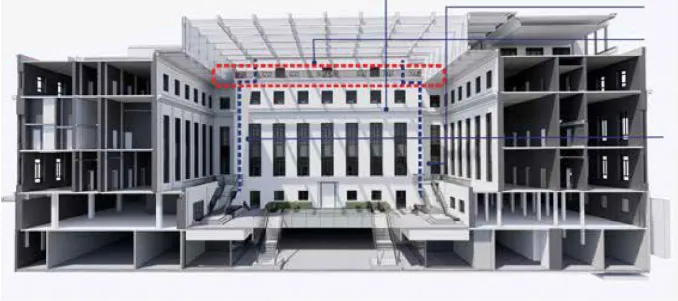
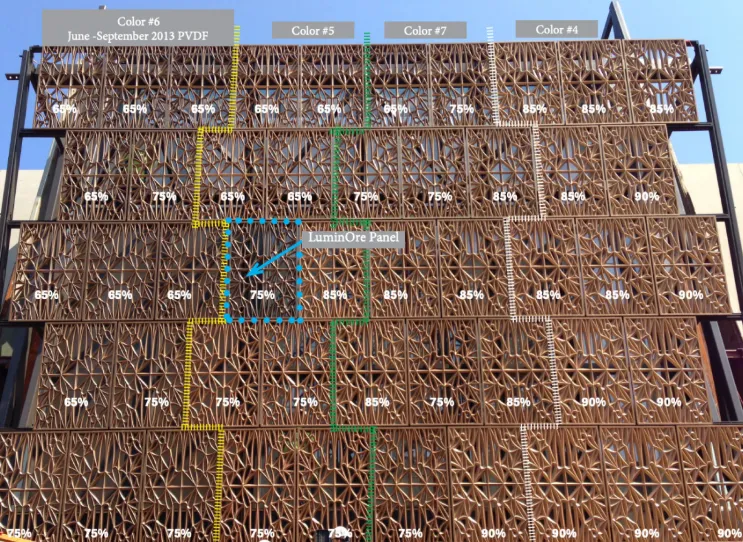
Similar attention to detail was evident in other projects. During the renovation of the Federal Reserve Building, the commission insisted that the new glass elements not be visible from the street. And when creating the National Museum of African American History and Culture, they spent months debating even the exact shade of the facade.
The Democratic Process and Criticism
Such details influence the perception of the city and its symbols.
Carol Quillen, head of the National Trust for Historic Preservation, emphasized: “Even if we’re slow, make mistakes, and argue—this process matters to us.”
“No public project should be the vision of just one person,” she added.
Yet that is precisely how this ballroom is often described.
The White House’s Position
White House spokesperson Davis Ingle stated: “President Trump is the best builder and developer in the world, and Americans can rest assured that this project is in his hands.”
According to him, previous presidents have wanted a ballroom for over 150 years, and it is Trump who will be able to make it happen.
Accelerated Design Process
Due to the desire to complete the project by the end of the presidential term, the development process has been significantly shortened. As early as October, the hall’s capacity was changed—a decision that is usually made at the early concept stage.
At the same time, construction is scheduled to begin as early as this spring, meaning that documentation preparation will occur in parallel with design revisions.
Former commission member Thomas Gallas noted: “These deadlines never made sense to me.”
He added that a project of this scale usually takes between 18 months and two years.
Unusual Approval Process
Typically, large projects go through several stages of approval—from concept to final approval. In this case, the commission did not review the initial concept at all and will now vote directly on the preliminary and final versions—an approach typical for minor changes.
Rodney Mims Cook Jr., chair of the Commission on Fine Arts, dismissed the criticism.
“We asked him to make the portico more restrained… remove the pediments… add landscaping. And he did all of that,” he noted.
Planning Commission Chair Will Scharf added: “If it weren’t for President Trump’s desire to move quickly and his funding, a project like this could drag on for years… We could be debating it for another 20 years.”
Scale and Design Controversy
Despite this, critics believe that the White House’s major project should not be prioritized over even its fence. Many comments address fundamental issues that will shape the capital’s appearance for decades.
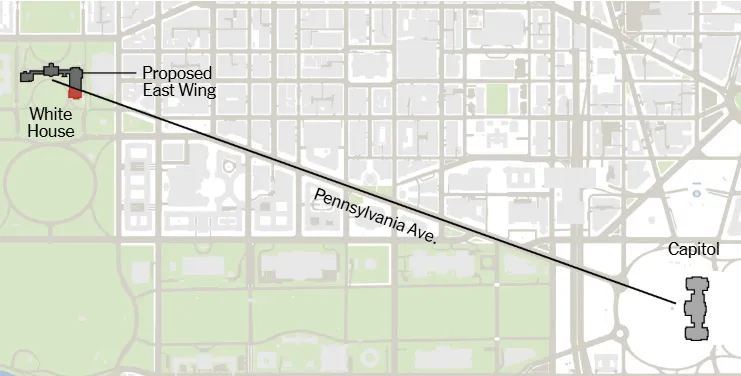
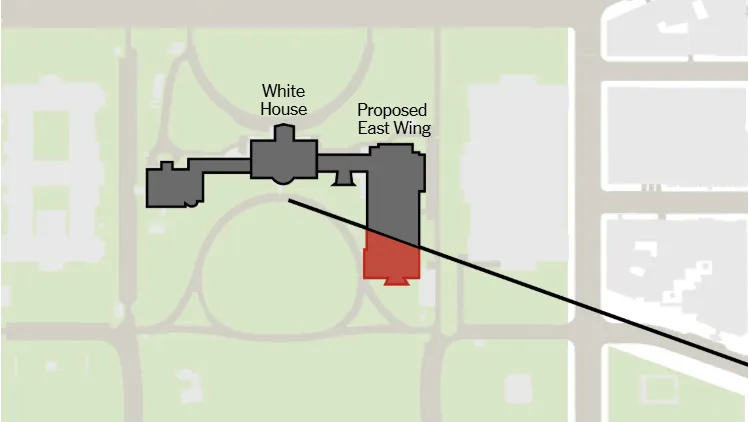
In particular, the ballroom will become a dominant feature on Pennsylvania Avenue—an axis that Pierre L’Enfant originally envisioned as a link between the Capitol and the White House.
Architect David Scott Parker stated: “This ballroom is literally an intervention between the two branches of government.”
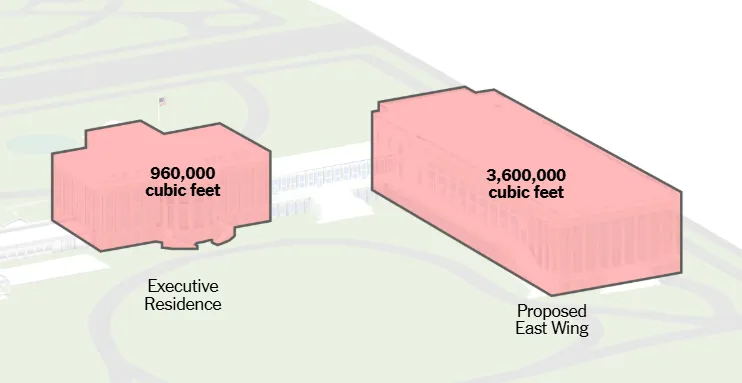
The proposed east wing is approximately 60% larger than the residence in terms of floor area, and more than three times larger in volume due to the ceiling height. This could make it the dominant structure and disrupt the symmetry of the complex.
Controversial architectural decisions
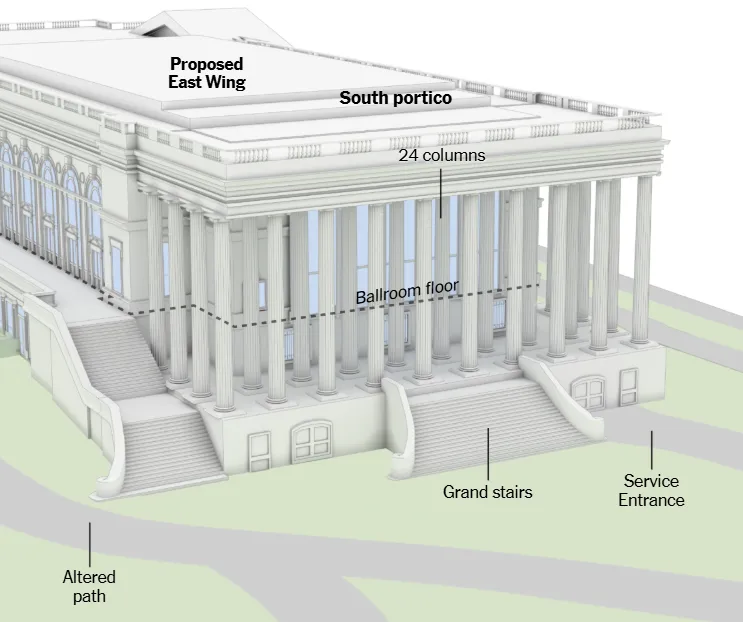
The south portico, which was not included in the original design, has no entrance to the hall, and its columns will block light and views.
Architect Shalom Baranes admitted: “Is it absolutely necessary? I would say no… It’s more of an aesthetic decision.”
Because of this, the historic entrance designed by Frederick Law Olmsted will also have to be altered, which will disrupt the symmetry.
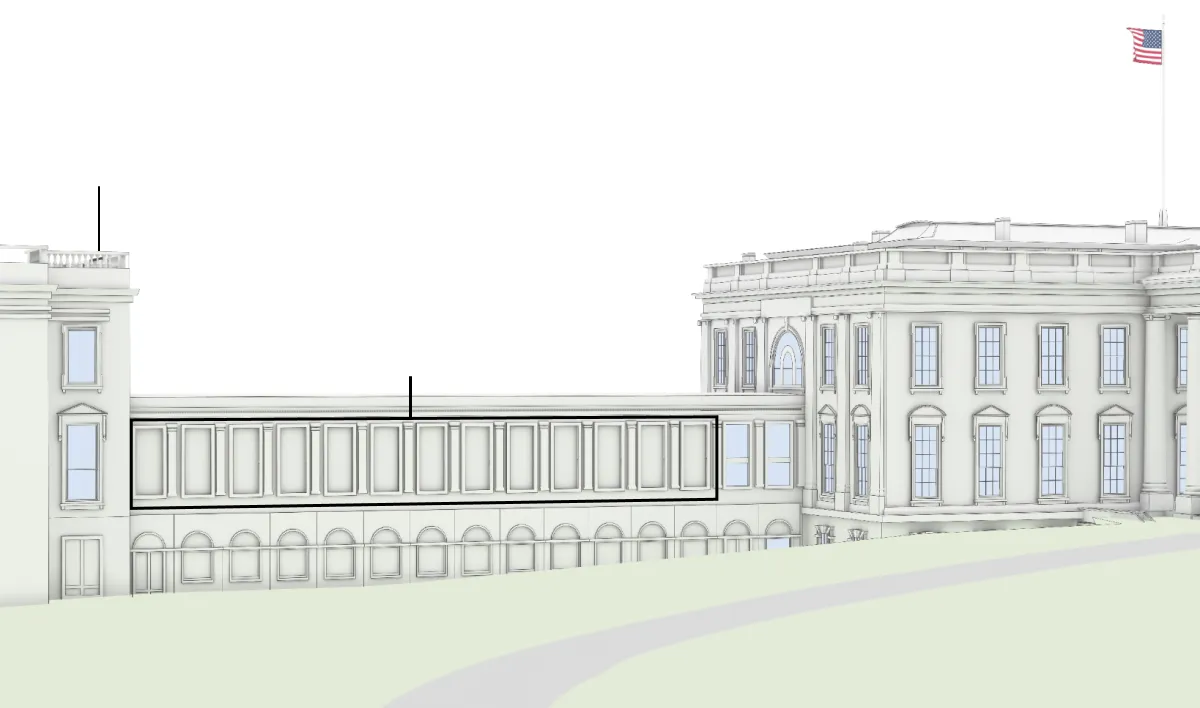
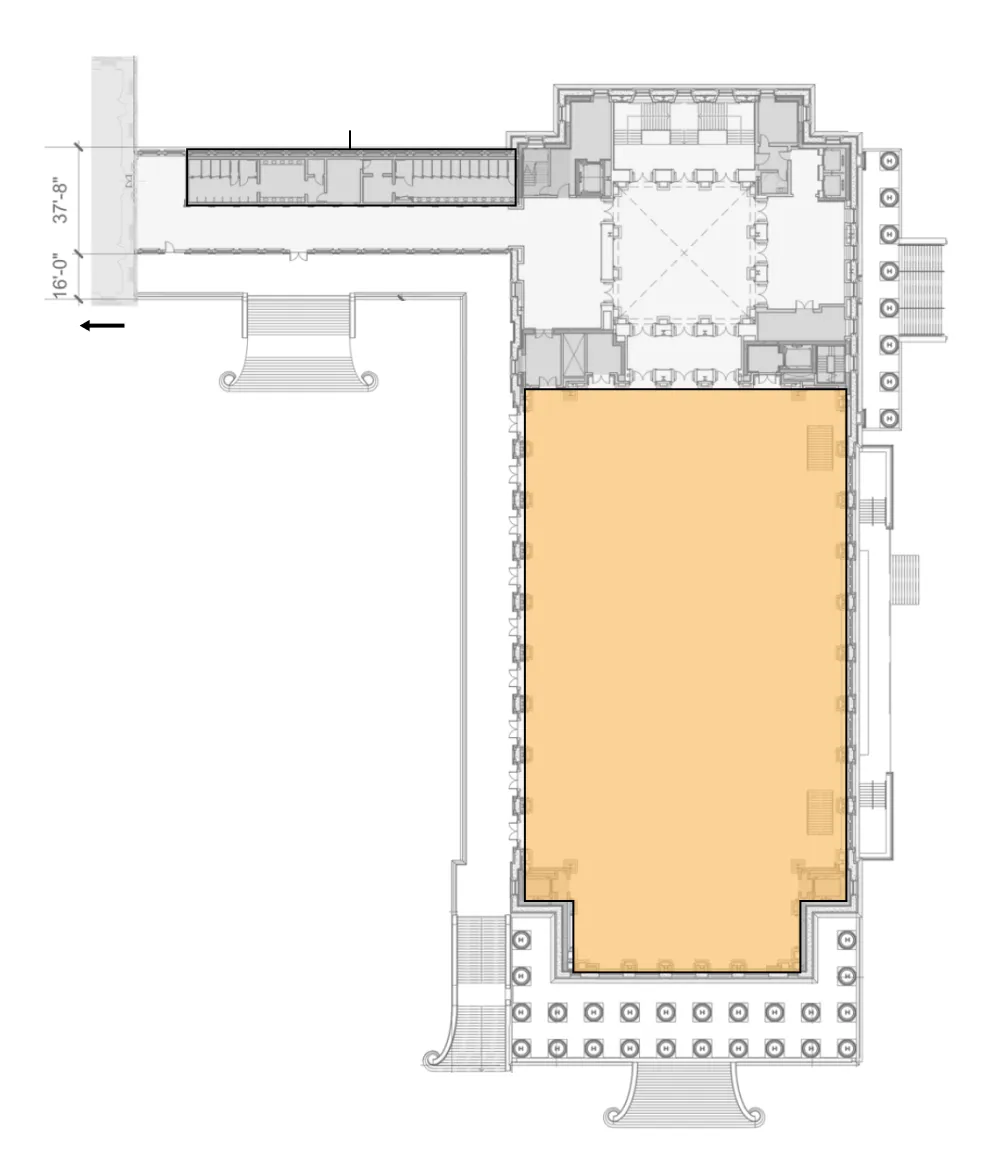
Inside, the hall is significantly larger than the standard for 1,000 guests—it can actually accommodate up to 1,500 people, which means smaller events may look empty. There are also excessively large service areas and “false windows” behind which restrooms are located.
Symbolic Significance
Supporters point out that the White House has always changed. Will Scharf said, “I see this project as a natural continuation of that history.”
However, critics emphasize that the issue is not only about functionality but also about how the building will appear to the public.
Phil Mendelson stated: “This is the people’s house, not Donald Trump’s or any other president’s.”
“I still don’t understand why the ceiling height has to be 40 feet (about 12 meters),” he added.
It is expected that, barring court intervention, the project will be approved as early as this week, despite significant criticism.
Recently, U.S. President Donald Trump announced that the state reception hall, for which the historic East Wing of the White House was demolished, is scheduled to be completed in about a year and a half.
U.S. President Donald Trump insisted on a significant increase in the size of the future ballroom at the White House, despite the architect’s objections. The project has already sparked controversy.
