
President Trump and Xi Jinping hold talks in Washington — Channel NewsAsia
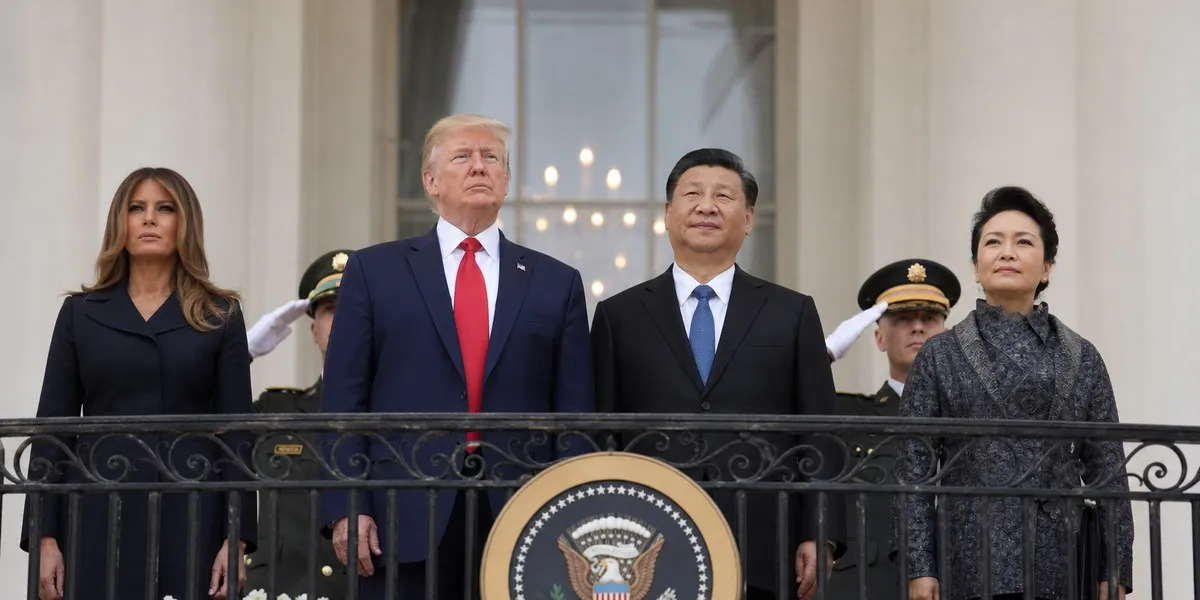
US President Donald Trump hosted Chinese President Xi Jinping at the White House in Washington on September 24. After the bilateral meeting, Trump said it had been very successful. Earlier, he described his relationship with the Chinese leader as a truly great friendship.
As Channel NewsAsia reports, this is the second meeting between Trump and Xi Jinping this year and the Chinese president's first visit to Washington in more than a decade. The leaders of the world's two largest economies were expected to discuss trade, security, technology, artificial intelligence, Taiwan and the war with Iran.
Taiwan and artificial intelligence
According to China's state-run Xinhua news agency, during the bilateral meeting Xi Jinping called on the United States to oppose Taiwan's independence. The White House did not immediately release its own account of the conversation. It had previously been expected that Xi would seek an end to US arms sales to Taiwan.
More current news is available on the UA.News Telegram channel Telegram.
Trump said the sides would also discuss security, technology and artificial intelligence, which he calls superintelligence. Xi Jinping said competition between the United States and China should be healthy. According to him, both countries have the opportunity and responsibility to develop and control AI so that its development remains under human control.
Trade truce
Analysts cited by the outlet did not expect major breakthroughs from the summit. Among the possible outcomes, they named an extension of the trade truce that was due to expire in November, as well as possible agreements on reducing certain tariffs, combating drug trafficking and expanding contacts between the two countries' militaries.
US Treasury Secretary Scott Bessent said that after talks with Chinese Vice Premier He Lifeng, the sides agreed to extend until January 10 the arrangement that had paused the trade war, during which reciprocal tariffs exceeded 100%. Issues that could escalate relations again include Taiwan, export controls and competition in AI.




