
President Trump orders AI to be called superintelligence — BBC News
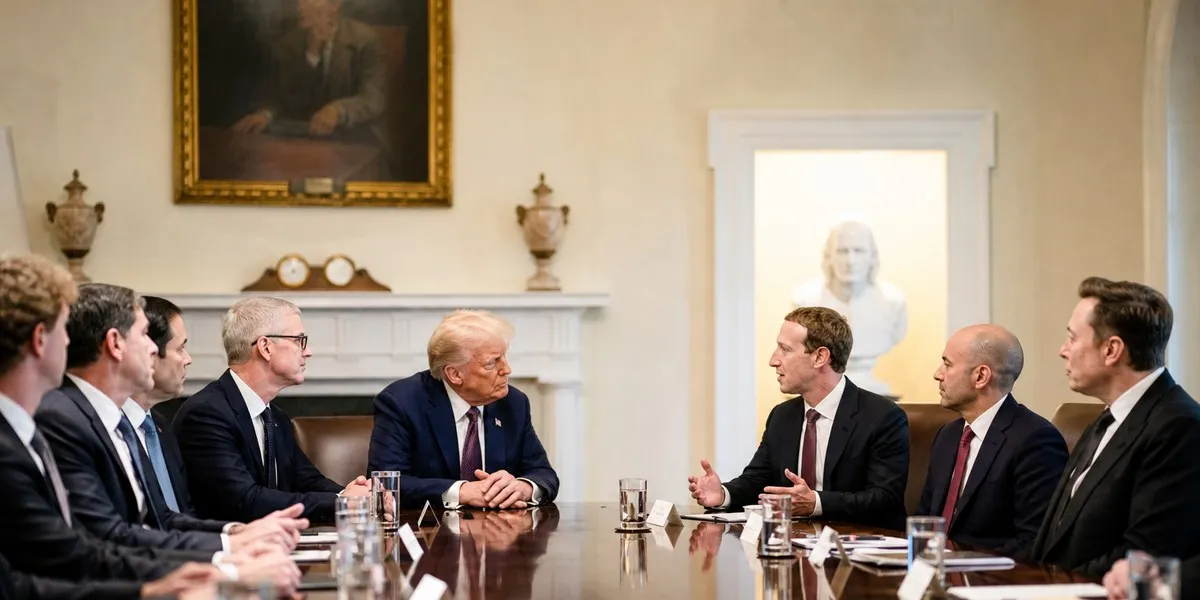
In the United States, President Donald Trump held a meeting with the heads of leading technology companies and signed an executive order requiring federal departments and agencies to replace the term “artificial intelligence” with “superintelligence” or SI in official communications. BBC News reports.
Under the order, the new terms must be used in correspondence, public statements, websites, reports, policy documents, and other executive branch documents that do not have legislative status. The document states that the development of these capabilities marks the arrival of a new era of “superintelligence.”
System safety agreement
The White House meeting was attended by the heads of OpenAI, Anthropic, Nvidia, Meta, and Google. After the closed part of the event, Trump said that the participants had signed a morally binding document on protection against potential AI risks.
The document assigns companies responsibility for the safety of their own technologies. They agreed to introduce safeguards so that models operate as intended and problems are promptly detected and addressed. The companies must also cooperate with independent auditors to assess system performance and ensure that their platforms do not compromise technical systems or gain improper access to them.
More current news is available on the UA.News Telegram channel Telegram.
The agreement was signed by Trump, Google CEO Sundar Pichai, Anthropic head Dario Amodei, Mark Zuckerberg of Meta, OpenAI President Greg Brockman, Elon Musk of SpaceX, and Nvidia CEO Jensen Huang. Trump also announced his intention to create a board to oversee the safety of AI tools, without specifying its composition.
Support for data centers
The US president reiterated his support for the rapid expansion of data centers, which provide computing power for AI systems. Their construction has drawn objections in some American communities because of electricity consumption and the possible impact on communities.
According to a Marist Poll conducted jointly with NPR and PBS News, 65% of registered voters opposed the construction of data centers in their areas. After the meeting, Jensen Huang proposed calling such facilities “superintelligence factories” and said they contribute to the reindustrialization of the United States and the creation of jobs.




