
Rare white-fronted shrike draws hundreds of observers in Finland — YLE News
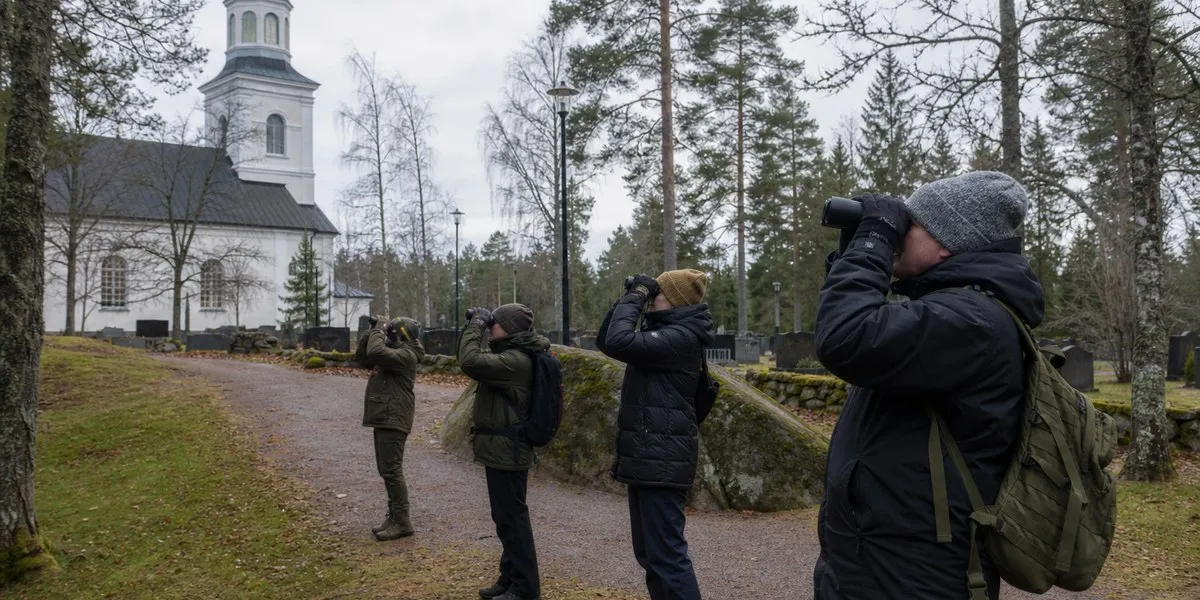
In Virolahti, Finland, hundreds of bird enthusiasts came to the cemetery near the church to see a rare white-fronted shrike. The bird was spotted there on August 14. As YLE News reports, the previous and, until last summer, only sighting of this species in Finland was recorded in the Åland Islands 44 years ago.
On the day information about the discovery became known, dozens of birdwatchers from different regions of the country came to the church. In total, hundreds of people visited the cemetery grounds during the summer. According to parish employee Tuire Pulkkinen, some of them even spent the night in the church parking lot to see the bird.
Visitors took church ceremonies into account
According to Pulkkinen, the visitors did not disrupt the usual order on the church grounds. During blessing ceremonies, they were asked not to disturb the participants, and after the ringing of the bells began, they returned to their observations. The church grounds remained clean, and some guests voluntarily offered to pay for the use of the toilets.
More current news is available on the UA.News Telegram channel Telegram.
The observers were also interested in the church building, including its age. In early September, the Birdwatchers' Association presented the church with a painting depicting a white-fronted shrike as a sign of gratitude for its cooperation. It was placed in the church vestibule.
The bird was ringed and examined
On Tuesday, birdwatchers ringed the shrike and examined it. Eetu Paljakka, a member and secretary of the observations committee of the Kymenlaakso Ornithological Society, said that the bird had good muscle condition and weighed several grams more than members of this species usually do. In his assessment, the stage of moulting also indicates that the bird is in good condition for departure.
Paljakka noted that the nearest nesting sites of the white-fronted shrike in Western Europe are located in Bulgaria, Turkey and Greece. He suggested that the bird may remain in Finland until the onset of night frosts, after which it will probably leave the country.


