
Russia nationalized $10 billion in assets over the course of six months
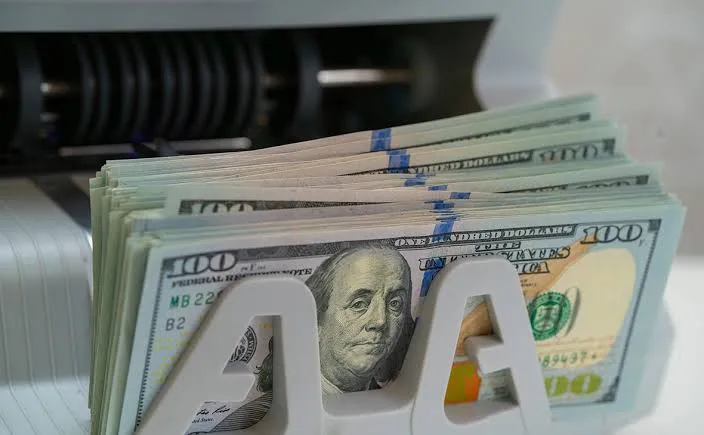
In the first six months of 2026, Russian authorities transferred assets worth at least $10.16 billion to state ownership. This is nearly as much as Russia nationalized in all of 2025, and such transactions now account for more than 40% of the total volume of the Russian M&A market.
In the first half of 2026, 15 cases of nationalization were recorded in Russia. The total value of assets that came under state control amounted to $10.16 billion. These figures were provided by analysts at the AK&M agency, whose data is cited by RBC. This is a very high figure for the Russian market. In the first six months of the year, nationalized assets accounted for 42.2% of the total volume of the Russian M&A market—that is, mergers and acquisitions.
By comparison, during the same period in 2025, there were only 10 cases of nationalization in Russia. At that time, the value of assets transferred to the state was approximately $3.95 billion. In other words, the scale of this redistribution of ownership has increased sharply over the course of a year. Looking at the full year of 2025, the state seized 24 assets worth $11.03 billion. In 2024, there were 10 such cases, and the total value of the assets was $3.89 billion.
Thus, in just the first six months of 2026, Russia came very close to matching the figure for the entire previous year. If this trend continues through December, the total for 2026 could set a new record for the current wave of nationalizations.
The “Rusagro” case was the largest
The largest asset to come under state control since the start of the current wave of nationalizations was the “Rusagro” agricultural holding owned by businessman Vadim Moshkovich. The asset was valued at approximately $7.7 billion. In May 2026, the holding company came under the management of RSHB-Finance LLC, a subsidiary of the state-owned Rosselkhozbank. Thus, control over one of the country’s largest agricultural assets ended up in the hands of an entity affiliated with a state-owned bank.
This case became the largest in terms of value among all nationalizations that took place in Russia after 2022. Its scale is particularly striking when viewed against the backdrop of overall statistics: Rusagro alone accounts for a significant portion of the total value of assets nationalized in the first half of the year. The grain producer “Krasnodarzernoprodukt” ranked second in terms of value. The court valued its assets at $1.05 billion. Another major nationalization involved Murmansk fishing companies. These include “Murmanseld 2,” the “Zarya” fishing collective, and the “Andromeda” Company. Russia’s General Prosecutor’s Office estimated their total value at $606.4 million.
What Lies Behind the Wave of Nationalizations
Since the start of Russia’s full-scale war against Ukraine, state control over business has significantly intensified in the country. The authorities have gained the ability to transfer private companies and assets to state ownership through court rulings and other mechanisms. In many cases, Russian law enforcement and government agencies accuse company owners of violating the law, conflicts of interest, or other actions that allegedly harm the state. Following this, the prosecutor’s office can petition the court to transfer the assets to the state.
At the same time, critics of this policy point to another problem. In their view, under the pretext of protecting state interests, a large-scale redistribution of private property is taking place in Russia, and large enterprises are coming under the control of state agencies or businesspeople with ties to the government. This trend has become particularly noticeable since 2022. The Russian government has begun to intervene more actively in the ownership of large companies, and courts are increasingly ruling in favor of transferring assets to the state.
This applies not only to individual enterprises. Assets from various sectors of the economy—ranging from agriculture and the food industry to fisheries, metallurgy, energy, and other sectors—are coming under state control.
Why the $10 billion figure is significant
The $10.16 billion figure reflects more than just the number of individual court cases. It demonstrates the scale of a process that is having an increasingly significant impact on Russian business. In fact, in less than seven months, the state acquired nearly as many assets as it did in all of 2025. At the same time, the number of cases has also increased: from 10 in the first half of 2025 to 15 in the same period of 2026.
Another telling figure is the share of nationalizations in the Russian M&A market. At 42.2%, this means that nearly half of all mergers and acquisitions during this period involved assets that the state took under its control. This creates additional risks for private businesses. Owners of large companies are forced to consider not only ordinary economic problems, sanctions, or falling demand, but also the possibility of losing assets due to decisions by government agencies.
What Lies Ahead
So far, the statistics indicate that the process is accelerating. In 2024, Russia nationalized 10 businesses worth $3.89 billion. In 2025, the number of such cases rose to 24, and the total value of the assets reached $11.03 billion. In the first half of 2026 alone, the state seized 15 assets worth $10.16 billion. In other words, while Russia has not yet surpassed last year’s figure in terms of the number of cases, it has already nearly matched it in terms of asset value.
If the second half of the year is as active as the first, the results for 2026 could significantly exceed previous figures. Much will depend on whether major cases involving large private companies continue. For now, the main trend is clear: the Russian state is increasingly taking large assets under its control. And the record $10.16 billion in just six months shows just how massive this process has become. This is reported by Russian media.
The Russian film *The Last of the Batmen: Kolobok*, which was released on August 6, faced low demand even during the advance ticket sales phase. According to publicly available schedules from Moscow movie theaters, only a small number of tickets were purchased for the film’s opening screenings.


