
Saudi Arabia calls for shipping protection — The National
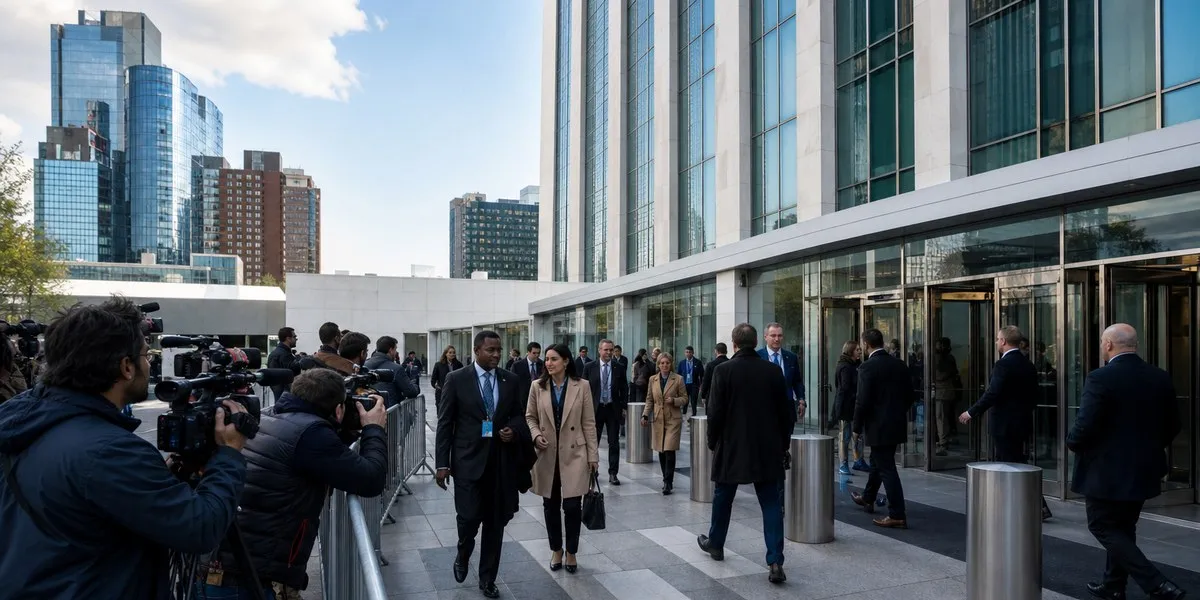
Saudi Arabia’s Foreign Minister Prince Faisal bin Farhan, during the UN General Assembly in New York, United States, called on the international community to condemn Houthi attacks that threaten shipping in the Red Sea and the Bab el-Mandeb Strait. He stated that attempts to block Middle Eastern waterways pose a threat to global energy security, The National reports.
Call for a political settlement
Prince Faisal bin Farhan also stressed the need for a comprehensive agreement to stabilize Yemen and ease the plight of its population. He welcomed the UN Security Council statement condemning Houthi missile and drone attacks on Saudi Arabia and commercial vessels.
Speaking about Sudan, the head of Saudi diplomacy called for a political solution to be led by the Sudanese parties and one that would preserve the country’s unity and its institutions. He also expressed support for Syria’s stability and reconstruction, welcoming the US announcement that Syria would be removed from the list of state sponsors of terrorism.
More current news is available on the UA.News Telegram channel Telegram.
Statements on Lebanon, Iraq and the Strait of Hormuz
Saudi Arabia’s foreign minister stated that weapons in Lebanon and Iraq must be held exclusively by the state. He called for ensuring Lebanon’s sovereignty and the functioning of its institutions, and also stressed that Iraqi territory should not be used to attack neighboring countries.
Separately, Russian Foreign Minister Sergey Lavrov, of the aggressor state, said at the General Assembly that Moscow was ready to help stabilize the situation in the Strait of Hormuz. He called for the creation of a regional security architecture that, he said, should strengthen trust between the Arab states of the Persian Gulf and Iran.
Oman’s Foreign Minister Badr al-Busaidi and Iran’s Foreign Minister Abbas Araghchi also discussed safe navigation through the Strait of Hormuz in New York. According to Oman’s Foreign Ministry, the sides stressed the need for diplomatic contacts, confidence-building and guaranteeing freedom of passage to support international trade and energy supplies.




