
Seismologists have explained the series of powerful earthquakes around the world
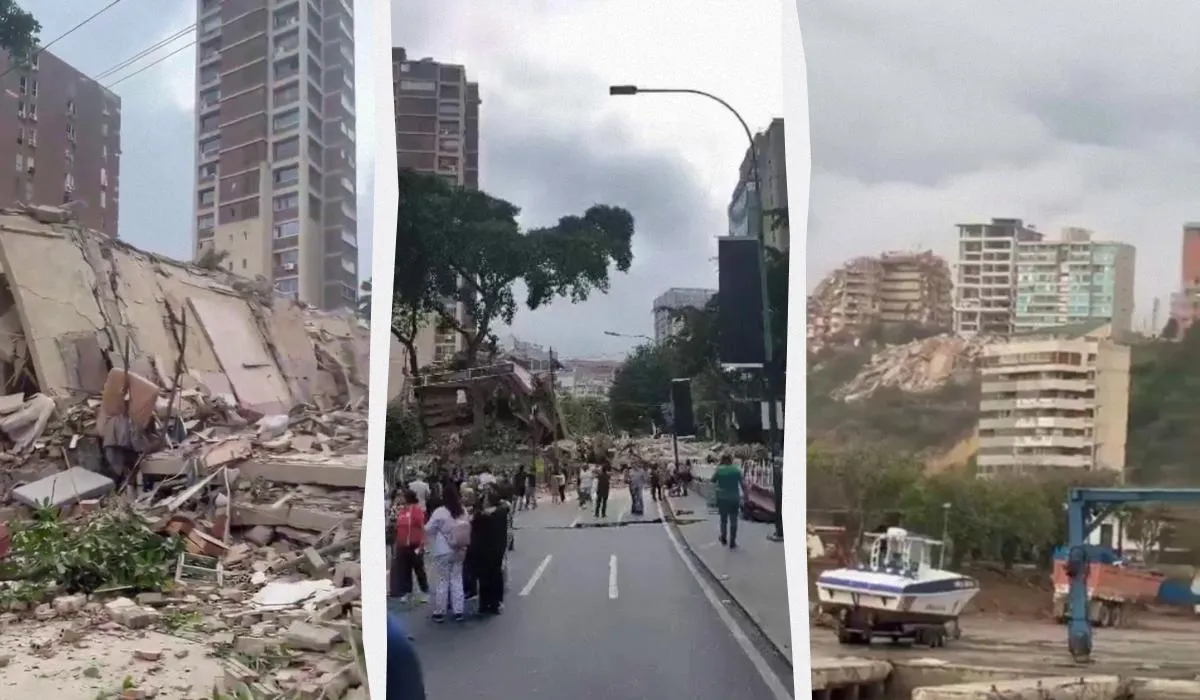
Within a few hours, powerful earthquakes struck the United States, Japan, and Venezuela. As a result, people on social media began speculating that these events might be linked. However, seismologists say there is no evidence of such a connection. A powerful series of earthquakes that occurred almost simultaneously in three different countries has caught the attention of people around the world. Tremors were recorded in California, off the coast of Japan, and in Venezuela, and the close timing of these events sparked numerous discussions on social media.
On Wednesday, a 5.6-magnitude earthquake struck northern California. A few hours later, a much more powerful 7.2-magnitude earthquake was recorded off the northern coast of Japan. At almost the same time, two strong earthquakes struck Venezuela. There, they led to a massive tragedy and a large number of casualties. Despite this, experts emphasize that it is not appropriate to speak of a “domino effect” or a global chain of earthquakes.
William Barnhart, deputy program coordinator for seismic hazard assessment at the U.S. Geological Survey, explained that all three earthquakes occurred near active tectonic plate boundaries. It is in such areas that underground tremors occur most frequently. “Earthquakes happen every day all over the world. Most of them occur far from populated areas. It’s just that this time there was a rather unusual coincidence, with several strong earthquakes occurring almost simultaneously in places where people felt them,” said Barnhart.
He added that a strong earthquake can indeed trigger new tremors, but this usually happens only near the epicenter. At a distance of thousands of kilometers, such an effect is practically impossible. Martin Hudson, an adjunct professor in the Department of Civil and Environmental Engineering at the University of California, Los Angeles, shares this view. “If we analyze earthquakes over the past hundred years, we won’t find any examples where tremors so far apart were related,” he emphasized.
Experts explain that a coincidence in timing does not necessarily mean there is a cause-and-effect relationship between the events. According to them, such situations are rare but entirely possible, since the Earth is constantly in motion and seismic activity in different regions is a common occurrence. Therefore, despite the sensational speculation on social media, modern seismology sees no reason to believe that the earthquakes in the U.S., Japan, and Venezuela were linked. According to scientists, this was merely an unusual but coincidental overlap in timing. The Guardian reports on this.
In Venezuela, the death toll from two strong earthquakes has risen to approximately 235. At least 4,300 more people were injured, according to updated data on the aftermath of the natural disaster.


