
Sirp urged Estonia to test counter-drone systems before procurement — ERR News
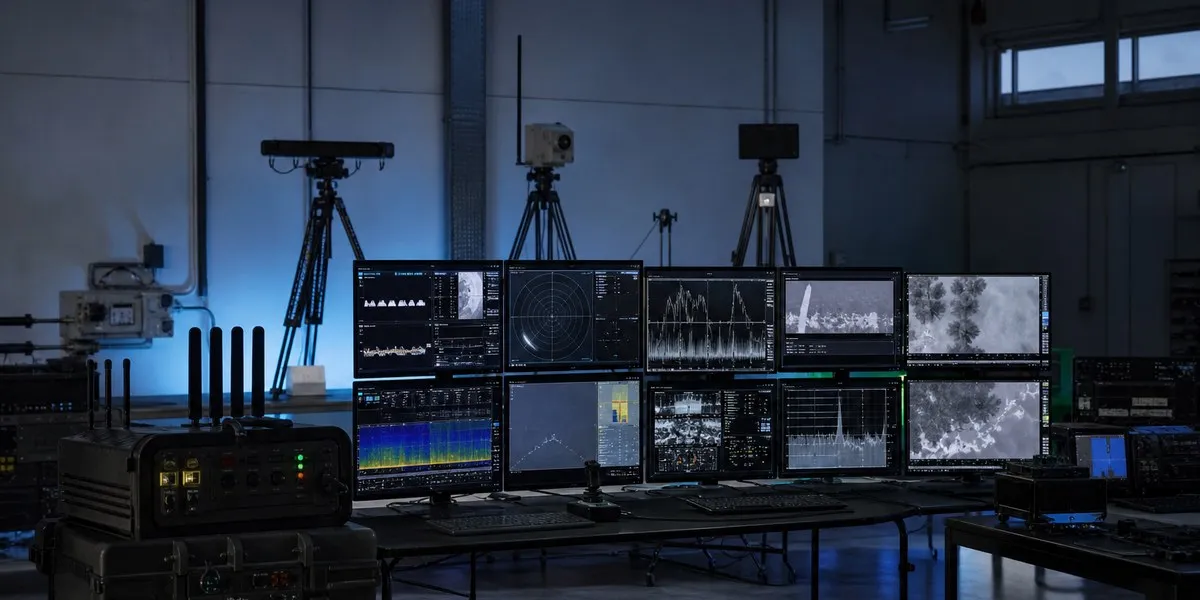
Estonia should establish a permanent capability for testing counter-drone technologies before major public procurement, columnist Kristian Sirp believes. According to him, unmanned technologies are developing faster than the state can procure them through standard procedures: a solution considered the best when technical requirements are drafted may already be outdated by the time a contract is signed.
As ERR News reports, as defense spending increases, so does the cost of wrong decisions. Procuring equipment worth millions of euros without checking its compatibility with other systems, the data it provides, and decision-making procedures concerns governance, resilience, and the use of public funds.
Not only radars and sensors
Sirp emphasizes that an individual radar, radio-frequency sensor, optical camera, electronic warfare jamming system, or interceptor drone does not in itself create a full-fledged capability to counter a threat. A drone must be detected and identified, data from several sensors must be combined, an assessment must be made as to whether it poses a threat, and information must be transmitted in time to the decision-maker.
This is particularly important for critical infrastructure facilities, including electrical substations, hospitals, and ports. Different sensors may react differently to the same object: one may issue an alert, another may not confirm it, and a third may detect the object but classify it differently. Under such conditions, the author notes, it is necessary to determine in advance who receives the data, who assesses the threat, and when the police or facility security are involved in the response.
More current news is available on the UA.News Telegram channel Telegram.
Testing in real-world conditions
The author warns that different agencies may procure solutions at different times, while their data formats, operating models, threat assessments, or command-and-control systems may prove incompatible. The result may be a large number of technologies without a unified operational picture.
In March, NATO launched the Innovation Range in Latvia, where a campaign to test, assess, verify, and validate drone and counter-drone technologies began at the Selonia military training ground. The event brought together companies from Alliance countries and Ukraine, operational users, and public-sector representatives. The European Commission's action plan on drone security and countering drones, adopted in February, also focuses on secure equipment, command-and-control systems, industrial cooperation, and technology testing.
In Sirp's view, Estonia should test solutions in the conditions of cities, ports, energy facilities, and near hospitals, where sensors are affected by buildings, other radio signals, and people's everyday activity. He also proposes combining field trials with digital models that would make it possible to repeat scenarios, change parameters, and compare the performance of different systems and procedures.




