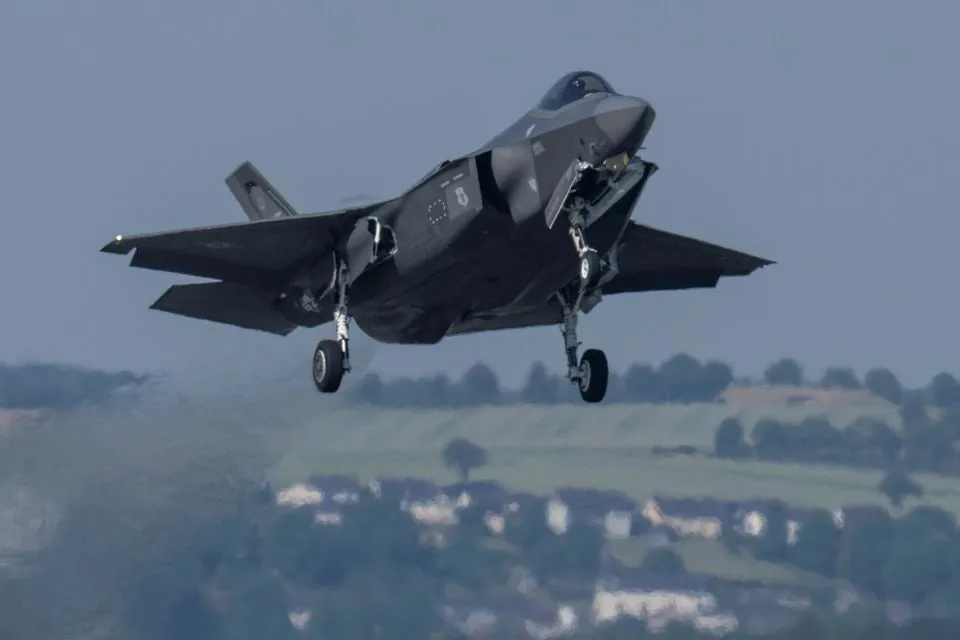
NATO may face a significant reduction in U.S. military involvement. Specifically,this refers to a possible decrease in the number of U.S. troops and the volume of weapons that Washington provides to the Alliance.
This information was reported by the German publication Spiegel.
As noted in the publication, a representative of Pentagon Chief Pete Hegset informed other high-ranking officials from NATO member countries of these intentions late last week.
According to this information, as part of the Alliance’s military planning, Washington intends to significantly reduce the number of key military resources provided to NATO, including American fighter jets, warships, drones, and refueling aircraft.
For some time now, the U.S. has been insisting on a redistribution of the military burden within the Alliance. Under the previous allocation system, the U.S. provided about half of the military capabilities.
Last Friday, Hegset’s advisor, Alexander Velez-Green, presented figures to the political directors of NATO member states for the first time, clearly outlining exactly how the U.S. envisions this.
According to the publication, the U.S. proposals regarding future force planning turned out to be more radical than Europeans had expected.
Before the meeting, European diplomats assumed that the changes would consist of minor adjustments over time. However, according to Spiegel, the U.S., for example, intends to provide NATO with significantly fewer strategic bombers. There is also talk of reducing the U.S. contribution of fighter jets by a third.
At the same time, the U.S. has made it clear that, within the framework of NATO, it wants to maintain nuclear deterrence in Europe. In return, Europeans are expected to largely take on the conventional defense of the continent.
Accordingly, the U.S. Navy is to provide NATO with fewer destroyers, an American official said.
Furthermore, the U.S. no longer intends to provide submarines for the Alliance’s needs. Europeans must also independently provide drones for reconnaissance.
According to Velez-Green, allies are being urged to fill the emerging gaps as quickly as possible. At the same time, the U.S. is ready to work closely with all NATO partners who act swiftly now.
As Hegset’s advisor noted, from the U.S. perspective, the planned move is logical. Reducing U.S. capabilities is realistic and responsible, since many Europeans are investing more in defense and can do more, he said.
The U.S. expects Europeans to take concrete steps by early June at the so-called Force Generation Conference.
It is noted that Washington would like to present a new burden-sharing plan at the NATO summit in Ankara in July.
Commenting on this, a spokesperson for Secretary General Mark Rutte told Spiegel that in the past, NATO’s force planning had been “overly dependent” on the U.S. But now, she said, Europe and Canada are investing more in defense, so it is possible to “shift the burden of responsibility.”
“The changes strengthen NATO by reducing excessive dependence on a single ally,” she said.
U.S. President Donald Trump is preparing for his next scheduled medical checkup at the Walter Reed National Military Medical Center, which has once again drawn attention to his health.
Debate in the U.S. has reignited over Donald Trump’s physical and mental health after footage surfaced online from the Oval Office showing him allegedly dozing off during an official event. The discussion quickly went beyond this single incident and escalated into a broader political and medical debate. Some experts point to alarming signs in the president’s behavior, but there is no official diagnosis.