
The U.S. has strengthened the UAE's missile defense with new systems
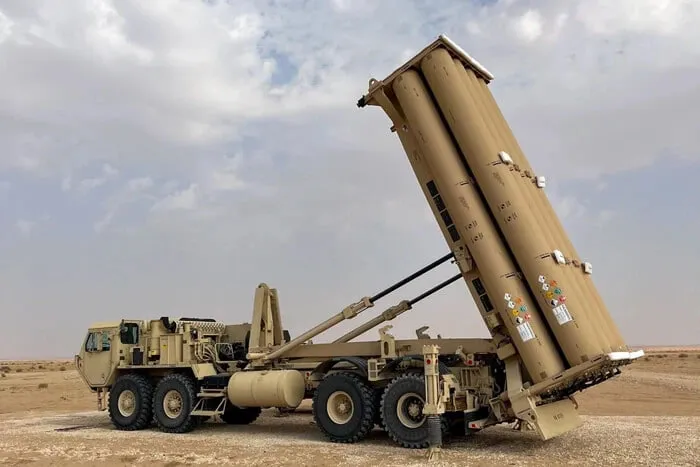
The United States has delivered new THAAD launchers to the United Arab Emirates to protect against ballistic missiles. Lockheed Martin Space will manufacture the systems under a $211,435 million contract.
The new launchers are intended to strengthen the country’s defenses following large-scale missile attacks by Iran.
Amendment P00082 to contract HQ0147-19-C-5001, awarded under the U.S. Foreign Military Sales program, calls for the production of new Configuration 3 THAAD launchers for the UAE. The U.S. Missile Defense Agency (MDA) served as the contracting authority.
Each THAAD launcher carries eight interceptor missiles. The system is designed to counter ballistic missiles and uses the “hit-to-kill” principle: the target is destroyed by a direct kinetic impact from the interceptor, rather than by the warhead’s detonation.
The new Configuration 3 standard is associated with updated hardware provided by the THAAD System Build 5.0 software package. According to MDA budget documents, the modernization is intended to replace outdated equipment, address cybersecurity vulnerabilities, and improve the system’s maintainability.
For the United Arab Emirates, this capability is of particular importance due to the location of the facilities requiring protection. These include air bases, ports, energy infrastructure, and densely populated cities located in various parts of the country.
The dispersal of launchers makes it more difficult for an adversary to disable the entire battery with a single strike. Furthermore, this architecture enhances missile defense capabilities during a simultaneous attack by multiple ballistic missiles from different directions.
The relevance of this approach was confirmed by the UAE’s experience during its confrontation with Iran in 2026. At that time, the country faced massive attacks by ballistic missiles and drones targeting military, energy, and civilian facilities.
This experience demonstrated that missile defense depends not only on radars and stockpiles of interceptor missiles. The system’s ability to maintain combat readiness and withstand repeated strikes over an extended period also proved to be a critical factor.
The issue of means to counter ballistic missiles has also been actively discussed in recent months in the context of Ukraine. In particular, the discussion centers on the possibility of intercepting the Russian “Oreshnik” ballistic missile. Military analyst Viktor Kevlyuk explained that due to its high speed and trajectory, the “Oreshnik” is a difficult target even for modern air defense and missile defense systems.
According to the expert, Ukraine does not possess the capabilities for such an interception. Among the systems available worldwide, the American THAAD and SM-3, as well as the Israeli Arrow-3, are theoretically capable of intercepting the “Oreshnik” during the initial phase of its flight path.
This was reported by Army Recognition.
The U.S. will strengthen the UAE’s defenses with THAAD air defense systems.
As a reminder, the United Arab Emirates government has blamed Iran for the attack on two vessels belonging to the state-owned oil company ADNOC in the Strait of Hormuz. This was announced on August 14 by the UAE Ministry of Foreign Affairs.
U.S. President Donald Trump stated that the Strait of Hormuz could be fully open to international shipping as early as August 4. After that, he said, Washington and Tehran will move on to a new phase of negotiations focused on Iran’s nuclear program.
U.S. President Donald Trump also called on American oil companies to immediately lower gasoline prices for consumers. Separately, he criticized Chevron CEO Mike Wirth.


