
The U.S. and Trump Face Growing International Backlash — Politico
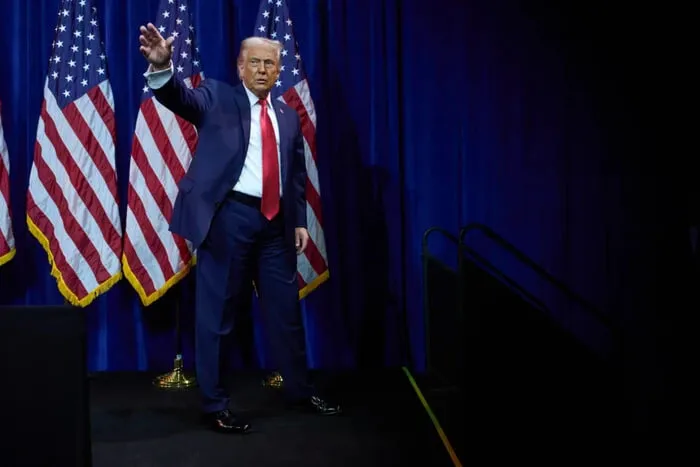
Donald Trump is convinced that he can influence other countries through economic pressure, threats, and military force to compel them to act in his interests.
However, as Politico reports, recent international events reveal a different trend—an increasing number of countries are willing to openly defy Washington’s policies, calling into question the effectiveness of such a strategy of influence.
In particular, Iranian leaders rejected U.S. peace proposals, opting instead to continue the military standoff. In Hungary, voters did not support Viktor Orbán, one of Trump’s key allies in Europe. Pope Leo XIV openly stated that he is not afraid of criticism from the White House, appealing to higher spiritual values.
The Trump administration often views the global arena as a space where threats, sanctions, or military force can be used to force any capital to submit. However, the law of reciprocity applies in international politics: every act of force provokes a reaction that often does not align with Washington’s expectations. Experts, including Richard Haass, note that Trump is failing to adapt to a new reality where bullying is no longer an effective tool.
There is also serious concern that objective information about the state of affairs in the world is not reaching the president, as his inner circle avoids the “hard truth.” Vice President J.D. Vance’s negotiating style with Iran only confirmed this: instead of seeking compromise, the U.S. effectively issued ultimatums, which Tehran perceived as a refusal to engage in an equal dialogue. Western diplomats emphasize: if you want to achieve something from the other side, you must offer something in return, rather than merely threatening new strikes.
The State Department rejects the criticism, arguing that Trump is merely defending American interests that have been ignored for years. However, the consequences of such a hardline approach are becoming increasingly apparent. For example, Trump’s attempts to pressure Denmark over Greenland have forced European leaders to seek ways to reduce their defense dependence on the U.S. A similar situation is unfolding in the economy: the imposition of tariffs is prompting countries to seek new trading partners by bypassing America.
A critical mistake of the Trump team is said to be treating global conflicts as “real estate deals.” This approach ignores issues of identity and peoples’ struggle for survival, which cannot be measured solely in material terms. Although Trump sometimes backs down in the face of powerful players, such as China, he continues to disregard the interests of smaller states.
Ultimately, such a policy could accelerate the transition to a “post-American world,” where the U.S. will lose its role as the primary center of gravity. Instead of relying on the trust of reliable allies, Washington may find itself in a situation where it has to ask for help from countries that no longer consider America their unconditional partner.
Trump criticizeda judge for halting construction of the White House ballroom.
U.S. President Donald Trump insists on significantly expanding the size of the future White House ballroom, despite the architect’s objections. The project has already sparked controversy.
U.S. President Donald Trump announced that the state reception hall, for which the historic East Wing of the White House was demolished, is scheduled to be completed in about a year and a half.
