
The U.S. Has Discovered the Largest Tungsten Deposit, but NASA Is Opposed — Financial Times
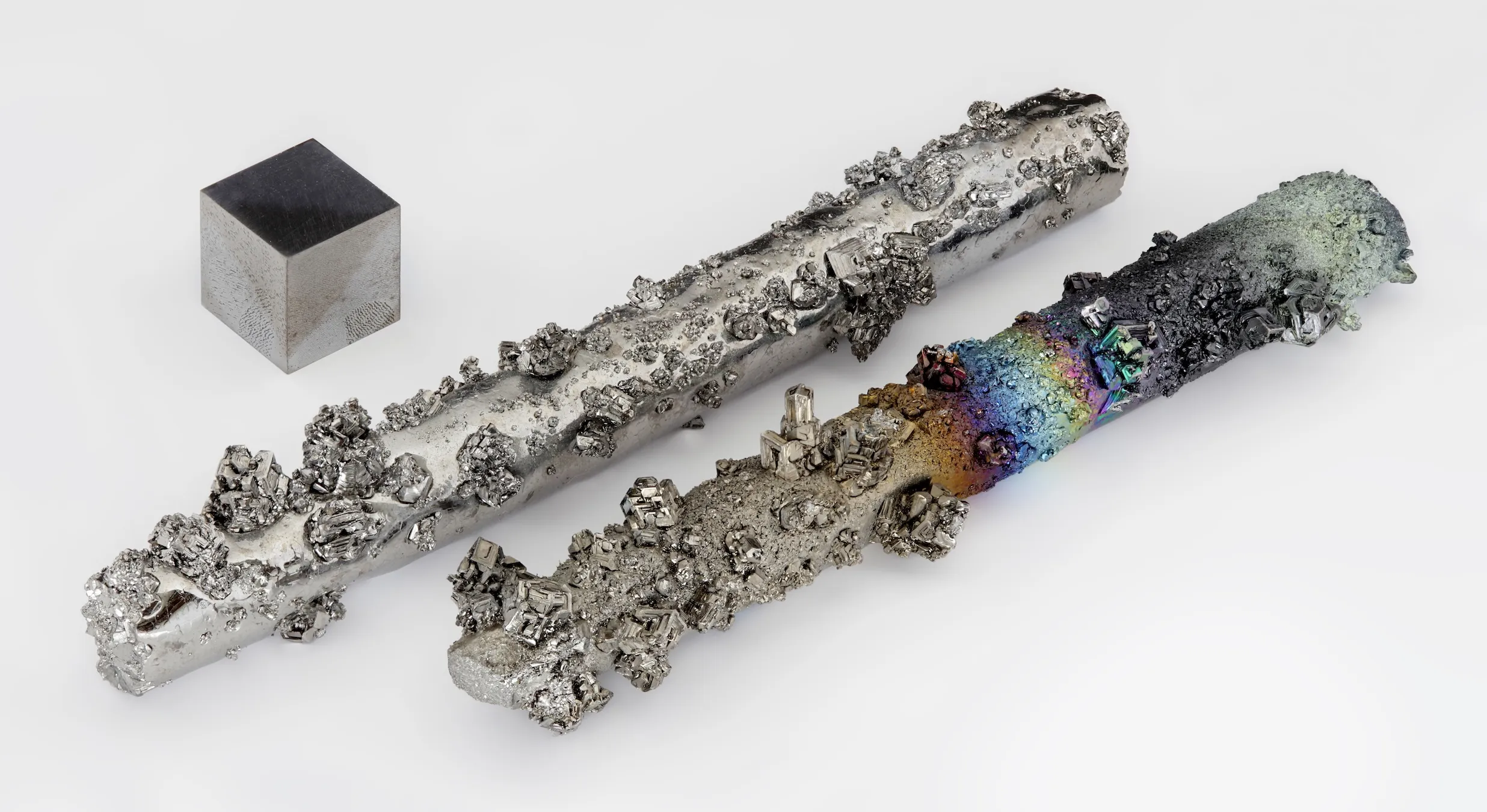
An American mining company announced the discovery of the largest tungsten deposit in the United States—a strategic metal for the defense industry. According to the Financial Times, the project has run into restrictions imposed by NASA, which is prohibiting the development of some of the claimed areas.
The tungsten discovery is detailed in a resource report reviewed by the Financial Times, following a recent drilling program conducted by 3 Proton Lithium, a critical minerals mining company, as part of its Railroad Valley Minerals project, located in a remote part of the Great Basin desert in eastern Nevada.
However, NASA states that one-third of the area claimed by the company covers a unique region used to track signals transmitted to Earth by satellites, and that mining in this area could jeopardize the agency’s operations.
“This is a metal that the United States stopped mining ten years ago and now imports, while China controls and manipulates the global market,” said Kevin Moore, chairman and chief financial officer of 3PL. The Chinese Embassy in Washington stated that Beijing “is committed to supporting the stability of global supply chains.” It also added that “tungsten export applications that comply with current regulations will be granted licenses.”
According to Moore, the scale of the deposit “is not just a story about mineral extraction. It’s a story of national security.”
A private company based in Nevada has estimated the resource at 1.78 million metric tons, which—if the commercial viability of mining is confirmed—is more than five times the size of the next-largest tungsten deposit in the U.S.
3PL has estimated its value at approximately $152 billion, based on current prices, which have skyrocketed amid a severe shortage.
However, media reports note that the estimate of the deposit’s size does not include an area where drilling is currently blocked by NASA.
The tungsten market has risen by nearly 600% since February 2025 due to high demand from the aerospace and defense industries and tool manufacturers, as well as reduced supply resulting from export restrictions imposed by China, which controls 80% of the global market.
The report also notes that large deposits of lithium, boron, and potassium have been discovered in vast underground salt deposits covering an area of approximately 150 square kilometers near the city of Ili, where 3PL holds a lease and mining rights.
The administration of U.S. President Donald Trump has prioritized projects for the extraction of critical minerals in an effort to weaken Beijing’s control over this strategically important sector, and last year included 3PL’s Railroad Valley project in the FAST-41 program—a federal initiative designed to expedite approvals.
The global tungsten shortage has caught the White House’s attention. As the race for resources gains momentum, the U.S. government is prepared to allocate up to $1.6 billion for a planned tungsten mine in Kazakhstan, which is being developed by a group planning a merger with a shell company backed by Donald Trump Jr. and Eric Trump.
3PL, which has raised nearly $50 million to carry out its project, is lobbying the Trump administration and Congress to lift a 20-year-old federal ban on mining and exploration in an area of about 44 square kilometers in 2023.
The restriction was imposed by the Bureau of Land Management at the request of NASA, which used the flat, uninhabited desert terrain for calibration tests of satellite instruments to ensure the accuracy of standardized data.
Moore stated that the 2023 decision was made based on “incomplete information” due to insufficient coordination with NASA, and that the company is “trying to proceed through the proper channels” to allow for the extraction of this potential resource for the benefit of the United States.
A NASA spokesperson stated that the agency’s position has not changed.
Analysts note that the discovery of such a large tungsten deposit in the U.S. will generate significant interest due to tight global supply conditions, but they caution that developing the deposit—even if land rights issues are resolved—will likely take several more years.
“When prices are this high, it’s easy to generate interest in a project like this or a new discovery. Right now, there are probably several dozen small mining companies around the world trying to capitalize on this price surge,” said Timothy Puko, an analyst at the research firm Eurasia Group.
According to him, “it’s important to understand that it will take about five years at best before development begins, and a lot can change in that time.”
Source: Financial Times
Earlier, NASA revealed what the Earth’s geoid actually looks like.
Astronauts took X-rays of the human body in space for the first time.
SpaceX successfully completed the 13th test flight of its super-heavy Starship rocket. During the mission, the spacecraft deployed 20 Starlink V3 satellites into orbit for the first time and performed a controlled splashdown in the Indian Ocean.


