
Old munitions in the seas off Germany are polluting marine life
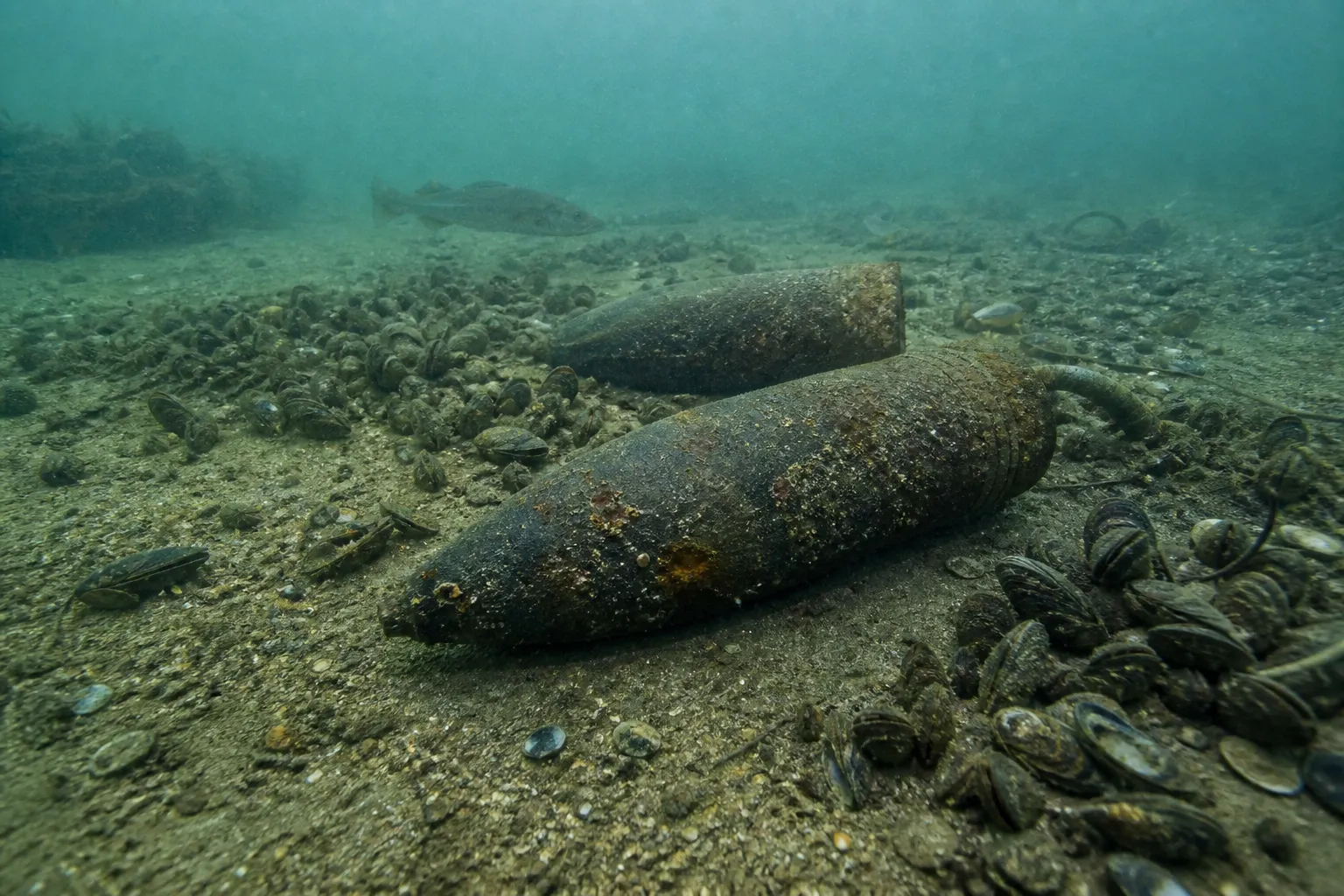
About 1.6 million metric tons of conventional munitions lying in the North Sea and the Baltic Sea off the coast of Germany are gradually corroding and releasing toxic substances into the marine environment. Scientists are detecting compounds related to TNT in fish, mussels, and whale tissue, according to Deutsche Welle.
Some of this munitions dates back to the two world wars—including mines, unexploded bombs, and ammunition lost at sea. Significant quantities of weapons were also deliberately sunk after Nazi Germany’s surrender in 1945, when the Allies dismantled its arsenals. While the risk of explosion was previously considered the main threat, the environmental risk is now becoming increasingly apparent.
Edmund Mazer, a toxicologist at the University of Kiel, stated that due to corrosion of the casings, compounds from the munitions are entering the marine ecosystem and living organisms. One of the most toxic substances is trinitrotoluene, or TNT. Jorn Scharsak, a researcher at the Thünen Institute of Fisheries Ecology, noted that metabolites and decomposition products of TNT have been found in flounder. Their concentrations are very low, but such compounds have been repeatedly detected near areas where old munitions are concentrated.
Fish caught for research generally do not show a higher prevalence of viral, bacterial, or parasitic diseases. At the same time, scientists regularly observe liver tumors. Mazer’s team, in collaboration with the Alfred Wegener Institute in Bremerhaven, found liver abnormalities in more than 50% of the fish living near sites where munitions and sunken ships had been dumped. By comparison, these changes were found in only 1–2% of fish outside such areas.
Read more breaking news on the UA.News Telegram channel.
In mussels, researchers observed biochemical signs of oxidative stress: metabolites of TNT can damage proteins, lipids, and DNA. TNT-related compounds were also found in tissue samples from two whales that had washed ashore. This indicates that the substances are reaching animals at the top of the marine food chain.
At present, scientists do not consider the consumption of seafood to be dangerous for humans, as one would have to eat a very large amount of fish for this to be a concern. At the same time, they expect the problem to worsen as the shells of the munitions continue to break down. In the Baltic Sea, pollution may be more pronounced due to weaker currents and slower water exchange.
In Germany, pilot projects for the systematic removal of munitions have only recently begun in order to prevent environmental damage. The plan involves using floating platforms to safely destroy recovered munitions at sea. According to Mazer’s estimates, one such facility is capable of processing approximately 700–1,000 metric tons per year, so cleaning up German waters on the current scale could take decades.


