
A Moscow court has ordered the recovery of $252 billion from a Belgian company
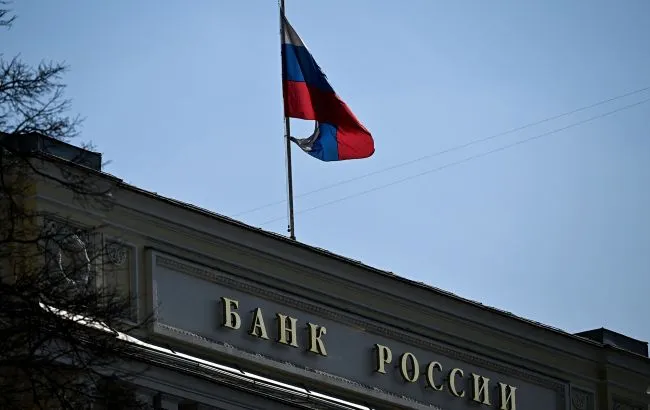
A Russian court has issued a ruling allowing for the immediate seizure of approximately $252 billion from the Belgian clearing house Euroclear, in what appears to be a high-profile financial counterattack against the freezing of Russian assets in Europe, although the actual chances of recovering this money remain highly doubtful due to international sanctions and jurisdictional limitations. This is reported by Reuters.
The case concerns assets of the Central Bank of Russia that were frozen by the EU following the full-scale invasion of Ukraine, a significant portion of which is held in the Euroclear system, which has effectively become one of the key hubs for frozen funds.
A Russian arbitration court granted the Central Bank of the Russian Federation’s motion for immediate enforcement of a preliminary ruling regarding the recovery of damages from the Belgian company, which was issued back on May 15, and now Moscow is formally stepping up pressure, asserting the need to restore allegedly violated rights.
The Reuters report emphasizes that this decision will most likely be largely symbolic, as Russian courts have no real authority in EU countries, and European legislation explicitly protects Euroclear as an institution that complies with the sanctions regime and operates within international rules.
At the same time, Russia may attempt to take more practical steps and seek the seizure of the company’s assets in so-called “friendly jurisdictions,” including China, Kazakhstan, and the United Arab Emirates, which adds a global financial dimension to the situation.
Euroclear’s lawyers sharply criticized the proceedings in the Moscow court, citing procedural violations and a lack of due process, as the hearing was scheduled just two days before the case was heard, and the full text of the ruling has not yet been made public.
In response, the Central Bank of Russia stated that the decision on immediate enforcement is “fair,” explaining that, in their view, delaying the process only prolongs the violation of Russia’s rights and postpones the restoration of control over the assets.
“The Bank of Russia considers the decision on immediate enforcement to be fair, as the court took into account not only the ongoing nature of the violation but also the real risk that any delay in enforcement would further postpone the restoration of the violated rights,” the statement reads.
In fact, this story looks like yet another episode in the major financial war surrounding frozen Russian assets, where legal decisions, political statements, and sanctions mechanisms are intertwined in a complex conflict that is unlikely to have a quick or simple resolution.
Oil refining has come to a halt in central Russia following drone attacks.
Russia is waging a disinformationcampaign against Armenia ahead of the elections.
Russia is cutting social benefits to increase payments to contract soldiers.
The Russian economy is contracting despite higher oil prices
Russia changed its polling methodology, and Putin’s approval rating immediately rose
Putin has begun speaking of “ending the war” due to serious problems on the home front and at the front lines


