
August 12, 2026 — World Elephant Day: How the Holiday Came to Be and What Threats the Animals Face
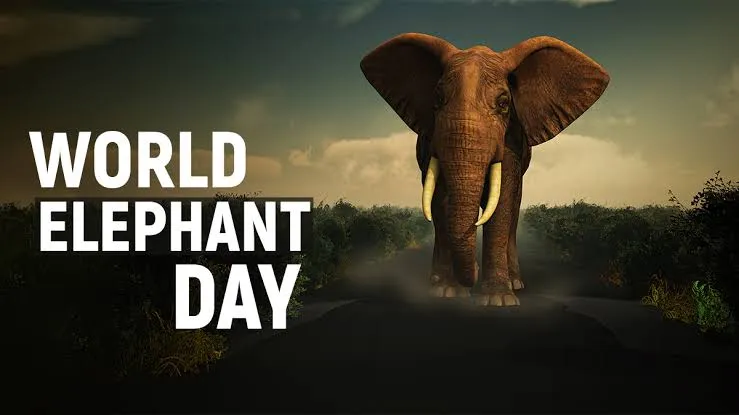
Every year on August 12, the world celebrates World Elephant Day. In 2026, it falls on a Wednesday. This isn’t just an excuse to watch cute videos of elephants; it’s an international initiative that draws attention to poaching, the ivory trade, the destruction of natural habitats, and conflicts between humans and animals. The holiday was established in 2012 to bring together people and organizations dedicated to elephant conservation.
World Elephant Day was established on August 12, 2012. Its co-founders were Canadian filmmaker and conservationist Patricia Sims and the Elephant Reintroduction Foundation of Thailand—a foundation associated with an initiative by Queen Sirikit of Thailand. From the very beginning, the idea was quite simple: to raise awareness of elephant issues among as many people as possible and to help organizations speak out about them together.
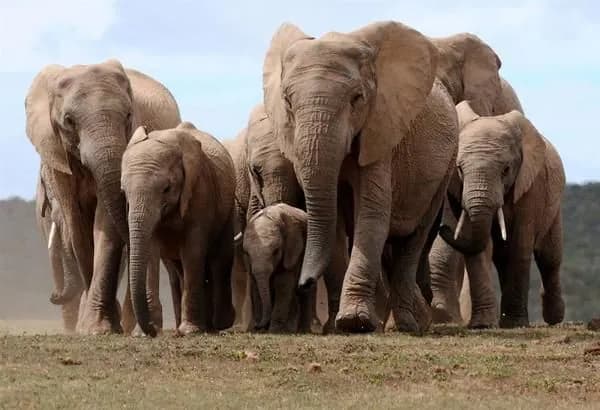
Over the years, the initiative has grown into an international movement. According to the organizers of World Elephant Day, nearly a hundred conservation organizations in various countries have joined the effort. At the same time, the day is not tied to any one specific campaign or country. The idea is for different organizations to hold their own events and jointly draw attention to elephant issues.
The date of August 12 is no coincidence for this conservation campaign: it was on this day in 2012 that World Elephant Day was first observed. Thus, in 2026, the initiative will celebrate its 14th anniversary. Over this time, World Elephant Day has become an opportunity to discuss not only African elephants—which we most often see in documentaries—but also Asian elephants, which face their own distinct challenges.
Why Do We Need This Day?
At first glance, it might seem that elephants don’t need a special day. They’re known all over the world, live in nature reserves and national parks, and their images have long been part of popular culture. However, behind these animals’ fame lies a very different reality. Elephant populations suffer from poaching, habitat loss, the fragmentation of their natural habitats by roads and farmland, and conflicts with humans.
A particular problem is ivory. Due to the demand for it, animals have been killed for their tusks for decades. The IUCN notes that ivory poaching has been one of the main causes of the sharp decline in the African elephant population. Even after the strengthening of conservation measures, illegal hunting remains a serious threat.
That is why World Elephant Day is, first and foremost, an awareness campaign. On this day, conservation organizations share information about the animals’ lives, hold educational events, raise funds for conservation programs, and urge people not to support the illegal trade in ivory products. The main idea is simple: elephants can only be protected when people understand the challenges they face.
How Many Species of Elephants Exist
Today, there are three species of elephants on the planet: the African savanna elephant, the African forest elephant, and the Asian elephant. In the past, African elephants were often considered a single species, but modern scientific data has allowed them to be classified as two distinct species.

The African savanna elephant is the largest of all modern land animals. It lives primarily in the open spaces of Africa, where it feeds on grass, leaves, twigs, bark, and other vegetation. The African forest elephant is smaller than the savanna elephant and is adapted to life in the dense tropical forests of Central and West Africa. The Asian elephant inhabits South and Southeast Asia.
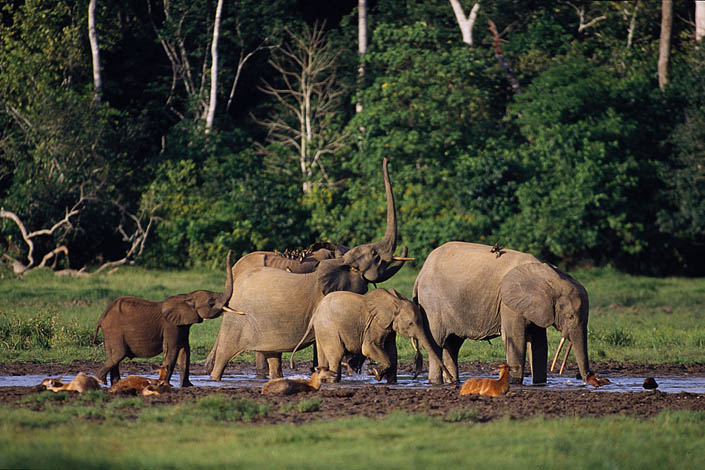
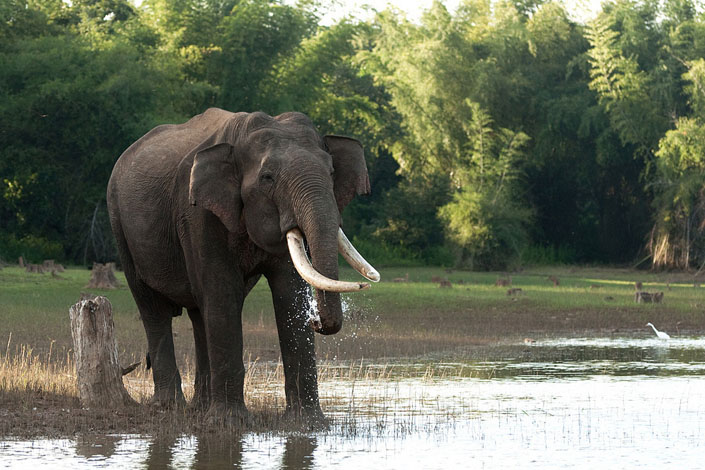
These animals differ not only in size. African elephants typically have much larger ears than Asian elephants, and the shape of their heads and the structure of their tusks also differ. Among Asian elephants, tusks are found primarily in males, whereas in African elephants, both males and females can have tusks. At the same time, all three species share a common trait—they are extremely social and spend a significant portion of their lives in groups.
Elephants have an extraordinary memory
The phrase “an elephant never forgets” has long been popular, but it is backed by actual scientific observations. Elephants exhibit complex social behavior and are capable of remembering other animals, routes to water, and places where food can be found. For them, this memory serves a practical purpose, especially in arid regions where access to water can determine the survival of the entire group.
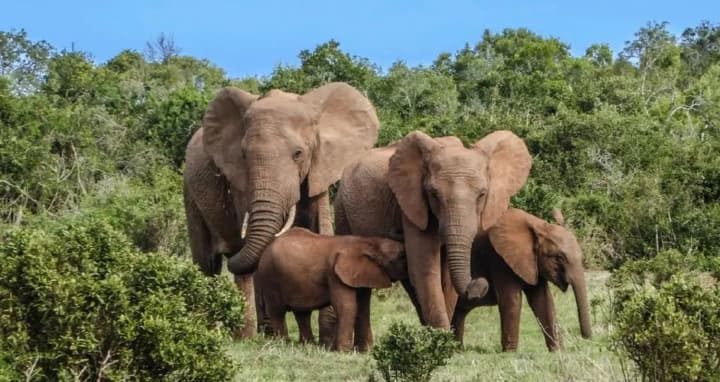
Elephants live in family groups, in which older females often play a key role. It is the experience of these older animals that helps the group find water, food, and safe routes. In dangerous situations, elephants are able to protect their young and respond to threats collectively. These animals also communicate actively with one another. They use sounds, body movements, touch, and even low-frequency signals that can travel long distances. To humans, some of this communication is practically imperceptible, but for elephants, it is an important way to maintain contact with their relatives.
Why Do Elephants Have Trunks?
The trunk is one of the elephant’s most recognizable features, but it is far more than just a “big nose.” It serves simultaneously as a nose, a hand, and a tool for interacting with the world around them. With its trunk, an elephant breathes, sniffs, draws water, picks up food, touches other elephants, and explores objects.
The trunk consists of a vast number of muscles and allows for a wide variety of movements. An elephant can use it to handle large objects, but it is also capable of performing much more precise actions with it. The animal can gently lift a small object, pluck a leaf, or scoop up water.
The trunk is also important for communication. Elephants can touch one another with it, especially when greeting or interacting with family members. Therefore, for an elephant, it is essentially a multifunctional organ, without which its life would be completely different.
Elephants Are Vital to Entire Ecosystems
Protecting elephants is not just for the elephants themselves. These animals have a major impact on the environment in which they live. As they move through their territory, they create trails, alter vegetation, disperse seeds, and help shape conditions for other species. Forest elephants play a particularly important role. They consume the fruits of various plants and carry seeds over considerable distances. In this way, the animals help forests regenerate and spread plant life. In conservation studies, elephants are even referred to as the forest’s “gardeners.”

When elephant populations decline sharply, the consequences can extend beyond a single animal or even a single species. The structure of the vegetation, seed dispersal, and living conditions for other ecosystem inhabitants are all affected. That is why the conservation of elephants is important for the entire natural world.
What Poses the Greatest Threat to Elephants
Poaching remains one of the main threats. Elephants are illegally killed for their tusks, which then end up on the black market. According to the IUCN, ivory poaching has been the key factor in the decline of the African elephant population over the past decades. An equally serious problem is the loss of habitat. People are expanding cities, roads, farms, industrial areas, and plantations. As a result, once-vast natural habitats are being fragmented into smaller pieces. It becomes more difficult for elephants to move between areas where they find food and water.

Another problem is human-elephant conflict. As natural habitats shrink, elephants may venture onto farmland in search of food. They can damage crops, fences, and other infrastructure. For local communities, this can mean significant financial losses, and for elephants, the risk of retaliation from humans.
Climate change is also affecting the situation. Due to shifts in rainfall patterns and water availability, the animals are forced to alter their routes and seek new food sources. This is particularly important for elephants, as they require significant amounts of water and food. The IUCN has also noted that climate change may alter the availability of plant-based food for forest elephants.
The Status of Elephant Populations
The status of different elephant species varies, but none of them can be considered free from threats. The African forest elephant is classified as “Critically Endangered,” and the African savanna elephant as “Endangered” on the IUCN Red List. The Asian elephant is also classified as “Endangered.”
According to IUCN estimates, the population of wild Asian elephants is approximately 40,000–50,000. By comparison, the estimated population of the two African species in 2016 was about 415,000 animals in systematically surveyed areas. However, these figures should not be taken as an exact “census” of all elephants on the continent, as some areas are not surveyed regularly.
At the same time, there is some good news. In some regions, conservation efforts have helped stabilize or even increase elephant populations. The IUCN notes that combating poaching, effective land management, and measures to promote coexistence between humans and wildlife can yield results. In other words, the situation is complex, but it is not hopeless.
How World Elephant Day Is Observed
On August 12, educational and conservation events are held in various countries. Nature reserves, zoos, charitable organizations, and activists organize lectures, themed exhibitions, documentary screenings, and meetings with experts. Often, people learn not only about the animals themselves but also about the work of those dedicated to their rescue.
Another popular format is charity fundraisers. The funds can be used to combat poaching, provide veterinary care, rehabilitate rescued animals, protect natural habitats, or support educational programs for local communities. It’s important that such support goes to reputable organizations that are truly dedicated to elephant conservation.
On social media, people share photos, videos, and interesting facts about elephants. The organizers of World Elephant Day encourage people to use this occasion to raise awareness about the animals’ challenges and spread the word about conservation projects. This way, an ordinary post can become a way to draw attention to an issue that a person may not have even thought about before.
What You Can Do on August 12
You can celebrate this day even without participating in a large-scale event. For example, you can watch a documentary about elephants or read about the work of nature reserves. Another option is to support a reputable organization dedicated to protecting these animals. It’s also important to be mindful of souvenirs and crafts that may be made from ivory or sold as “antique” items. You shouldn’t buy such items if their origin is questionable. For decades, the demand for ivory has been one of the causes of widespread poaching.
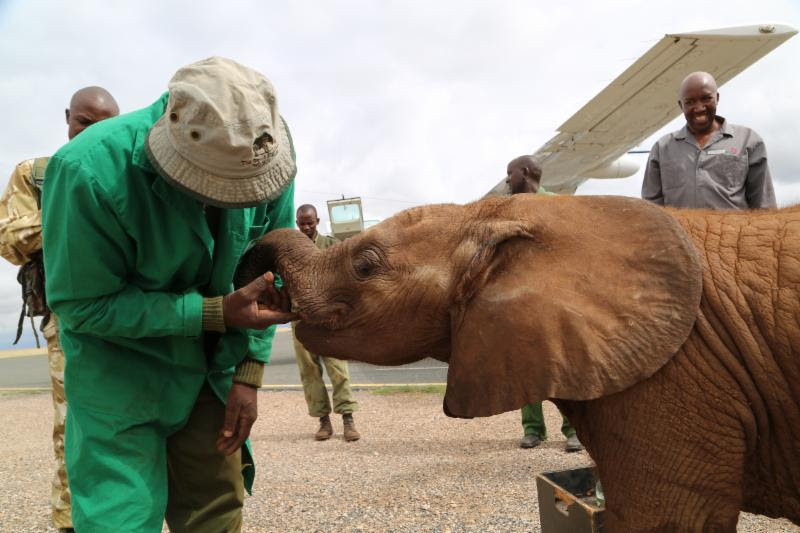
For children, this day can be turned into a little lesson about nature. Drawing an elephant, reading about its family life, watching a wildlife video, or creating a themed quiz are simple ways to talk to your child about animals and human responsibility.
Interesting Facts About Elephants
Elephants are the largest living land animals. They can travel significant distances in search of water and food, and their lives are closely tied to seasonal changes in their environment.
Elephants can communicate using very low-frequency sounds, some of which humans cannot hear. These signals can travel long distances and help the animals stay in touch.
Elephant family groups often consist of females and young. Older animals possess valuable experience that helps the group navigate the terrain and find water and food.
Elephants have strong social bonds. They can touch one another with their trunks, show different reactions to members of their group, and stay close to injured or weakened relatives.
Their impact on nature is so great that the disappearance of elephants could alter entire ecosystems. They disperse seeds, create trails, alter vegetation, and create conditions that benefit other animals.
Why World Elephant Day Is Important
World Elephant Day isn’t just a celebration of how big and cute these animals are. Above all, it’s a reminder that even the planet’s most famous and majestic inhabitants can be threatened. For centuries, elephants have been hunted for their tusks, and today they are increasingly losing their natural habitats due to human activity. African and Asian elephants require different conservation approaches, but they share a common challenge—they need enough safe space to live.

At the same time, the history of conservation shows that the situation can be changed. Where effective anti-poaching programs are in place, natural habitats are preserved, and local communities are helped to coexist with wild animals, populations can recover. That is why, on August 12, we should remember not only the elephants living far away in Africa or Asia. We should reflect on just how much these animals’ lives depend on human decisions. And most importantly, we must remember that protecting nature begins not with grand words, but with concrete actions.


