
September 13, 2026 — World Crane Day: Interesting Facts About These Majestic Birds
September 13, 2026, marks World Crane Day—an environmental observance dedicated to one of the world’s most famous migratory birds. This day draws attention to cranes, their habitats, and the challenges that have put some species at risk of extinction. There are currently 15 species of cranes living in the wild, and ten of them already have conservation status due to the risk of extinction.
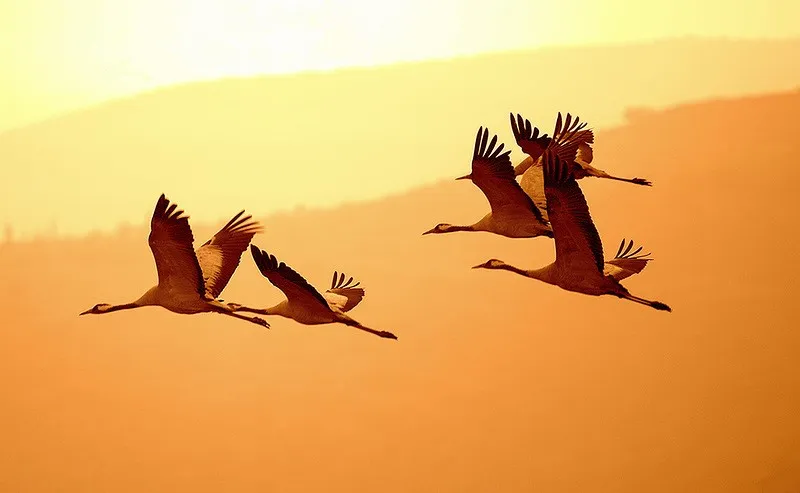
World Crane Day is observed on the second Sunday in September. In 2026, this date falls on September 13. The holiday is not an official UN international day, but it is used by conservation organizations, zoos, ornithologists, and bird enthusiasts as an opportunity to raise awareness about cranes and the challenges of their conservation. September was not chosen for this date by chance. It is during this period that the fall migration of cranes begins or continues in many regions. The birds leave their nesting grounds and head for their wintering grounds, traveling hundreds and even thousands of kilometers.

That is why cranes are particularly often seen in large flocks in the fall. They gather before their flight, look for places to rest and feed, and then continue on their way. For ornithologists, this period is also important for observing and counting birds. It is precisely these migrations that clearly demonstrate why protecting cranes cannot be limited to a single country. A bird may nest in one region, stop over in another during its flight, and winter on yet another continent. If wetlands, grasslands, or safe roosting sites disappear along any part of this route, it affects the entire population.
How World Crane Day Came to Be
In the case of World Crane Day, there is no clear history of its establishment, as there is, for example, with national or official international observances. The holiday gradually spread among the conservation community as a day dedicated to raising awareness about cranes and their protection. Therefore, the claim that the date was supposedly officially established in the United States in 2002 following the rescue of a specific brood should not be presented as an established historical fact. The available materials from major conservation organizations do not provide sufficient evidence to support this particular version of the date’s origin.
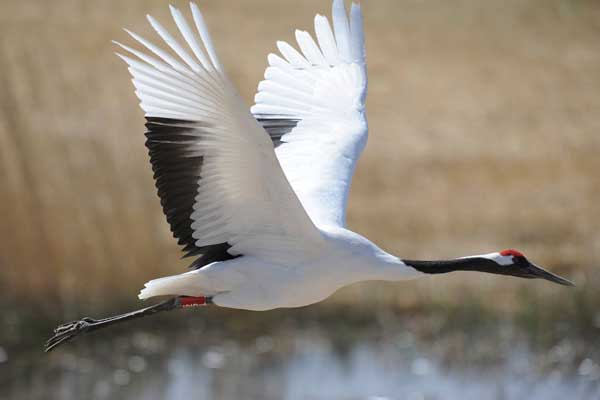
Instead, the very idea of drawing attention to cranes has a much longer history. For many decades, cranes have been one of the symbols of the international conservation movement. The International Crane Foundation, founded in 1973 in the United States, has played a key role in this effort. The organization works to conserve all 15 species of cranes and the ecosystems on which they depend.
The story of the American crane’s—or whooping crane’s—rescue became particularly well-known. In the 20th century, its population was on the brink of disaster, but thanks to many years of work by scientists and conservationists, the population was successfully restored. This example has shown that even a very difficult situation can be turned around by combining scientific research, habitat conservation, and collaboration with local communities. Today, cranes remain a symbol of nature conservation. By protecting them, people are simultaneously protecting the wetlands, steppes, meadows, water bodies, and agricultural landscapes where hundreds of other species live. That is why concern for cranes matters far beyond the scope of a single bird species.
Why Cranes Need to Be Protected
There are 15 species of cranes on the planet, and they are found on five continents. The greatest species diversity is found in East Asia and sub-Saharan Africa. Cranes inhabit a wide variety of environments—from wetlands and floodplains to steppes, meadows, and agricultural lands. The problem is that many of these habitats are changing rapidly. Wetlands are being drained, natural areas are being converted into fields, roads and cities are being built, and river courses are being altered. This is particularly dangerous for migratory birds, as they need not only nesting sites but also safe areas along their entire migration route.
Other threats include poaching, poisoning, collisions with power lines, and other factors. Changes in agriculture present a separate problem. According to the International Crane Foundation, agriculture is linked to nine of the 19 major threats identified for cranes and affects all 15 species in one way or another.
Climate change can also affect these birds. It alters the condition of wetlands, the availability of food, and conditions at wintering grounds. For migratory species, any shift in the natural balance can have consequences across multiple countries simultaneously. That is why protecting cranes involves more than just banning hunting. We need to preserve natural habitats, restore wetlands, regulate land use, reduce the risk of birds colliding with power lines, and work with people who live near crane habitats.
What Types of Cranes Live in the World
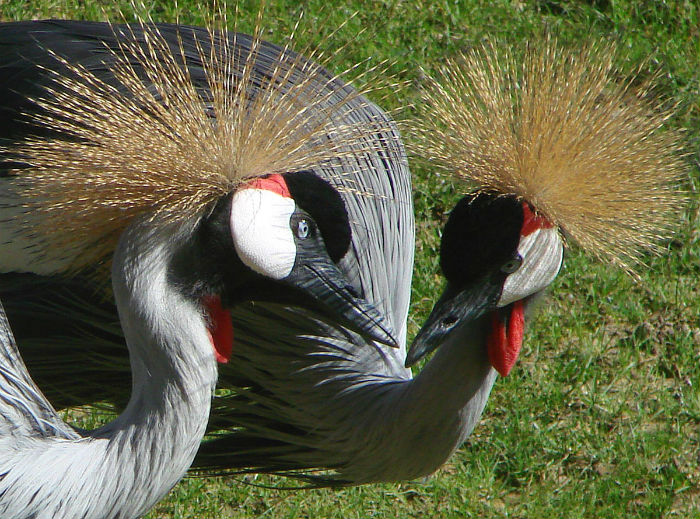
Cranes belong to the crane family. Today, scientists recognize 15 extant species of these birds. Among them are the well-known gray crane, the American whooping crane, the Japanese crowned crane, the black crane, the red-crowned crane, the demoiselle crane, and other species. They vary greatly in appearance and lifestyle. For example, some species have bright patches of bare skin on their heads or distinctive feathered adornments. African crowned cranes are particularly striking due to the golden “crown” on their heads.
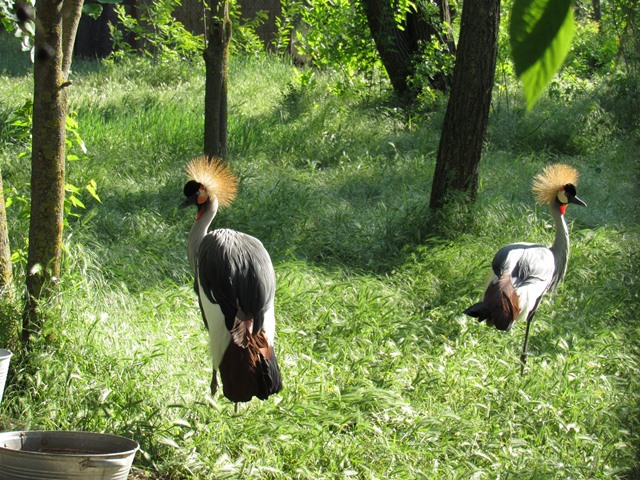
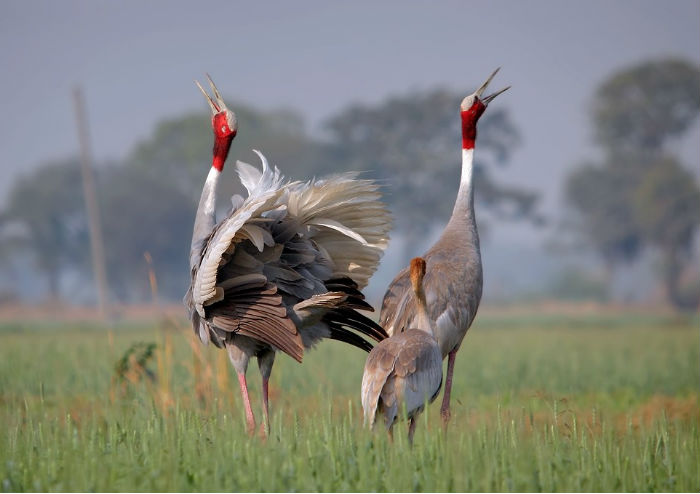
There are also true giants among cranes. The Sarus Crane is considered one of the tallest flying birds in the world. Some individuals can reach a height of nearly 1.8 meters. Despite their outward similarities, each species has its own unique characteristics. Some cranes live primarily in wetlands, while others have adapted well to steppes or open agricultural areas. Some species undertake very long seasonal migrations.
Some populations are in significantly better condition than others. But overall, cranes remain one of the most vulnerable families of birds. According to the International Crane Foundation, 10 out of 15 species are classified as threatened.
Which Cranes Live in Ukraine
Cranes are not an exotic sight in Ukraine. Important migration routes pass through our territory, so large flocks of migratory birds can be observed here in the fall and spring. The Red Book of Ukraine lists the gray crane and the steppe crane. This means both species require special attention and protection.
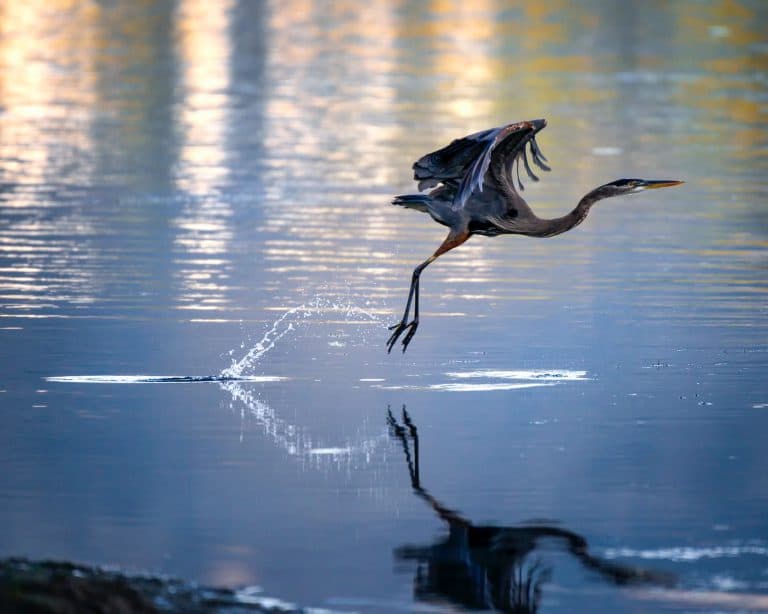
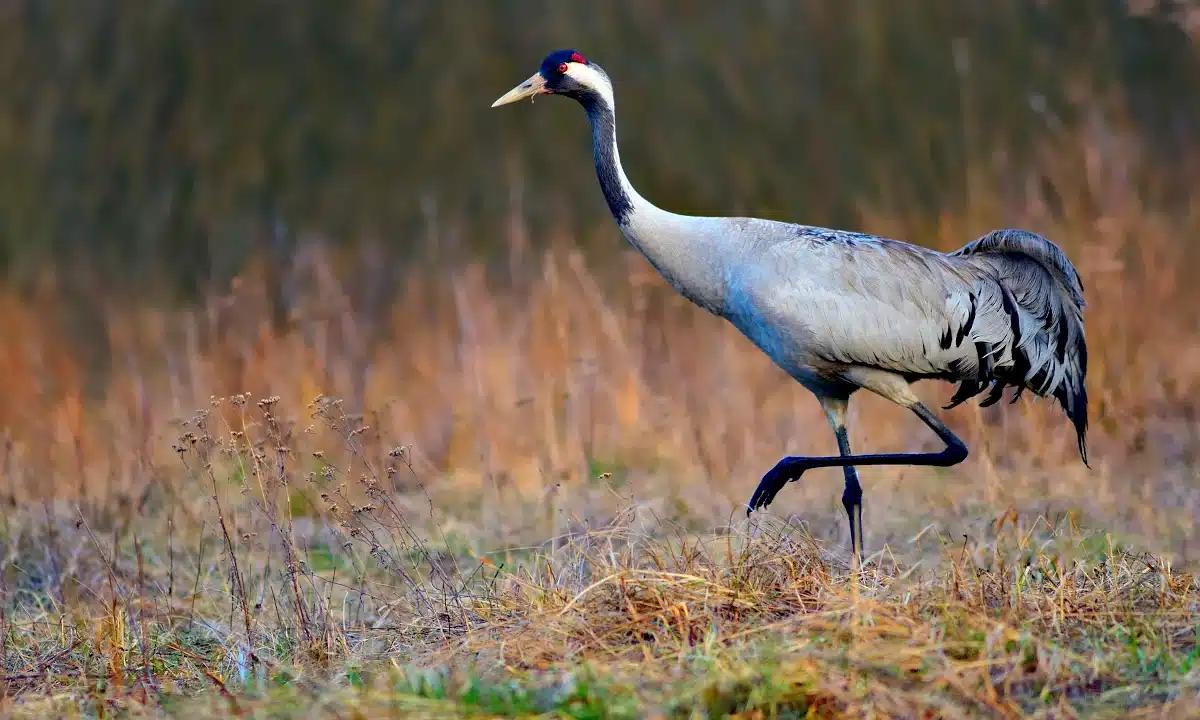
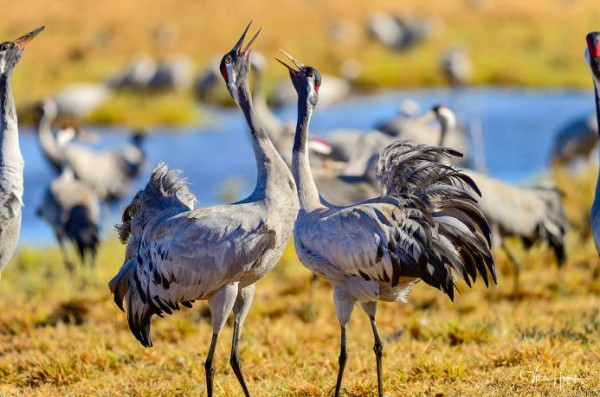
The gray crane is one of the most well-known Ukrainian crane species. It is a large gray bird with long legs and a long neck, a dark head, and a distinctive red patch of skin on the crown. In Ukraine, it is classified as a rare species and is protected not only at the national level but also under international conservation agreements. The steppe crane is even rarer. It is primarily associated with open steppe landscapes and nests in areas with low or sparse vegetation. In Ukraine’s Red Book, this species is classified as “endangered.”
For both species, nesting sites, stopover sites during migration, and wintering grounds are crucial. Therefore, the conservation of a single wetland or steppe area can have significance far beyond the boundaries of that specific territory.
How Cranes Live
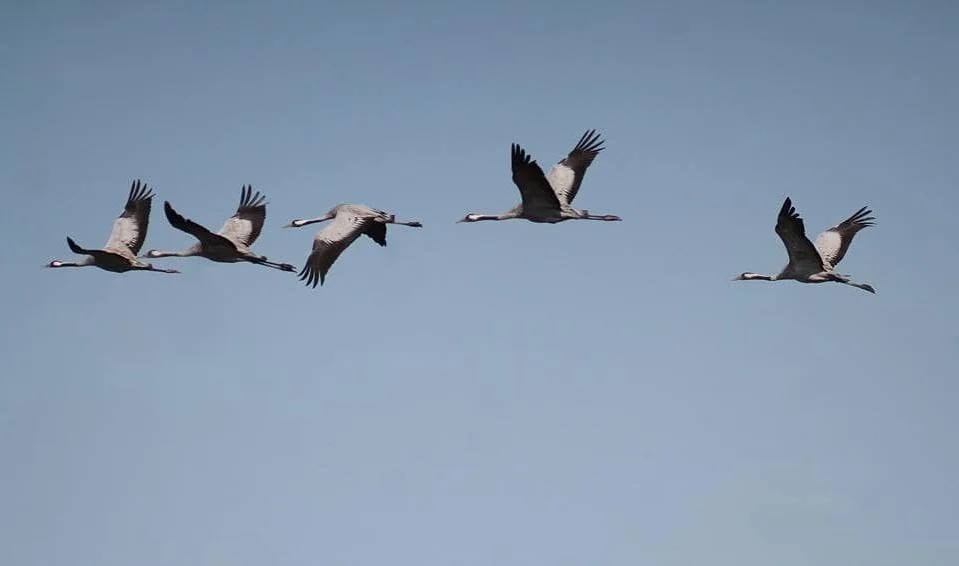
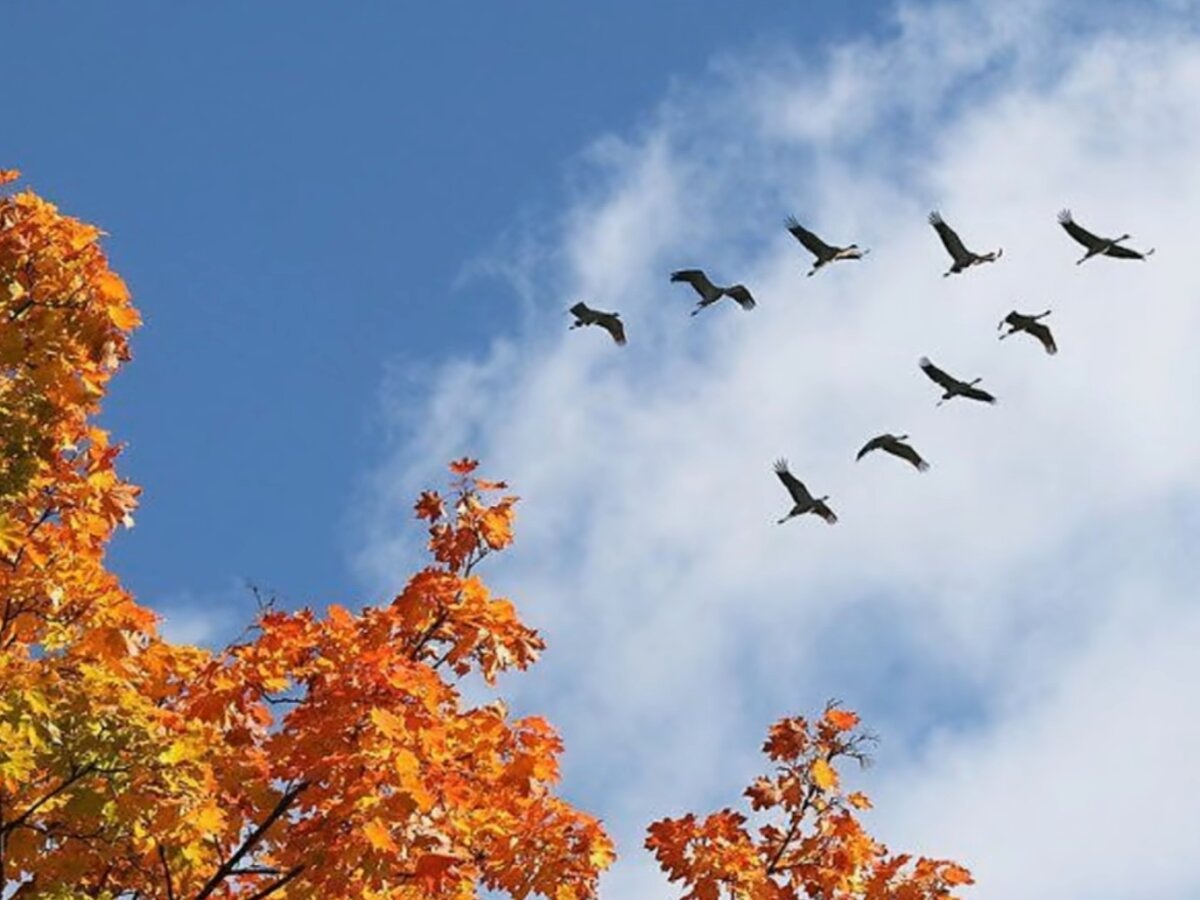
Cranes are known for their seasonal migrations. Before embarking on a long journey, they gather in flocks, put on weight, and take advantage of favorable weather conditions for flight. For some species, the journey between nesting and wintering grounds spans thousands of kilometers. During flight, cranes often form a characteristic V-shape. This formation helps the birds take advantage of air currents and conserve energy. A flock is also easily recognizable by its call—cranes can communicate with one another even when they are barely visible in the sky.

They have a varied diet. Depending on the species and season, this may include seeds, grains, berries, young plants, insects, small invertebrates, and other available food. Many cranes are associated with wetlands. There, they can roost, forage, and hide from danger. At the same time, some species actively use fields and other open areas, especially during migrations. For cranes, it’s not just the places where they breed that are important. Equally important are the areas where they can safely rest and feed during their long journeys. If these areas disappear, the birds are forced to travel greater distances without the opportunity to properly regain their strength.
Cranes form long-term pairs
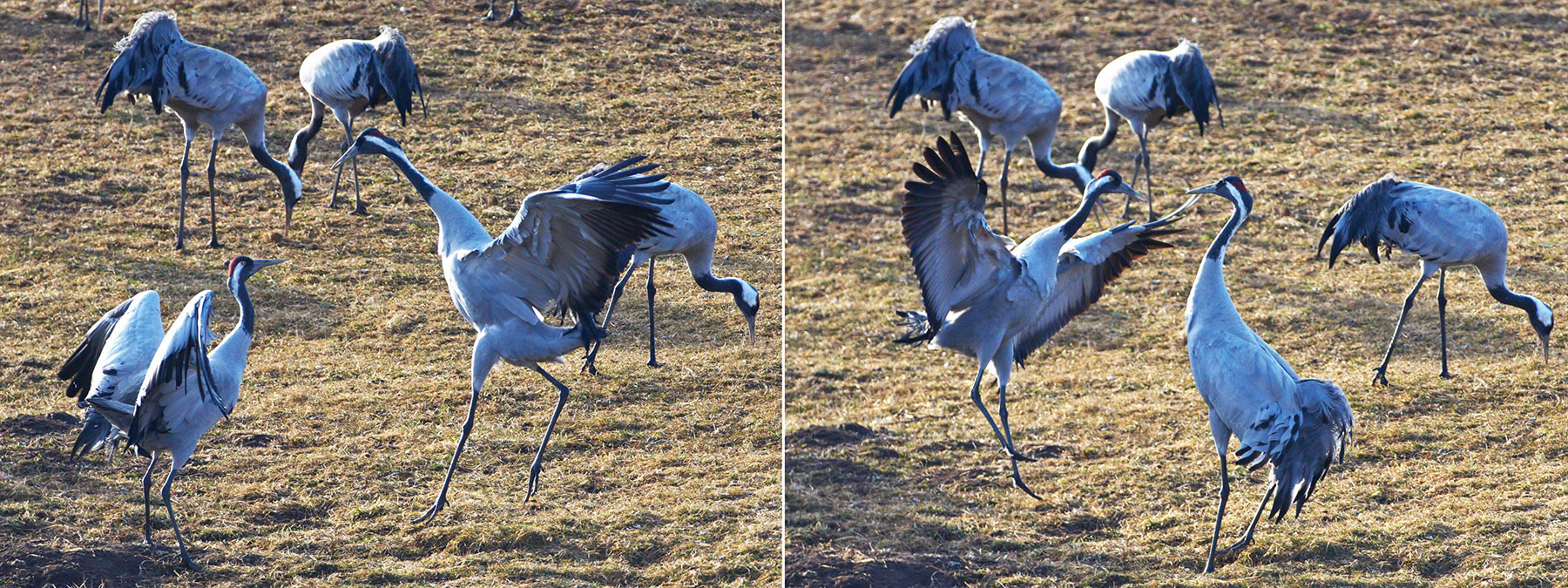
Cranes are known for their complex social behavior. In many species, pairs may remain together for a long time. The male and female work together to raise their young and defend their territory. Crane “dances” are particularly well-known. The birds may hop, spread their wings, bend over, run after one another, and toss blades of grass or other objects into the air. This behavior isn’t limited to the breeding season—it can also serve as a means of communication.
Cranes usually build their nests on the ground. They often choose marshy or open areas for this purpose, where they can easily spot potential predators. Many species lay only a few eggs, so the survival of each chick is crucial for the population. After hatching, the chicks are not completely helpless. They begin to follow their parents fairly quickly and gradually learn to find food. However, they are still far from being able to fend for themselves, so the first few months are especially important.
It is precisely their low reproductive rate that makes some crane species very vulnerable. If adult birds die or their nesting sites are destroyed, the population cannot recover in a single season.
Interesting Facts About Cranes
There are 15 species of cranes in the world. They live on five continents, with the greatest diversity of these birds found in Asia and Africa.
Cranes belong to one of the most vulnerable families of birds. According to the International Crane Foundation, ten of the 15 species are classified as threatened.
Cranes can travel enormous distances. For example, whooping cranes travel approximately 2,500 miles—more than 4,000 kilometers—during their seasonal migrations.
The crane dance is more than just a beautiful spectacle. During this behavior, the birds may hop, spread their wings, bend their bodies, and make sounds. It is part of the cranes’ complex communication system.
Cranes help protect entire ecosystems. When conservationists protect these birds’ habitats, they also preserve wetlands, meadows, steppes, and other areas that are vital to many animal and plant species.
In Ukraine, two species of cranes are listed in the Red Book. These are the gray crane, which has “rare” status, and the steppe crane, which has “endangered” status.
Why the Crane Has Become a Symbol of Hope
In various cultures, the crane holds special significance. It is associated with longevity, loyalty, freedom, wisdom, and positive change. This symbolism has become particularly strong in East Asian countries. One of the most famous symbols is the Japanese origami paper crane. In Japanese culture, there is a tradition of folding a thousand paper cranes—senbazuru. It is associated with wishes for health, longevity, and the fulfillment of dreams.
This story also gained worldwide fame thanks to Sadako Sasaki, a Japanese girl who developed leukemia after the atomic bombing of Hiroshima. She folded paper cranes during her illness. After her death, Sadako’s story became one of the symbols commemorating the victims of the atomic bombing and the pursuit of peace. In conservation efforts, the crane has also become a symbol of its own. It draws attention not only to the birds themselves but also to the places where they live. That is why international conservation organizations refer to cranes as “flags” of nature conservation—they help people more easily see the problems facing the entire ecosystem.
How World Crane Day Is Celebrated
Since this is an unofficial environmental observance, there is no single mandatory way to celebrate. In different countries, events depend on which crane species live in a particular region and what threats they face. One of the most popular activities is birdwatching. People head to natural areas, bodies of water, and sites where cranes gather seasonally. You don’t have to be a professional ornithologist—all you need are binoculars, a camera, and a desire to observe nature.
Lectures, guided tours, exhibitions, educational activities for children, and conservation campaigns are also held. Zoos and nature centers provide information about different crane species, their behavior, and the challenges they face. Another area of focus is supporting organizations dedicated to bird conservation. This can take the form of financial support, participating in volunteer activities, or simply sharing reliable information about the challenges facing cranes.
For children, you can organize a themed lesson or a workshop on making paper cranes. You can also read Ukrainian fairy tales together, draw a bird, or watch a documentary about migration. The most important thing is not to disturb the birds themselves. If you happen to see cranes during a walk, it’s best to observe them from a safe distance and avoid approaching their nests or intentionally startling the flock.
What You Can Do on September 13
You can celebrate this day even without participating in official events. The simplest option is to learn more about the cranes that live in or migrate through Ukraine. You can check out a map of migration routes, read about endangered species, or watch videos of ornithologists at work. Another option is to go for a walk to a place where you can observe birds. If there’s a nature park or nature reserve nearby, find out if they offer guided tours. That way, you can not only see the birds but also learn why that specific area is important to them.

You can make a paper crane or organize a small arts-and-crafts evening with your children. At the same time, it’s worth discussing why wild animals need protection and why preserving wetlands and grasslands is important not only for birds. It’s also helpful to support a conservation organization. Even a small donation or sharing information about its work can help draw attention to the issue.

Or you can simply look up at the sky. If you’re lucky enough to see a flock of cranes, don’t dismiss it as just another sight. Behind that flight lie thousands of kilometers of travel, a complex migration, and the birds’ dependence on safe havens along the entire route.
Why World Crane Day Is Important
Cranes seem like birds that are hard to miss. They’re large, loud, fly in distinctive flocks, and have a very recognizable silhouette. But it’s precisely these conspicuous birds that can be the first to signal that something is wrong with nature. When wetlands, grasslands, and resting areas along migration routes disappear, cranes lose more than just beautiful scenery. They lose places where they can feed, roost, and raise their young. Over time, this affects population sizes.
According to current estimates, ten of the 15 crane species are threatened with extinction. This means that the issue of their conservation remains highly relevant. At the same time, the history of individual species shows that conservation efforts can yield results. That’s why September 13 is not just an occasion to admire these beautiful birds. It’s an opportunity to remember that nature needs concrete action: protected areas, responsible land use, safe migration routes, and a respectful attitude toward wildlife.

And if you see a flock of cranes in the sky on this day, it’s worth pausing for a moment. These birds may fly across several countries and continents, and their future depends on how well people preserve the habitats they use throughout the year.


