
September 15, 2026 — The Day After the Feast of the Exaltation of the Cross: What Does This Day Mean?

On September 15, 2026, the Orthodox calendar marks the beginning of the afterfeast of the Exaltation of the Precious and Life-Giving Cross of the Lord. It continues the prayers and liturgical traditions of the great feast of the Exaltation, which is celebrated on September 14. The post-feast period lasts several days and concludes with the closing of the feast on September 21, when the church calendar finally brings this festive period to a close.
The post-feast period is a special time in the church calendar when a major feast does not end immediately after a single day. For a certain period afterward, the Church continues to commemorate the event through divine services, prayers, and church hymns. In this way, the faithful have the opportunity not only to celebrate the feast on a specific date but also to reflect on its meaning for several days afterward. In the case of the Exaltation of the Holy Cross, the central theme remains the Honorable and Life-Giving Cross of the Lord.
In 2026, September 15 is the first day of the post-feast period of the Exaltation. It will last through September 20, and on September 21, the feast will be concluded. This order is established in the Orthodox liturgical tradition: a major feast is followed by a period of its continuation, and then by a separate day of conclusion. Therefore, September 15 should not be viewed as a new, separate major feast equivalent to the Exaltation of the Cross. It is a continuation of the festive cycle that began the day before. Texts and hymns dedicated to the Cross are still heard during divine services. Believers continue to reflect on its significance for the Christian faith.
When Is the Afterfeast Celebrated in 2026?
In 2026, the Exaltation of the Holy and Life-Giving Cross of the Lord falls on Monday, September 14. The following day, September 15, the post-feast period begins. It will last six days—from September 15 to 20. September 21 is the Day of Commemoration of the Exaltation, after which this liturgical period concludes. This sequence is clearly indicated in the church calendar. September 14 marks the Exaltation itself, September 15–20 are designated as the post-feast period, and September 21 is the Feast of the Deposition. In other words, September 15 is not a random date, but the first day of a distinct period following the main feast.
At the same time, there may be differences among various church calendars depending on tradition and calendar style. For example, the calendar of the Orthodox Church in America also designates September 15–21 as the post-feast period and September 21 as the day of the commemoration. For Ukrainian readers, it is important to follow the modern calendar, according to which the OCU celebrates the Exaltation of the Holy Cross on September 14. That is why the post-feast period begins on September 15. In Old Style calendars, the corresponding dates are shifted by 13 days.
What Is the Exaltation of the Holy Cross?
To understand the significance of the post-feast period, it is worth recalling why the Church venerates the Cross so highly in the first place. The Exaltation is dedicated to the Christian tradition associated with the discovery of the Cross on which Jesus Christ was crucified. According to church tradition, this occurred in Jerusalem in the 4th century thanks to Saint Helena, the Equal-to-the-Apostles Queen and mother of Emperor Constantine the Great.
According to tradition, after the Christianization of the Roman Empire, people began searching for sites associated with the earthly life of Jesus. Christian churches were later built on Calvary and near the Holy Sepulcher. The historic consecration of the Church of the Holy Sepulcher in Jerusalem took place on September 13, 335. This event is also linked to the establishment of the tradition of honoring the Cross in September.
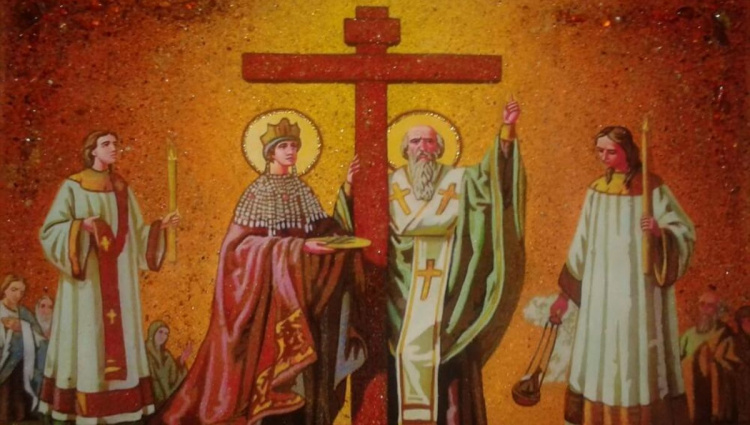
The very word “Exaltation” means lifting up or raising. In liturgical tradition, this is associated with the solemn lifting of the Cross before the faithful. In the early Church, this rite held great significance, as the Cross was perceived not merely as an object but as a sign of Christ’s victory over death. The post-feast period continues this very theme. The Church does not cease to focus on the Cross once September 14 ends, but continues for several more days to remind the faithful of its spiritual significance. Therefore, on September 15, the liturgical services still have a clear connection to the Exaltation of the Cross.
Why Does the Afterfeast Last Several Days?
In church tradition, major feasts often have more than just one main day. They may be preceded by a pre-feast period, when the faithful prepare for the event, and followed by a post-feast period, when its meaning continues to be celebrated in the divine services. This helps to perceive a church feast not as a single date, but as an entire period. The post-feast period of the Exaltation of the Cross lasts seven days, counting from September 15 to 21, including the day of the conclusion of the feast. In the Orthodox tradition, the actual post-feast days fall on September 15–20, while September 21 has a separate name—the conclusion of the feast.
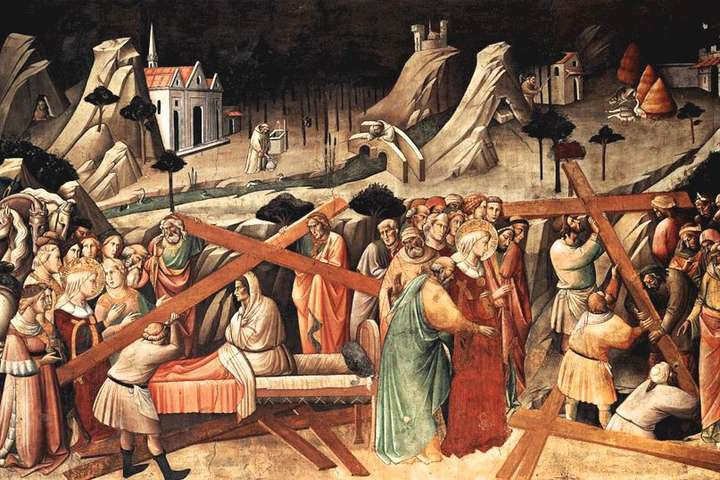
During the post-feast period, the church continues to use special liturgical texts related to the Exaltation of the Cross. This means that the theme of the Cross remains central even after the liturgical calendar has moved on to the next commemorative dates. The services also commemorate the saints whose feast days fall on those respective days. In other words, the post-feast period is a kind of continuation of the main event. It provides an opportunity to reflect once more on its meaning rather than moving immediately on to the next theme in the church calendar.
How Divine Services Are Conducted on September 15
On the day of the afterfeast, liturgical texts dedicated to the Exaltation continue to be recited in churches. According to Orthodox tradition, special afterfeast hymns may be used during weekday Liturgies after the Small Entrance. The Orthodox Church in America explicitly states that from September 15 until the end of the feast, the corresponding text related to the Cross is sung during weekday Liturgies after the Small Entrance.
For the faithful, this means that the atmosphere of the great feast continues even after September 14. If a person comes to church on September 15, they are still in the period of liturgical veneration of the Cross. The prayers and hymns serve as a reminder of Christ’s sacrifice on the Cross and its significance for Christians. It is especially important to note that the post-feast period is not merely a formal extension of the feast date. Its purpose is to help people reflect once more on what the Church proclaims on the Feast of the Exaltation of the Holy Cross. That is why the image of the Cross remains central as a sign of sacrificial love, victory over death, and hope.
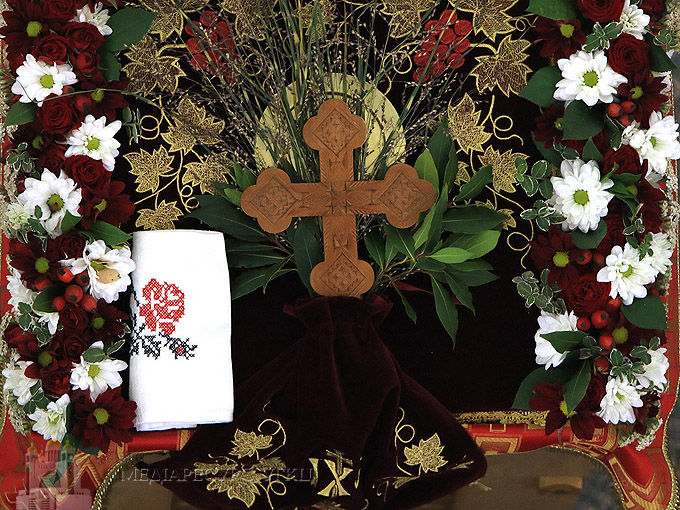
The UGCC also emphasizes the spiritual significance of the Cross. The materials prepared by the Synod of Bishops of the UGCC for the Feast of the Exaltation of the Holy Cross in 2026 include, in particular, a homily by His Beatitude Sviatoslav and remarks by the bishops on the Cross as a sign of God’s love, suffering, and victory.
Is fasting required on September 15?
It is important not to confuse the day after the feast with the Feast of the Exaltation itself. September 14 is a strict day of fasting in the Orthodox tradition. This is connected to the great feast of the Exaltation of the Cross itself. September 15 no longer has this status simply because it is the day after the feast. In the calendar for September 15, 2026, the Orthodox Diocese of Vinnytsia and Bar does not designate September 15 as a fasting day, and liturgical calendars also list this day as a regular day following the feast.
At the same time, specific dietary rules may depend on church tradition, the day of the week, and a person’s individual circumstances. Therefore, one should not automatically apply the strict rules of September 14 to all days of the post-feast period. For Christian life, it is not just the list of foods that matters. The post-feast period is, above all, a time for prayer, reflection, and spiritual focus. Therefore, even on an ordinary day, a person can continue the celebration without unnecessary fuss.
What traditions are associated with the post-feast period?
The main tradition of the post-feast period is attending church services. Believers can go to church, pray before the cross, light a candle, and give thanks to God. For many, this is also a time for personal prayer for their family, health, and peace. During these days, people continue to pay special attention to the Christian symbol of the Cross. At home, they may pray before a cross worn around the neck or displayed in the home. At the same time, church tradition does not reduce the post-holiday period to mere household rituals or magical acts.
That is precisely why one should approach folk omens, superstitions, and claims such as “what you absolutely must do” on September 15 with caution. They may exist in folk culture, but they are not the essence of the church’s post-feast period. The foundation remains worship and prayer. Also, after the Exaltation, believers can devote more attention to charity and helping others. This is not a separate mandatory ritual, but it fully corresponds to the Christian understanding of the Cross as sacrificial love. Helping someone, supporting those going through a difficult time, or simply being more attentive to loved ones is one way to bring the meaning of the feast into everyday life.
What the Cross Symbolizes During This Time
In Christianity, the Cross has a dual meaning. On the one hand, it serves as a reminder of the suffering and death of Jesus Christ. On the other hand, it is a sign of victory over death and hope for the Resurrection. That is why, in church tradition, the Cross is not viewed merely as a symbol of tragedy. This explains why the spirit of the holiday continues to resonate even after the main celebration has ended. Christians are reminded that the meaning of the Cross does not end with the crucifixion. It combines pain, sacrifice, love, and victory.
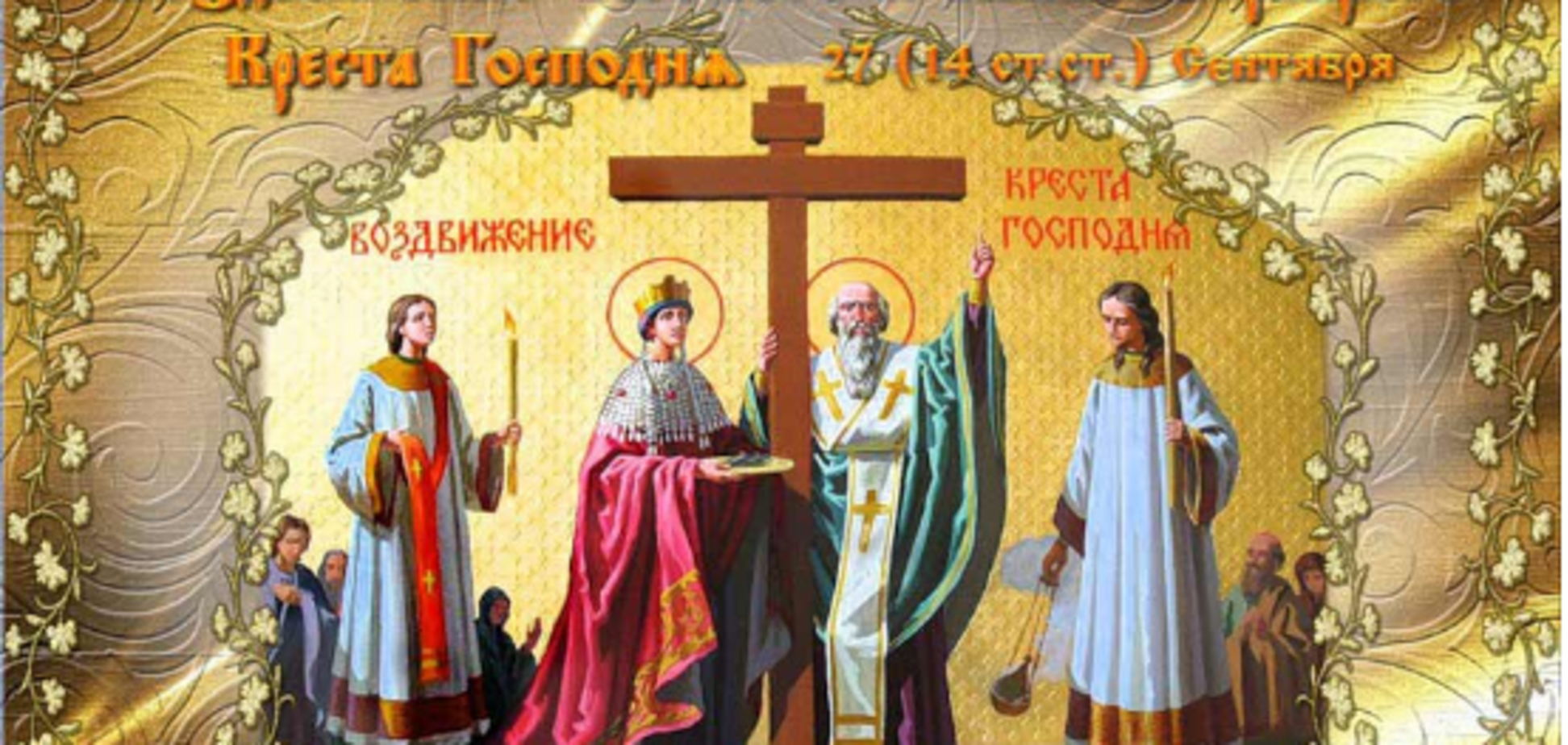
In the Ukrainian Greek Catholic Church’s materials for the Exaltation of the Cross in 2026, this idea is also emphasized in sermons. In particular, the Cross is described as a sign of love, suffering, and victory, and it is stressed that it is more than just a symbol. For modern people, this image can also have a very practical meaning. It reminds us that difficult circumstances do not always mean the end of the story. In the Christian understanding, even through suffering, there can be a path to hope and new life.
Interesting Facts About the Post-Feast Period of the Exaltation of the Cross
The first fact is that the post-feast period has specific boundaries. In the Orthodox tradition, it lasts from September 15 to 20, and September 21 marks the Commemoration of the Exaltation. In other words, the last day of this cycle has a distinct liturgical status.
Second fact: the post-feast period begins immediately after the major feast. The Exaltation of the Cross falls on September 14, and as early as September 15, the church texts continue the theme of the Cross. Therefore, these dates effectively form a single large liturgical cycle.
The third fact is that there is also a special period before the Exaltation. September 13 in the Orthodox calendar is the pre-feast day. Thus, a sequence is formed around September 14 consisting of the preparation, the feast itself, and several days of its continuation.
The fourth fact: the post-feast period does not signify yet another separate feast. It is, in fact, a continuation of the major event in the liturgical calendar. For this reason, September 15 is listed in the church calendar as “Afterfeast of the Exaltation,” rather than a repetition of the main feast’s name.
Fifth fact—during this period, other saints are also commemorated. For example, on September 15, the Orthodox calendar honors the Great Martyr Nikita of Gothia. However, this liturgical day simultaneously remains part of the post-feast of the Exaltation.
Sixth fact—September 21 marks the conclusion of the feast. This is not merely the last day on the calendar. The conclusion holds a distinct liturgical significance: for the final time within this cycle, the Church solemnly returns to the theme of the Exaltation. In the OCU calendar for 2025, September 21 is specifically designated as the “Closing of the Feast of the Exaltation of the Honorable and Life-Giving Cross.”
What to Do on September 15
September 15 can be spent peacefully, without unnecessary fuss. If possible, it’s worth visiting a church and participating in the service. You can also set aside time for personal prayer or read passages from the Gospel related to Christ’s sacrifice on the Cross. This day is also a good time to reflect on your own actions. Christian tradition views the Cross not merely as a historical artifact, but as a reminder of love, sacrifice, and human responsibility toward others. Therefore, the day following the feast can be spent not only in church but also in performing specific acts of kindness.
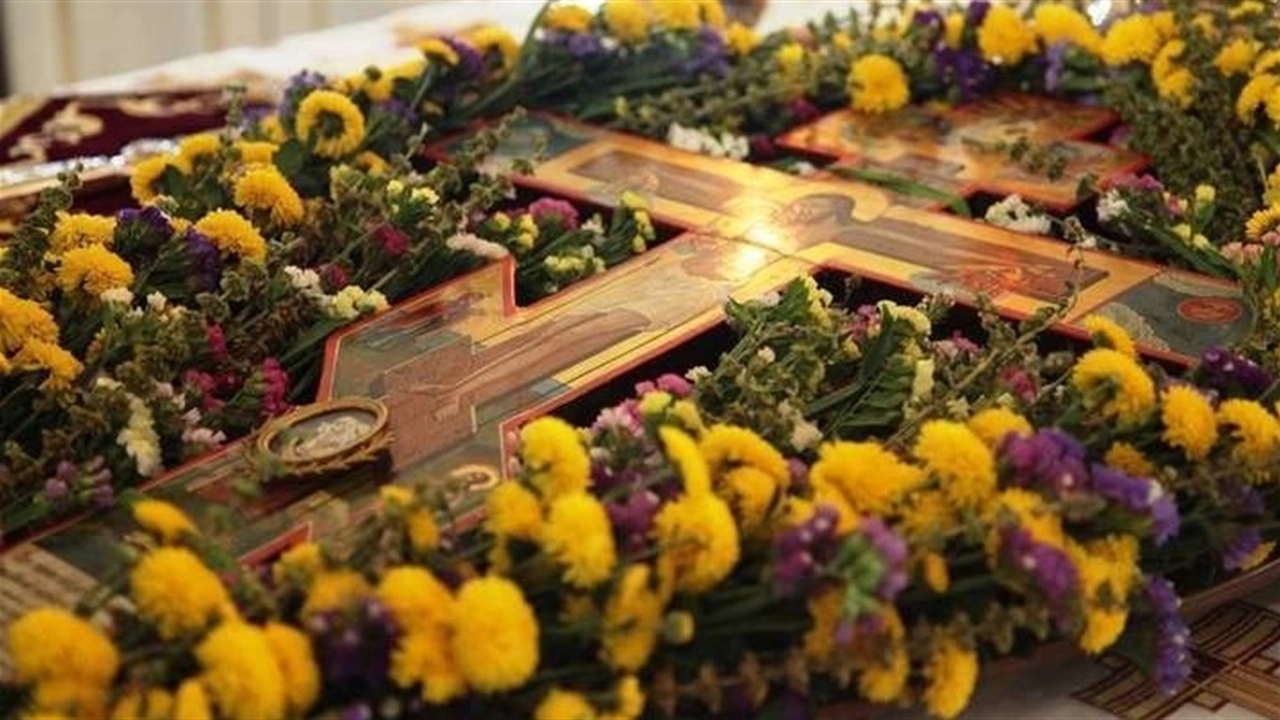
One should not look for magical omens in this date or try to turn the church tradition into a set of mandatory daily rituals. The church’s meaning of the day is much simpler—to continue praying and reflecting on the significance of the Cross. For each person, this can be a personal time of silence, prayer, or conversation with loved ones. September 15, 2026, marks the first day of the post-feast period following the Exaltation of the Holy and Life-Giving Cross of the Lord. It will last until September 20, and September 21 marks the conclusion of the feast. During these days, the Church continues to remind us of the Cross as a sign of sacrificial love, faith, hope, and the victory of life over death.


