
Holiday on August 21, 2026—Feast of the Apostle Thaddeus: What Not to Do and the Main Traditions
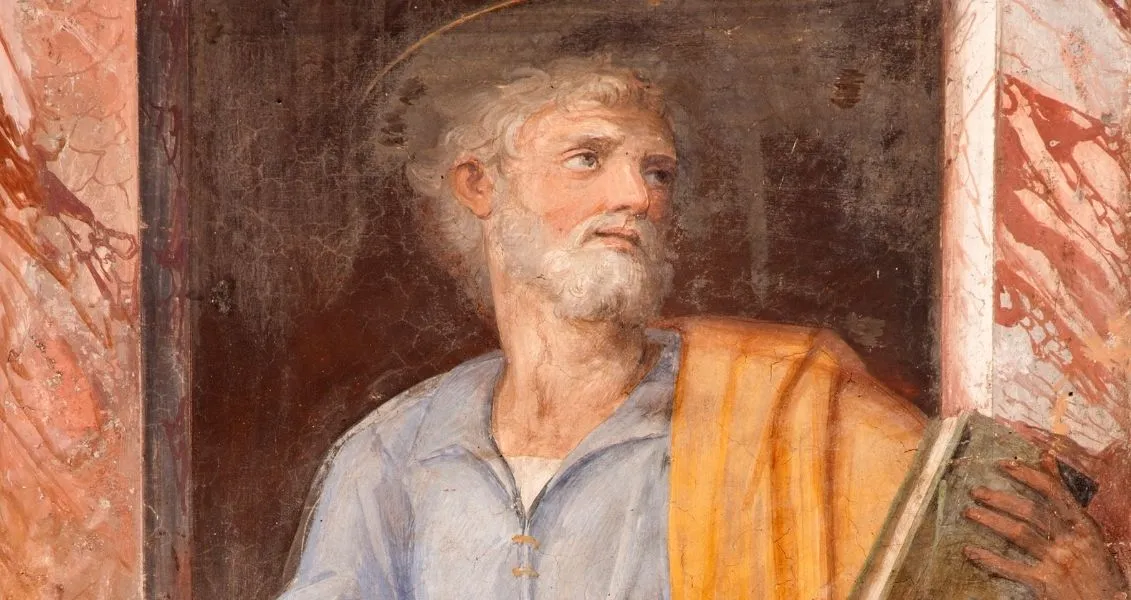
On August 21, 2026, Orthodox Christians honor Thaddeus, one of the Seventy Apostles and one of the first preachers of Christianity. According to church tradition, Thaddeus preached in Syria and Mesopotamia, and his mission in Edessa became particularly well-known, where he is said to have healed King Abgar and contributed to the spread of Christianity. In folk tradition, this day has also been associated with peace, household chores, the harvest, and various omens.
The feast day of Thaddeus, one of the Seventy Apostles, is celebrated in Ukraine on August 21 according to the new church calendar. This is the date listed in the official Orthodox calendar of the Orthodox Church of Ukraine for the year 2026. In the OCU calendar, the saint is listed as “Apostle Thaddeus of the Seventy (c. 44).” On this same day, the Church commemorates the martyr Vassa and her children—Theognis, Agapias, and Pista—as well as the Venerable Abraham the Diligent of the Caves.
For those who follow the Old Style calendar, this date falls on September 3. This is why references to September 3 can be found in old calendars and materials on folk traditions. This is not a different holiday, but the same church commemoration, simply according to a different calendar system. The OCU switched to the New Julian calendar for fixed feasts effective September 1, 2023. Therefore, in 2026, the correct date for the New Style calendar will be August 21.
Who Was the Apostle Thaddeus?
Thaddeus was one of the 70 apostles whom Christ sent to preach the Gospel. The Gospel of Luke states that Jesus sent His disciples ahead of Him to preach in various cities and places. Church tradition counts Thaddeus among this group. He is often called Thaddeus of Edessa, since a significant portion of the traditions regarding his life and preaching are associated with Edessa. Edessa was an ancient city in Mesopotamia, which is today associated with the territory of modern-day Turkey.
Thaddeus should not be confused with Judas Thaddeus, one of the Twelve Apostles. In Christian tradition, they are distinct figures, although they are often mistakenly identified with one another due to the similarity of their names. That is why the church calendar refers to him as Thaddeus, one of the Seventy. According to tradition, before becoming a disciple of Christ, Thaddeus heard a sermon by John the Baptist. His words made such an impression on him that Thaddeus was baptized and remained in the Holy Land. Later, he became one of Jesus’ disciples and set out to preach the Christian gospel.
Why is Thaddeus considered one of the first preachers?
What sets Thaddeus apart is that he did not belong to the Twelve Apostles, but to the broader circle of Christ’s disciples. According to church tradition, after Jesus’ Ascension, he set out to preach in the eastern lands. His name is particularly associated with Mesopotamia, Syria, and Edessa. There, he preached Christianity to people who had not previously been followers of Christ.
This was a time when Christianity was just beginning to spread. Christian communities were small, and preachers often faced misunderstanding and persecution. Therefore, the apostles’ missionary journeys were not merely religious travels but a dangerous undertaking. According to church tradition, Thaddeus did not limit himself to preaching in just one city. He continued to travel and tell people about Christ. It was thanks to such preachers that Christianity gradually spread beyond the borders of Judea.
The Story of Thaddeus and King Abgar
One of the most famous stories associated with Thaddeus tells of King Abgar of Edessa. According to church tradition, the ruler fell gravely ill and heard about Jesus and the miracles He performed. Abgar reportedly appealed to Christ, asking Him to come to Edessa and heal him. According to the tradition, Jesus did not go to Edessa in person, but promised to send one of His disciples to the king. After the Ascension, Thaddeus became that disciple. He arrived in the city, preached Christ’s teachings, and, according to tradition, healed Abgar.
The story of Jesus’ correspondence with Abgar is known from the work of the historian Eusebius of Caesarea. A later Syriac text, *The Teachings of Addai*, expands on this story and identifies Addai—who is identified with Thaddeus—as the disciple who came to the king after the Ascension.
At the same time, it is important to maintain journalistic accuracy here. The story of Jesus’ correspondence with Abgar and Thaddeus’ mission is transmitted by church tradition as a legend, not as an event that modern historical science can fully confirm. Researchers point out that the narrative contains legendary elements, and the texts that describe it in detail were recorded much later than the events in question.
Therefore, in materials about the saint, it is more accurate to use phrases such as “according to church tradition,” “according to legend,” or “as the story goes” when referring to the healing of Abgar and the correspondence with Jesus.
What Is Known About Thaddeus’s Preaching in Edessa
According to tradition, after healing the king, Thaddeus began preaching among the inhabitants of Edessa. Some of the people converted to Christianity, and the new community became important for the further development of the Christian tradition in the region. It is this story that is linked to one of the oldest accounts of the spread of Christianity east of Palestine. Edessa did indeed later become one of the major centers of Syrian Christianity.
But there is a historical detail worth noting here as well. Modern researchers believe that the final establishment of Christianity in Edessa occurred later than described in the legend of Thaddeus and Abgar. The earliest evidence points to the active spread of Christianity in the region as early as the 2nd century, and the Christian tradition associated with the ruling house of Edessa is linked primarily to King Abgar IX. Therefore, the image of Phaddeus in church tradition is, above all, that of one of the early preachers through whom, according to tradition, Christianity came to Edessa.
Travels and the Final Years of His Life
After Edessa, according to church tradition, Thaddeus continued to preach in other eastern lands. His missionary activity is associated with Syria, Mesopotamia, and Phoenicia. Like many other early Christian preachers, he reportedly faced resistance from the pagan population. Christian communities were small, and preaching the new faith could lead to persecution.
According to church tradition, Thaddeus died a martyr’s death. Different sources differ regarding the specific location and circumstances of his death. For this reason, the details of the saint’s final years are best understood as part of church tradition rather than as an indisputably established historical fact. For the Christian tradition, what matters most here is not the legend of his death itself, but the example of his fidelity to his faith. Thaddeus is remembered as a man who continued to preach even when it was dangerous to do so.
Folk Traditions on August 21
In folk tradition, August 21 was sometimes referred to as “Fadei the Preacher.” This day was associated not only with the church commemoration of the apostle but also with the completion of summer work and preparations for fall. At the same time, it is important to distinguish between church tradition and folk beliefs. The Orthodox calendar of the OCU commemorates the Apostle Thaddeus, but superstitions about dreams, money, guests, or certain everyday prohibitions belong specifically to folk tradition. The Church has not established any specific mandatory rules such as “you must not receive guests” or “you must not spend money.”
According to folk beliefs on this day, people were advised to pay more attention to their homes and loved ones. People tried not to quarrel, not to air their grievances, and not to spoil each other’s moods. Such advice was typical for many calendar days and reflected the ancient belief that the beginning or end of an important period of the year should be spent in peace. August 21 was also a time to focus on household matters. At the end of summer, people checked their supplies, finished seasonal work, and prepared for the tasks of fall. Therefore, the day fit well into the rural calendar.
What folk beliefs advised against doing
Some folk sources advise against spending large amounts of money or depleting supplies unnecessarily. It was believed that excessive spending on this day could lead to shortages in the future. Today, this should be viewed precisely as a folk belief, rather than a church prohibition. There was also a belief that it was best not to host lavish feasts on this day. People tried to stay home or spend time with their immediate family. Some descriptions of folk traditions even mention that one should not visit others or invite many people over, so as not to provoke arguments.
Another tradition is related to peace and tranquility. On August 21, people were advised not to argue, not to offend others, and not to harbor anger. For modern people, this advice may still be relevant regardless of whether they believe in superstitions: it’s entirely possible to spend the saint’s memorial day more peacefully by spending time with family. People also believed that dreams on this night could be significant or even prophetic. People tried to remember what they saw in their dreams and look for clues about the future in them. However, there is no scientific evidence that dreams on this particular day can predict the future.
Superstitions for Fadey’s Day
Folk omens for August 21 were mainly related to the weather and the approach of fall. They observed nature to understand what the rest of the season would be like. If the day was warm and dry, it was seen as a good sign for the end of summer. If, on the other hand, it started to rain and turned sharply colder, people expected autumn to arrive sooner.
Particular attention was paid to the morning weather, dew, and animal behavior. Such observations were part of the traditional rural calendar, when weather forecasts depended not on a mobile app but on years of observing nature. Of course, modern people shouldn’t take such folk signs as an accurate weather forecast. It’s interesting to view them first and foremost as part of Ukrainian folk culture and a way in which our ancestors tried to explain changes in nature.
How the Feast of the Apostle Thaddeus Is Observed
For believers, the main way to observe this day is through prayer and participation in church services. In church, the Apostle Thaddeus and other saints whose feast days fall on August 21 are commemorated. People can turn to the saint with a personal prayer, asking for help for themselves and their loved ones. It is important to remember, however, that Christian tradition does not reduce a saint’s feast day to a set of omens and prohibitions.
This day can also be spent with family. It is not necessary to throw a big feast or buy expensive gifts. It is much more appropriate to spend time with loved ones, help those in need, or simply do a good deed. If there is someone in the family named Thaddeus, August 21 can be an occasion to congratulate them on their Name Day. The name is rare today, so this date may be especially meaningful to the person bearing it.
What the Story of the Apostle Fadei Teaches Us
The story of Thaddeus is, above all, one of perseverance. He was not part of the inner circle of the Twelve, but, according to church tradition, he received his mission and set out to preach far from Jerusalem. His image is associated with mission and service. Thaddeus was not a ruler or a famous politician, but his name has been preserved in Christian tradition through his preaching and his help to others.
Of particular interest is the saint’s connection to Edessa. It is precisely through the story of Thaddeus and Abgar that Christian tradition has preserved one of the most famous accounts of the early spread of Christianity in the East. This story has endured through the centuries and become part of Syrian Christian culture. At the same time, this story clearly illustrates why it is important to distinguish between faith and historical reconstruction. Church tradition may be important to believers, but its specific details cannot always be confirmed by independent historical sources. That is why it is appropriate to refer to such events using the phrases “according to tradition” or “according to church tradition.”
Interesting Facts About the Apostle Thaddeus
Thaddeus was one of Christ’s 70 disciples. The Gospel of Luke mentions a group of disciples whom Jesus sent out to preach. Church tradition counts Thaddeus among them.
He should not be confused with Judas Thaddeus. These are different figures in Christian tradition. It is precisely the similarity of their names that often causes confusion.
Edessa is associated with Thaddeus. According to tradition, he came to the city after Christ’s Ascension and healed King Abgar. This story has become one of the most famous Syrian Christian traditions.
The story of the correspondence between Jesus and Abgar has ancient origins, but its historical accuracy has not been proven. The earliest known record of this story is attributed to the church historian Eusebius of Caesarea. Later, Syrian and Greek texts expanded upon the story.
In the OCU calendar for 2026, Thaddeus is commemorated on August 21. The official calendar refers to him as “Thaddeus, one of the Seventy Apostles” and indicates the approximate date of his death—around the year 44.
What to Remember on August 21
August 21 is, first and foremost, the day of remembrance for Thaddeus, one of the Seventy Apostles. In church tradition, he is remembered as one of the early preachers of Christianity, whose ministry was associated with Edessa, Syria, and Mesopotamia. The folk calendar adds its own omens and beliefs to this date. Dreams, prohibitions against unnecessary spending, advice not to quarrel, and spending the day with family—these are part of folk culture, not mandatory church rules.
A legend about King Abgar holds a special place in the story of Thaddeus. According to this legend, the apostle came to Edessa, healed the ruler, and began preaching among the local residents. Historians caution, however, that the legendary part of this story cannot be considered a fully confirmed historical event. For believers, this day can be an opportunity for prayer, attending church, and doing good deeds. For everyone else, it’s a chance to learn more about the early history of Christianity and the folk traditions that have shaped the Ukrainian calendar over the centuries.
In 2026, the Feast of the Apostle Thaddeus falls on Friday, August 21. According to the Old Style calendar, this commemoration is observed on September 3. And the most important thing to remember about this day is that the church date has a specific origin, while folk omens and taboos are best viewed as cultural heritage rather than mandatory rules of conduct.


