
September 3, 2026 Holiday — British Merchant Navy Day: Why the Red Flag Is Raised
On September 3, the United Kingdom observes Merchant Navy Day. On this day, the country honors the sailors who lost their lives during wars, thanks those who continue to work on merchant ships today, and reminds people just how heavily the country relies on maritime transport.
Merchant Navy Day in the United Kingdom is observed annually on September 3. In 2026, it falls on Thursday, September 3. It is a day of remembrance and gratitude for British merchant seamen. This refers not to the military navy, but to civilian seafarers who work on merchant ships and transport cargo between countries.

The merchant marine is of immense importance to Britain, as the island nation relies heavily on maritime trade. According to The Seafarers’ Charity, about 90% of the goods traded by the United Kingdom are transported by sea. This means that seafarers’ work is directly linked to the country’s supply of food, fuel, medicine, raw materials, and other goods.

Merchant Marine Day has two important aspects. The first is to honor the memory of those who died while on duty, especially during the world wars. The second is to recognize today’s seafarers, without whom international trade simply could not function.
Why September 3?
The date of September 3 is linked to the start of World War II. On September 3, 1939, Great Britain declared war on Nazi Germany. On that same day, one of the first major tragedies of the British merchant marine during the war occurred. The German submarine U-30 torpedoed the British passenger liner SS Athenia, which was sailing from Great Britain to Canada.
The ship was attacked just a few hours after the declaration of war. There were more than 1,400 people on board. As a result of the attack, more than 110 passengers and crew members were killed, and the ship sank the following day. British and Australian official sources refer to the SS Athenia as the first Allied merchant ship sunk during World War II. That is why September 3 has become a symbolic date for honoring merchant seamen. It serves as a reminder of just how dangerous their work was during the war. Yet merchant seamen were not soldiers. They transported cargo essential to the country, but because of the war, their routes became combat zones.
What Role Did the Merchant Marine Play During the War?
During World War I and World War II, merchant seamen carried out missions without which the military and the civilian population could not have functioned normally. They transported food, fuel, military equipment, ammunition, raw materials, and other essential cargo. Ships sailed across oceans and seas, where submarines, mines, aircraft, and other military threats could lie in wait for them.

The Battle of the Atlantic was particularly dangerous. It lasted for nearly the entire duration of World War II and became a struggle for control of the sea lanes through which vital cargo reached Britain. According to the Government of Western Australia, during the Battle of the Atlantic, approximately 3,500 Allied merchant ships and 175 military vessels were sunk, and more than 72,000 Allied military sailors and civilian merchant seamen lost their lives.
The losses suffered by the British merchant fleet were enormous. According to the British government, more than 20,000 merchant seamen died during World War II alone. Their work was, in fact, part of the country’s war effort, even though the seamen themselves were not members of the armed forces. They continued to sail these routes even when they knew they might not return home.
How Merchant Navy Day Came to Be
Merchant Navy Day was officially established in the United Kingdom in 2000. It was created as an annual occasion for the country to honor the contributions of merchant seamen of the past and draw attention to the work of the modern merchant fleet. The idea behind the holiday isn’t limited to military history. Organizers emphasize that the merchant marine remains vital even in peacetime.
Sailors transport goods between continents, keep ports running, and help maintain international supply chains. Their work is particularly noticeable when major crises arise and the normal operation of maritime routes is disrupted.
For example, during the COVID-19 pandemic, merchant seafarers continued to work, although due to restrictions, many of them were unable to return home on time or change crews. The Seafarers’ Charity also highlights current risks associated with the war in Ukraine and the dangerous situation in the Strait of Hormuz. Therefore, today’s Merchant Marine Day is not just a remembrance of the past. It is also a reminder of the people who continue to work at sea right now.
The Red Ensign has become the main symbol of the day
The main symbol of Merchant Navy Day is the Red Ensign. It is also often referred to by its unofficial nickname, the “Red Duster.” The Red Ensign is the official flag of the British merchant navy. It is used by British merchant ships, as well as vessels registered in countries and territories that are part of the Red Ensign Group. This group includes, in particular, Great Britain, the Isle of Man, Guernsey, Jersey, and a number of British overseas territories.
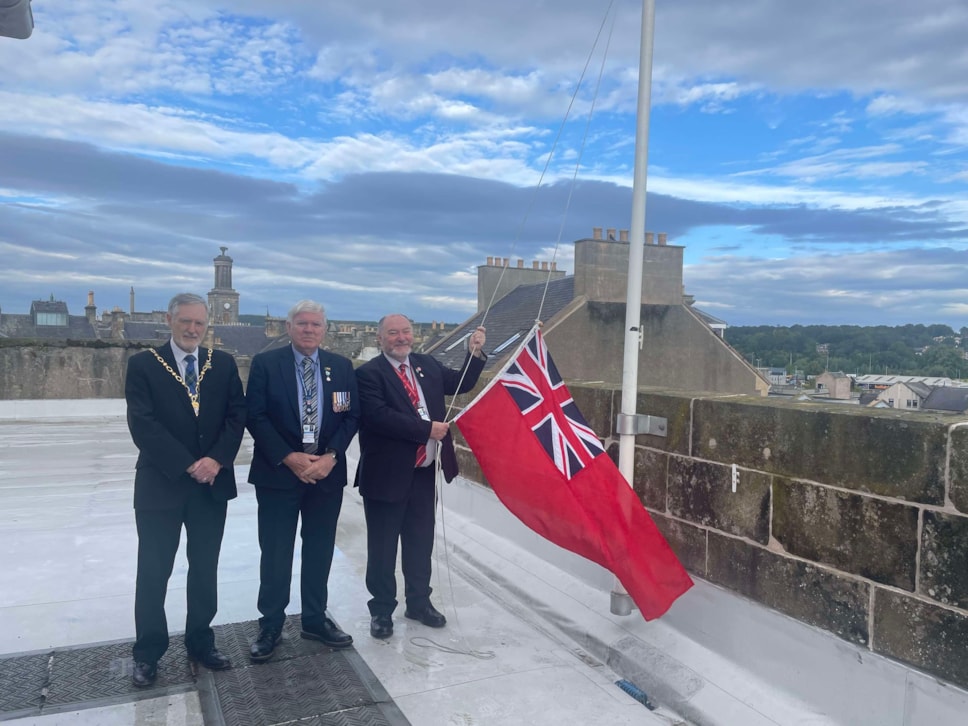
It is this flag that is flown every year on September 3 at government institutions, in cities, near ports, on public buildings, and on private homes. The British government has repeatedly supported this tradition. For example, the Department for Transport has traditionally flown the Red Ensign over its headquarters in London.
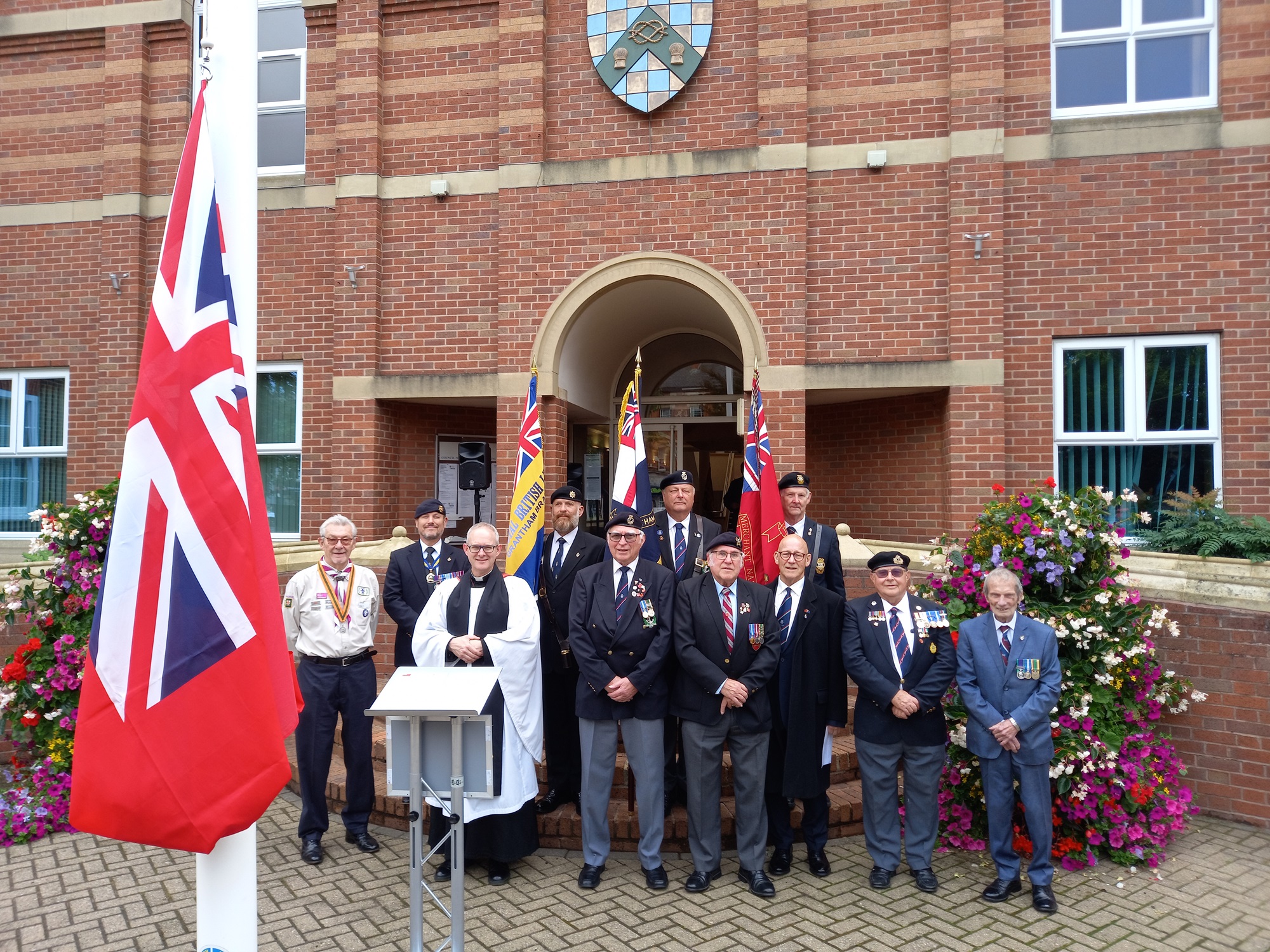
The College of Heralds of Great Britain also specifically notes that September 3 is a special day for flying the Red Ensign. Government agencies associated with the maritime sector may fly it on their buildings on Merchant Navy Day.
How Merchant Navy Day Is Celebrated
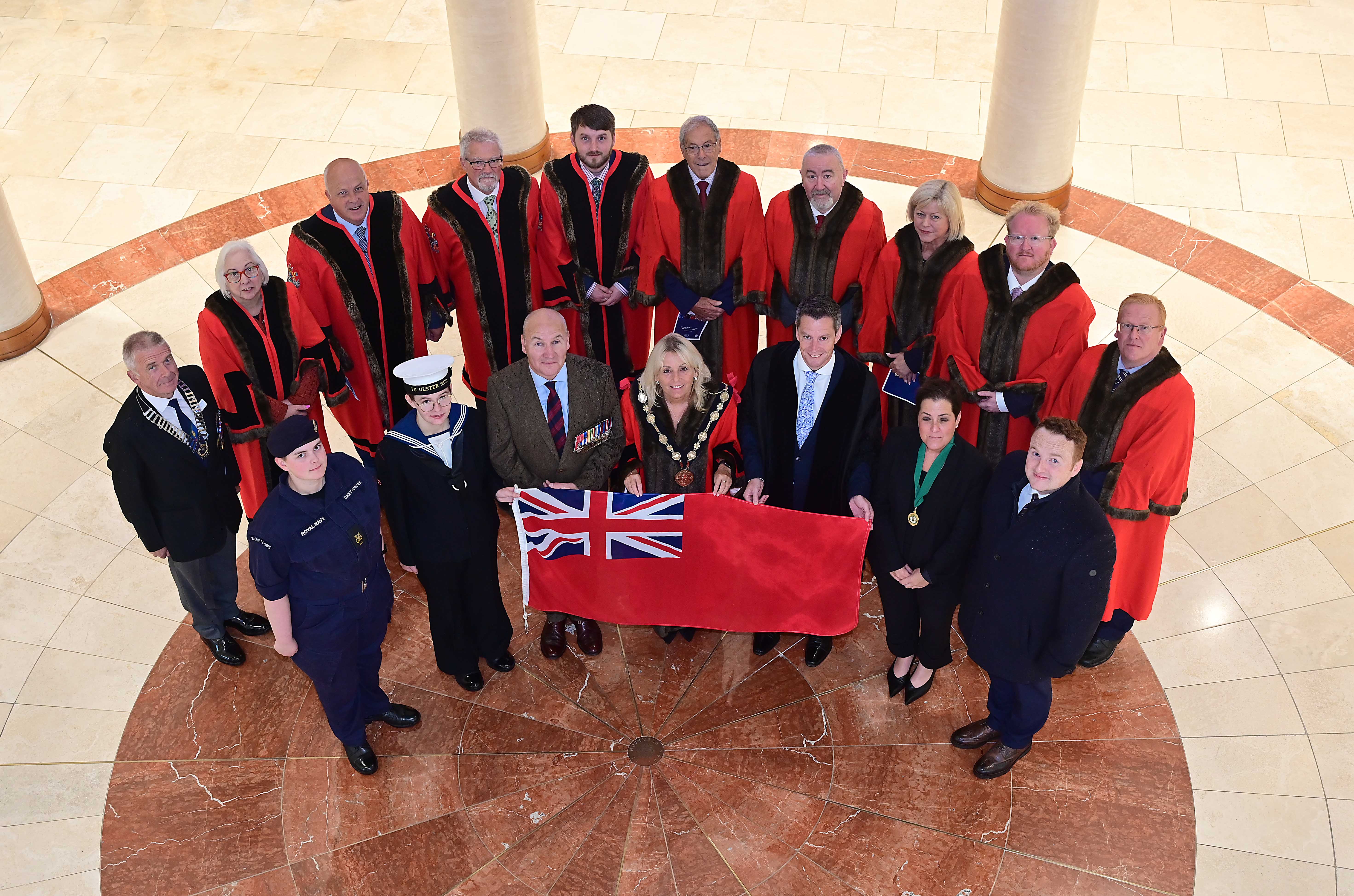
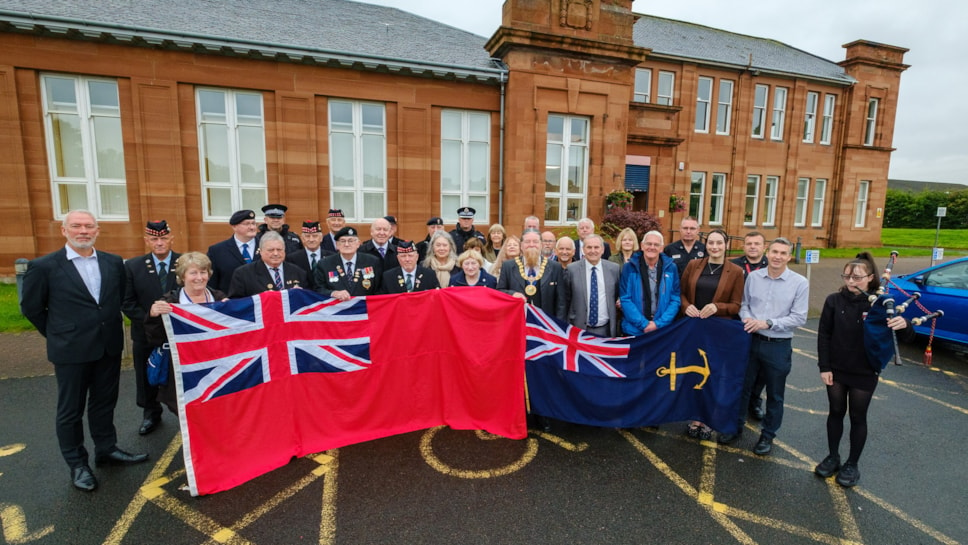
The most prominent tradition is the raising of the Red Ensign. Government agencies, local councils, ports, community organizations, businesses, and ordinary residents all take part. The Seafarers’ Charity runs the “Fly the Red Ensign” campaign, which encourages people to fly the Red Ensign at their homes, offices, community centers, and other locations. In 2026, the organization is also calling on people to join the campaign on September 3.
If someone is unable to fly the flag, the organizers offer an alternative: wearing something red. You can also spread the word about Merchant Navy Day on social media using the hashtag #MerchantNavyDay. Many cities hold commemorative ceremonies. During these events, the Red Ensign is raised, and local officials, veterans, and representatives of maritime organizations speak.

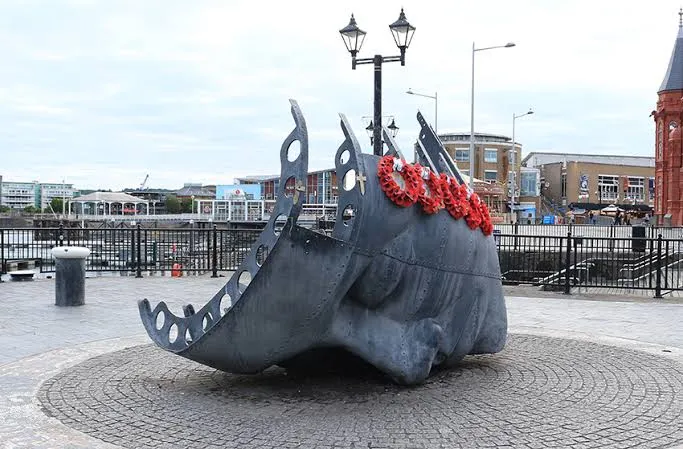
Another tradition is laying wreaths at memorials dedicated to merchant seamen. These events take place near monuments and war memorials, where those who died while on duty are remembered. In some cities, the ceremonies are quite large-scale. For example, on September 3, 2026, a memorial service and wreath-laying ceremony will take place at the Merchant Navy Memorial on the coast in Dover.
How Merchant Marine Day Will Be Observed in 2026
In 2026, the main date falls on Thursday, September 3. Various cities across the United Kingdom have already planned ceremonies and the raising of the Red Ensign. In Wrexham, the flag will be raised near City Hall at 10:30 a.m. Residents are invited to attend the ceremony and pay tribute to merchant navy sailors together.
In Colchester, the Red Ensign raising ceremony at City Hall will begin at 10:00 a.m. City officials invite residents to join the event. In Dover, a memorial service and wreath-laying ceremony at the Merchant Navy Memorial will begin at 11:00 a.m. The event is dedicated to both the sailors who lost their lives and those who continue to serve at sea today.
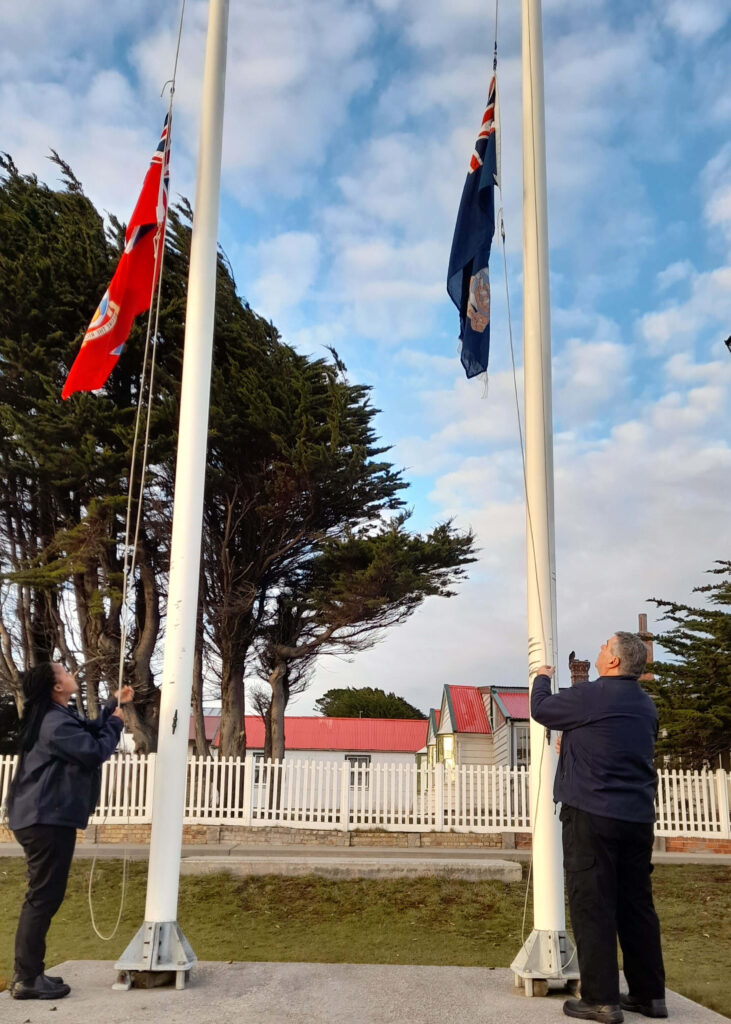
In London, a separate memorial service will be held on September 6 at the Merchant Navy Memorial in Trinity Square Gardens. The service commemorates the tens of thousands of people who lost their lives in the British merchant navy during the two world wars and the Falklands War. So while September 3 is the main date, commemorative events may also be held on other days so that more people can participate.
The Merchant Navy Memorial in London
One of the main memorial sites is the Merchant Navy Memorial in Trinity Square Gardens near Tower Hill in London. It bears the names of 36,040 men and women who died in the British merchant service as a result of enemy action during the two world wars and the Falklands War. It is the largest memorial of the Commonwealth War Graves Commission in the United Kingdom in terms of the number of names.

Those who died ranged in age from 13 to 74. They came from at least 103 different nationalities. Many of them do not have individual graves. Their ships sank far from shore, and the bodies of the deceased remained at sea. This is why memorials to the merchant navy hold special significance for the families of the sailors.

During commemorative ceremonies at the memorial, it is not only the British who are remembered. The merchant marine has always been an international environment, and sailors from various countries served on British ships.
How the Merchant Marine Differs from the Navy
The merchant marine should not be confused with the Royal Navy of Great Britain. The military navy is responsible for the country’s defense and conducting combat operations, while merchant seamen transport cargo and ensure the functioning of maritime trade. At the same time, during wartime, the distinction between civilian work and military needs became particularly important. Merchant ships transported military equipment, fuel, food, and other cargo for the army.

This is precisely why they became targets for the enemy. Sailors risked their lives, even though they were not armed military personnel themselves. Some merchant ships also carried out special missions. Some ships were converted to transport troops, serve as hospitals, or fulfill other needs.
Therefore, in British history, the merchant fleet is often cited as one of the key factors that helped the country survive the world wars. Its importance is particularly evident in the example of World War II, when Britain depended on supplies from across the Atlantic.
Interesting Facts About the British Merchant Marine
One of the most famous stories involves the SS Athenia. The ship was the first major loss of the British merchant fleet after the start of World War II. It was torpedoed just a few hours after Britain declared war on Germany.
Another fact is that merchant seamen were eligible for military awards for service in hazardous areas. The British government granted them, in particular, eligibility for the 1939–1945 Star and the War Medal upon fulfilling specific conditions of maritime service.
In 2013, the British government introduced the Merchant Navy Medal—a state award for outstanding service by merchant seamen. It can be awarded to individuals for professional service, assistance to fellow seamen, work in training new personnel, and contributions to the maritime industry.
The Red Ensign, which has become a symbol of this day, has a very long history. It has been used as the official flag of the British merchant marine for over a century. Today, it also links the British merchant fleet to a whole group of maritime registries in Great Britain and its dependent territories.
Another interesting detail is that merchant seafarers continue to work even during modern-day crises. The Seafarers’ Charity emphasizes that their work was vital during the COVID-19 pandemic, and today it is affected by wars, threats to maritime routes, and instability in strategically important regions.
Why This Holiday Is Important Today
For the United Kingdom, Merchant Navy Day is not just a remembrance of past wars. It serves as a reminder that a significant portion of the everyday items found in stores, hospitals, businesses, and gas stations depends on maritime transport. The country remains an island nation, so sea routes are of particular importance to it. According to current estimates, about 90% of the goods traded by the United Kingdom are transported by sea.
At the same time, the work of a seafarer remains challenging. People may spend months away from home, work in difficult weather conditions, and find themselves near dangerous areas. That is why Merchant Navy Day is not just about the seafarers themselves. On this day, we also remember their families, who are separated from their loved ones for long periods while the sailors are at sea.

The main symbol of the holiday—the Red Ensign—serves a very simple purpose in this regard. When the red flag appears on buildings, near ports, and on private homes on September 3, it serves as a reminder of the people whose work often goes unnoticed, even though modern Britain could not function properly without it.


