
Holiday on October 3, 2026 — German Unity Day: The History of the Country’s Reunification
On October 3, Germany celebrates German Unity Day—the country’s main national holiday. It was on this day in 1990 that the reunification of West and East Germany was completed after decades of division. In 2026, the holiday falls on a Saturday, and the main celebrations will take place in Bremen.
German Unity Day is a national holiday of the Federal Republic of Germany, celebrated annually on October 3. It commemorates the country’s reunification in 1990, when the German Democratic Republic (GDR) became part of the Federal Republic of Germany. On this day, Germany’s long-standing division into two states effectively came to an end. That is why October 3 holds not only political but also historical significance for Germans. It is a day that commemorates the country’s peaceful reunification after decades of division.
Why Germany Was Divided
To understand the significance of this holiday, we must look back at the events following World War II. After the defeat of Nazi Germany, the country was divided into four occupation zones, administered by the United States, the United Kingdom, France, and the Soviet Union. Eventually, the Federal Republic of Germany was formed from the Western zones, while the German Democratic Republic emerged in the Soviet zone in 1949.
Thus, Germany was effectively divided into two states with different political and economic systems. West Germany was aligned with the Western democracies, while the GDR remained part of the Soviet bloc. The Berlin Wall, erected in 1961, became a symbol of this division. It separated West and East Berlin and became one of the most famous symbols of Europe’s division during the Cold War. For many German families, this division was not an abstract political concept but a part of everyday life. People found themselves on opposite sides of the border, and the ability to travel freely between the two parts of the country was severely restricted.
What Changed in 1989
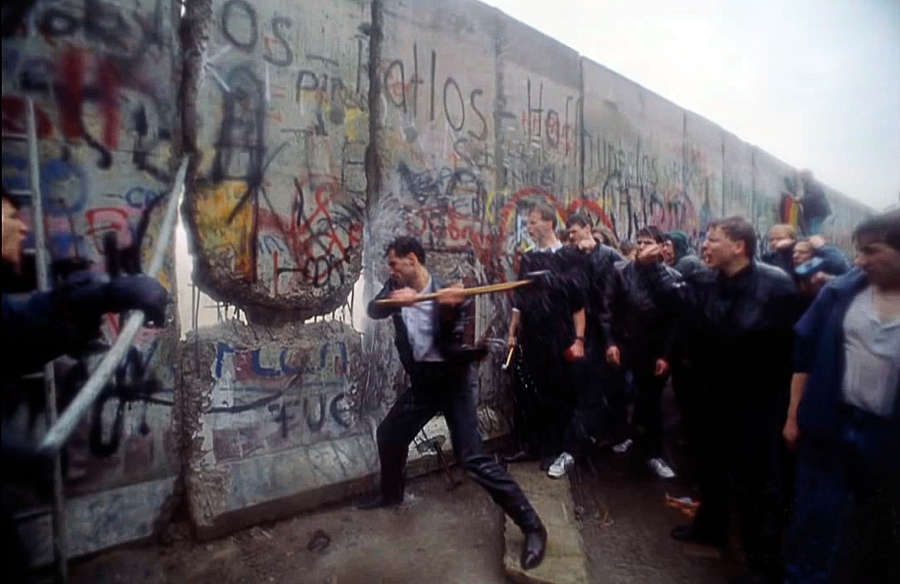
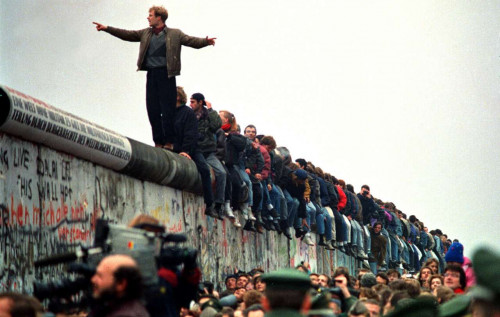
The year 1989 marked a turning point. Large-scale peaceful protests began in the GDR, and more and more people demanded political change, freedom of movement, and democratic reforms. On November 9, 1989, the GDR authorities announced changes to the rules for traveling abroad. After that, thousands of people flocked to the checkpoints along the Berlin Wall. Border guards eventually opened the crossings, and people were able to move freely from East Berlin to West Berlin.

The fall of the Berlin Wall became a symbol that the division of Germany was coming to an end. But the wall itself fell in November 1989, while the country’s legal reunification took place nearly a year later—on October 3, 1990.
How Germany Became One Country Again
After the fall of the Berlin Wall, a complex process of negotiations about Germany’s future began. An important step was the Unification Treaty between the Federal Republic of Germany (FRG) and the German Democratic Republic (GDR). It was signed on August 31, 1990. The document outlined exactly how East Germany would join the Federal Republic. Five states of the former GDR became part of the Federal Republic of Germany: Brandenburg, Mecklenburg-Western Pomerania, Saxony, Saxony-Anhalt, and Thuringia. The issue of Berlin, which once again became the capital of a unified Germany, was addressed separately.
At the same time, reunification required agreements not only between the two German states. The so-called “Two Plus Four” Agreement, concluded between the Federal Republic of Germany, the German Democratic Republic, and the four Allied powers of World War II—the United States, the Soviet Union, the United Kingdom, and France—played a crucial role. The document settled foreign policy issues related to German reunification.
Why October 3 Was Chosen
Interestingly, another date could have been chosen as German Unity Day. In the Federal Republic of Germany, until 1990, June 17 was considered German Unity Day. This day commemorated the popular uprising in East Berlin and the GDR in 1953, which was suppressed by force.

After reunification, it was decided to establish a new date for the national holiday. It became October 3—the day the Unification Treaty took effect and the GDR joined the Federal Republic. This was explicitly enshrined in the treaty itself. It states that October 3 is a legal holiday—Tag der Deutschen Einheit, or German Unity Day.
How the First Unity Day Was Celebrated
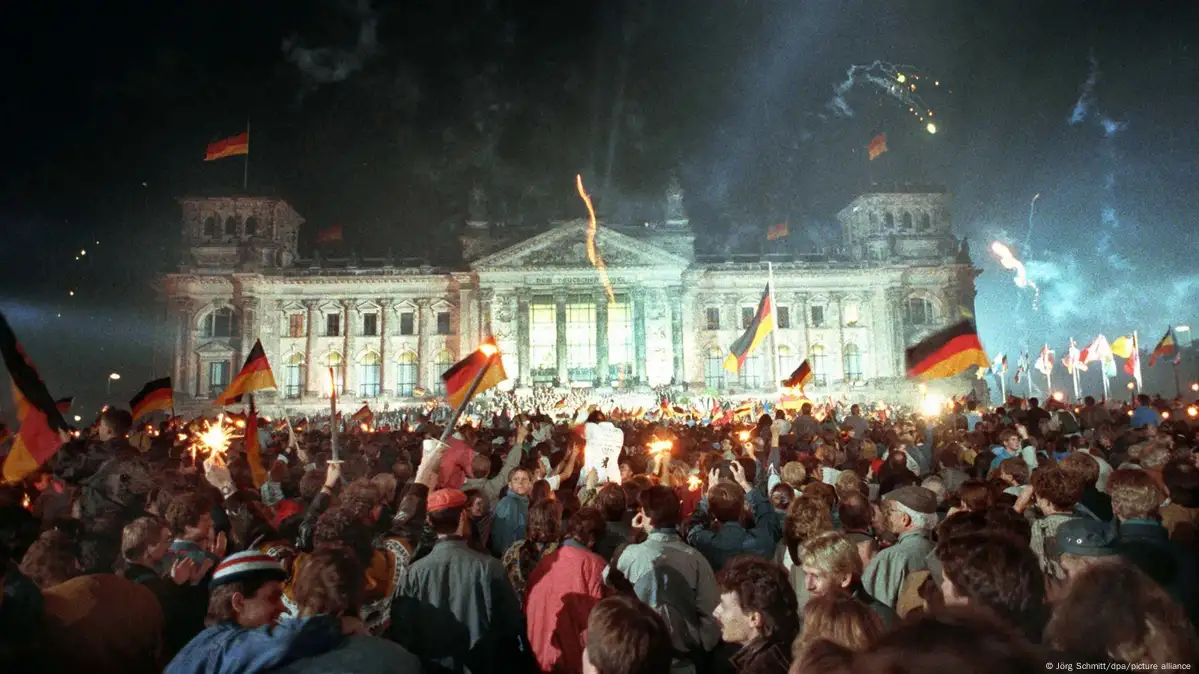
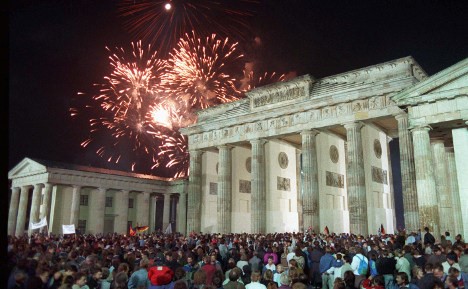
The first German Unity Day was celebrated on October 3, 1990, with large-scale festivities in Berlin. At midnight, in front of the Reichstag building, the national flag of the Federal Republic of Germany was raised to the sound of the Liberty Bell. Hundreds of thousands of people took to the streets of Berlin. Large crowds gathered at the Brandenburg Gate, and the celebration culminated in a fireworks display over the Reichstag.
Representatives of the Federal Republic of Germany and the former GDR took part in the ceremonies, including Federal Chancellor Helmut Kohl and Federal President Richard von Weizsäcker. On the same day, an official state ceremony marking the reunification was held at the Berlin Philharmonic.
How German Unity Day Is Celebrated Today
Today, October 3, is an official national holiday in Germany. Every year, major nationwide events are held in different states. Typically, the federal state holding the presidency in the Bundesrat hosts the central celebration. Traditionally, the event involves more than just official speeches by politicians. The host city organizes a large public festival featuring concerts, cultural events, exhibitions, presentations by the federal states, and various activities for visitors.

There, you can meet representatives from all of Germany’s states, learn more about their cultures and traditions, sample local dishes, and enjoy music. Participation in such events is usually open to the general public. In other words, German Unity Day in modern Germany is not just a state ceremony. It is also a major public celebration that seeks to combine the official part with concerts, cultural events, and casual socializing.
Where German Unity Day Will Be Celebrated in 2026
In 2026, Bremen will host the main celebrations. The events will take place from October 2 to 4, with October 3 being the main day of celebration. The celebrations will be held under the slogan “VIELE STÄRKEN – EIN LAND,” which can be translated as “Many Strengths—One Country.” A large public festival area will be set up in the center of Bremen and along the Weser River.
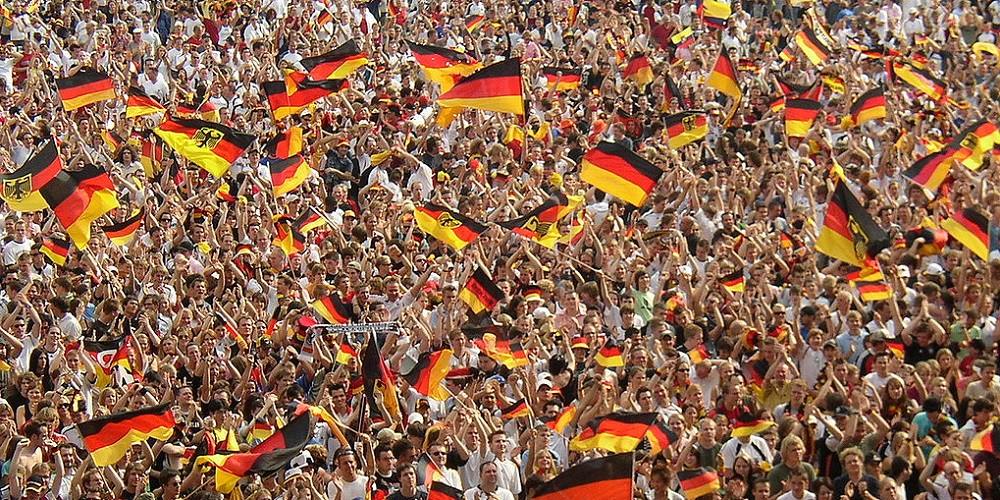
One of the main venues will be the so-called “Ländermeile” — the “Alley of the States” — where all federal states will present themselves. The Bundestag, the Bundesrat, the federal government, and the Federal Constitutional Court will also have their own designated areas. Concerts, cultural events, food venues, and various activities for children and adults have been prepared for guests. Organizers expect a total of about 400,000 visitors over the course of three days.
What’s Happening on October 3
The main day of the festival in Bremen will feature more than just an entertainment program. Official events will take place with the participation of representatives of the federal government and the states. In particular, on October 3, the Federal Chancellor will take part in the official program, attend an ecumenical service at St. Peter’s Cathedral, and participate in a state ceremony at the “Die Glocke” concert complex. Following that, a reception hosted by the Federal President is scheduled.
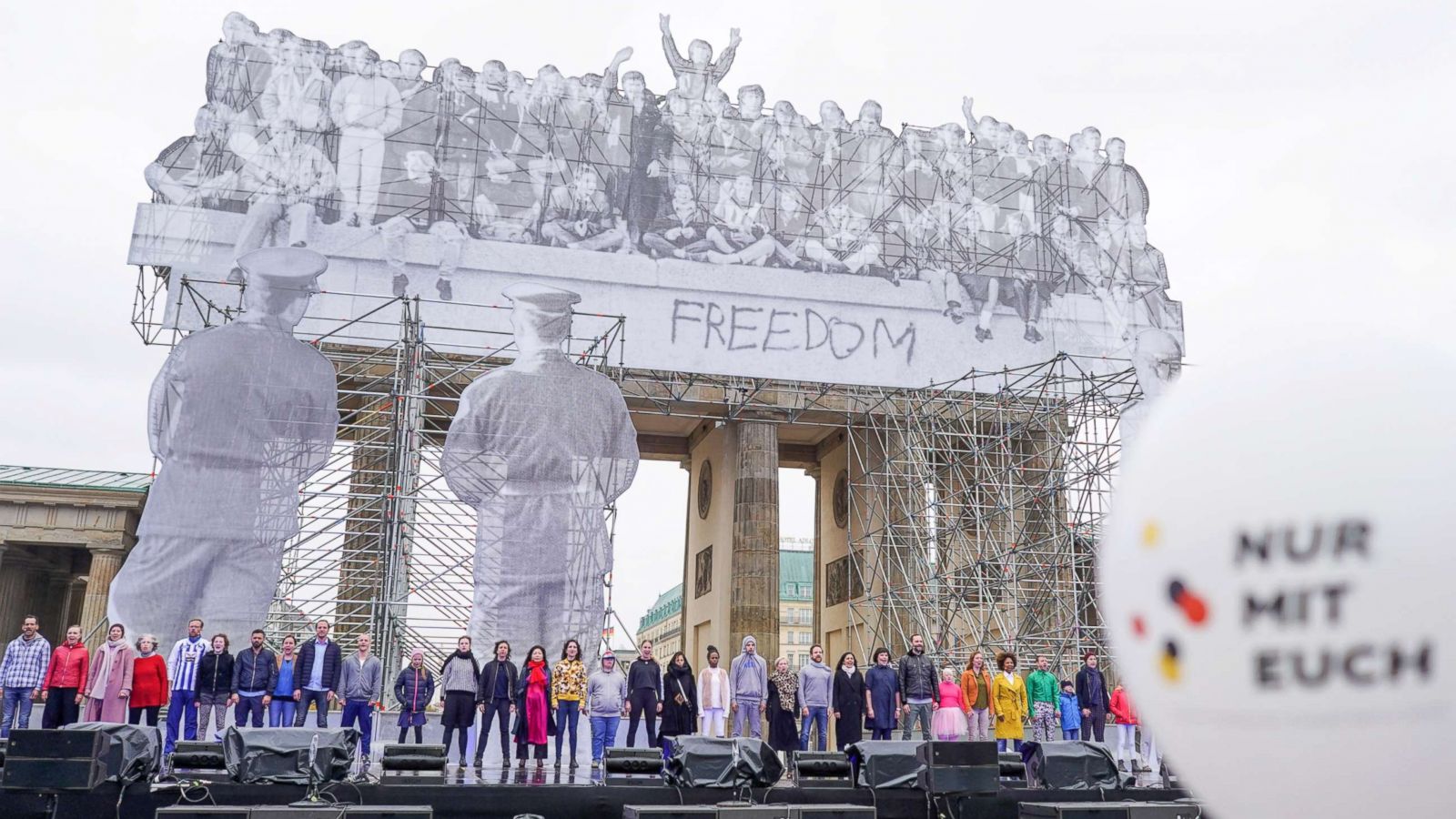
At the same time, a public festival will be taking place in the city. The federal government will also showcase its work at separate venues, where visitors will be able to speak with representatives from various ministries. The 2026 celebration is also special because it marks the 36th anniversary of German reunification.
Interesting facts about the holiday
October 3 is not the day the Berlin Wall fell. The Wall opened to free passage on November 9, 1989. German Unity Day, however, marks the legal completion of the country’s reunification on October 3, 1990.
Another interesting point is that German reunification did not occur through the creation of an entirely new state. The GDR joined the Federal Republic in accordance with the mechanism provided for in the then-current Constitution of the Federal Republic of Germany. At the same time, the Basic Law and the legal system of the Federal Republic came into effect in the territory of the former GDR.
Even before political reunification, on July 1, 1990, a monetary, economic, and social union between the Federal Republic of Germany and the GDR came into effect. At that time, the German mark became the common currency, and border controls between the two parts of the country were abolished.
It is also interesting to note that October 3 became a national holiday immediately after reunification. The Unification Treaty explicitly stipulated that this day would have the status of a legal holiday.
Why German Unity Day Is Important for the Country
For Germany, this holiday serves as a reminder of the events that completely transformed the country in just a few years. As recently as 1989, the Berlin Wall divided the city, and Germany existed as two separate states. Just one year later, the country was legally reunified. At the same time, for Germans, October 3 is not merely a commemoration of a specific historical date. Unity Day is associated with themes of freedom, democracy, peaceful change, and overcoming years of division.
The annual celebrations also provide an opportunity to discuss how East and West Germany continue to grow closer. That is why the festival program includes not only political ceremonies but also concerts, exhibitions, discussions, and events for ordinary people. In 2026, this tradition will continue in Bremen. On October 3, the country will once again commemorate the date that has come to symbolize the end of Germany’s division and the beginning of its new era as a unified nation.




