
August 5, 2026 Holiday — Traffic Light Day 2026: The History of Its Invention and Interesting Facts
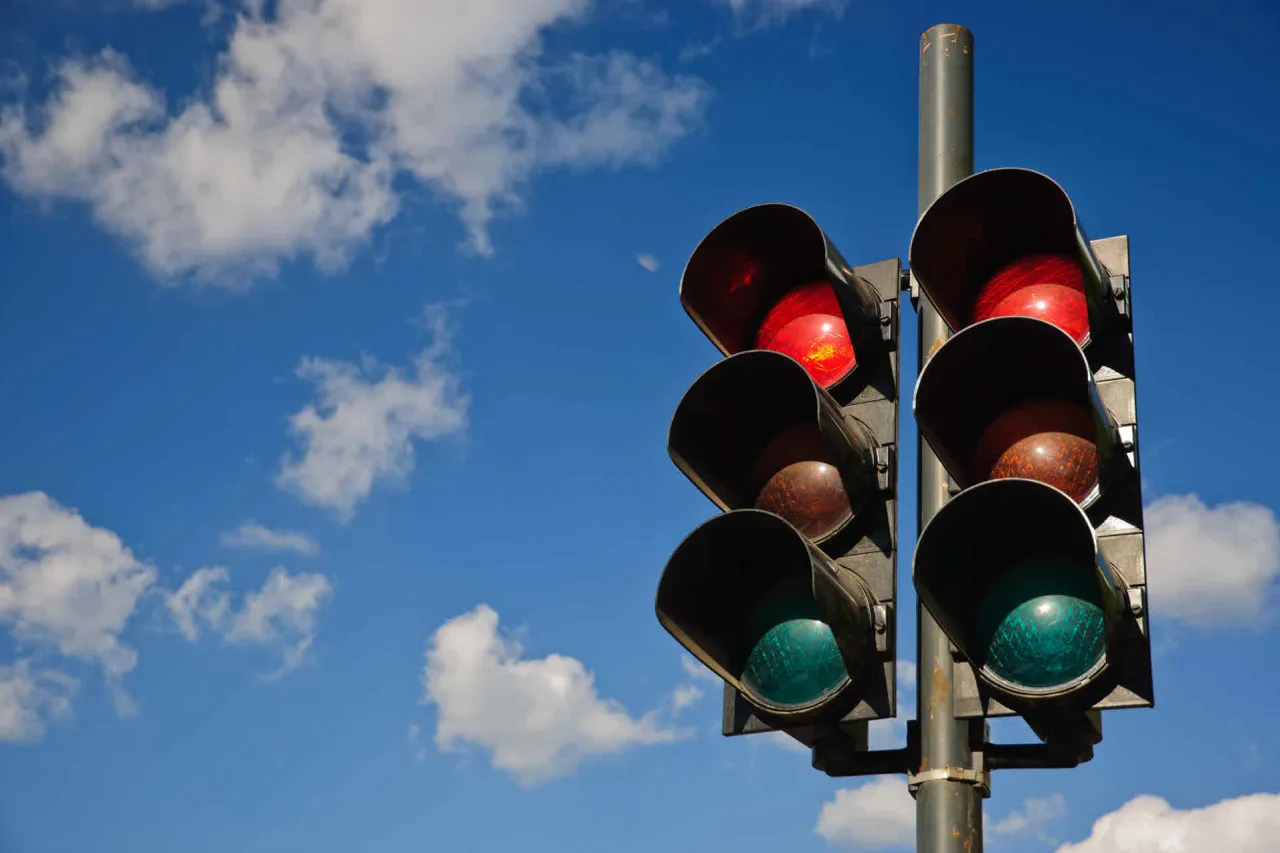
Traffic Light Day is celebrated annually on August 5. The date is linked to the introduction of the first electric traffic light: it was on August 5, 1914, that such a system began operating in Cleveland, Ohio. Modern traffic lights have come a long way from simple devices with two signals to complex systems capable of managing the flow of cars, pedestrians, and public transportation.
Traffic Light Day is celebrated on August 5. The date commemorates an event that took place over a hundred years ago in Cleveland, Ohio. On August 5, 1914, a system of electric signals to regulate traffic was installed at the intersection of Euclid Avenue and East 105th Street. It featured red and green lights and was designed by James Hoag. The system was operated manually: an operator switched the signals from a booth, and the design was such that vehicles approaching from different directions were not allowed to proceed at the same time.
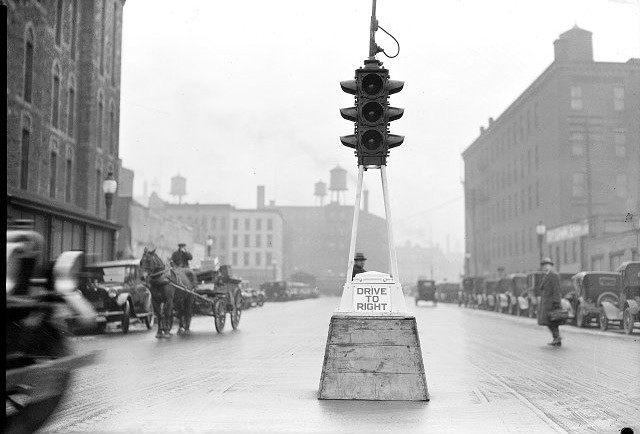
This event is often cited as the debut of the first electric traffic light. However, it would be incorrect to say that this was the first time humanity invented the traffic light. The first traffic control devices appeared even earlier.
What Was the First Traffic Light Like?
The first traffic light in history was installed not in the United States, but in London as early as 1868. It was developed by British engineer John Peake Knight, who worked on railroad signaling systems. The device was installed near the British Parliament at the intersection of Great George Street and Bridge Street. That traffic light bore no resemblance to modern traffic lights. During the day, it used movable signal levers, and at night, red and green gas lamps. The system was manually operated by a police officer.
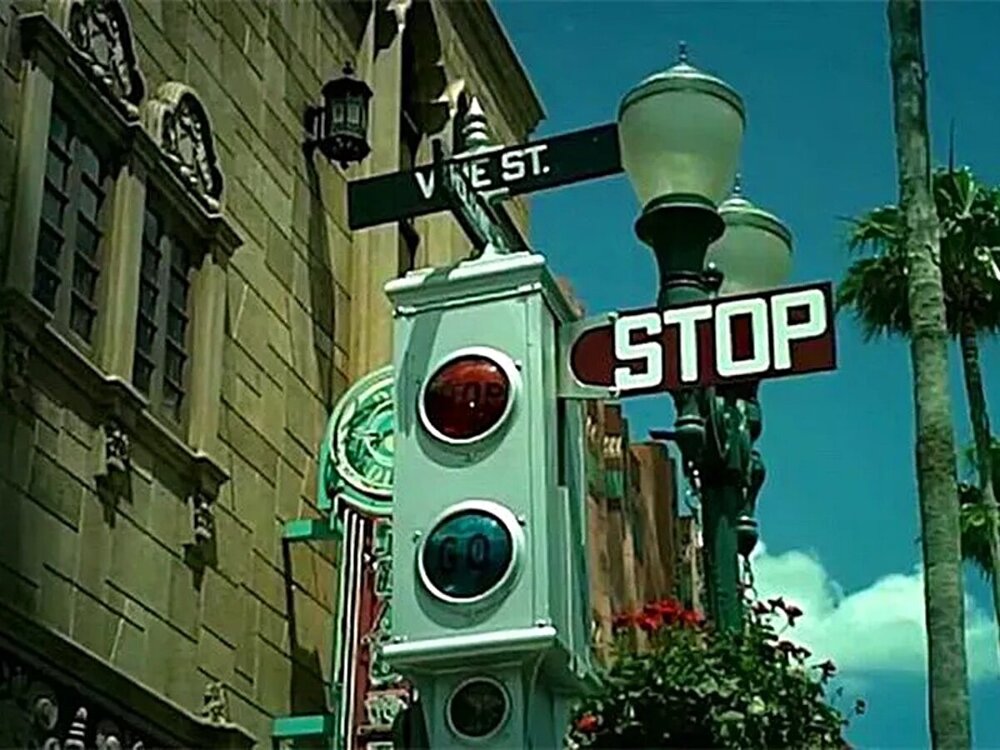
The idea was simple: drivers and horse-drawn carriages needed to be clearly shown when they were allowed to proceed and when they had to stop. However, London’s first traffic light didn’t last long. A police officer was killed in an accident involving a gas lamp, after which the system was dismantled. Several decades passed before traffic lights began to reappear on the streets. The reason was obvious: the number of cars was growing, and intersections without clear rules were becoming dangerous places.
Why Three Colors?
Today, we almost automatically know what the three colors mean. Red means stop, green means go, and yellow means caution—the signal is about to change. But that wasn’t always the case. The first electric systems used mainly red and green signals. The color yellow appeared later, when it became clear that an intermediate signal was needed between the “stop” and “go” commands.
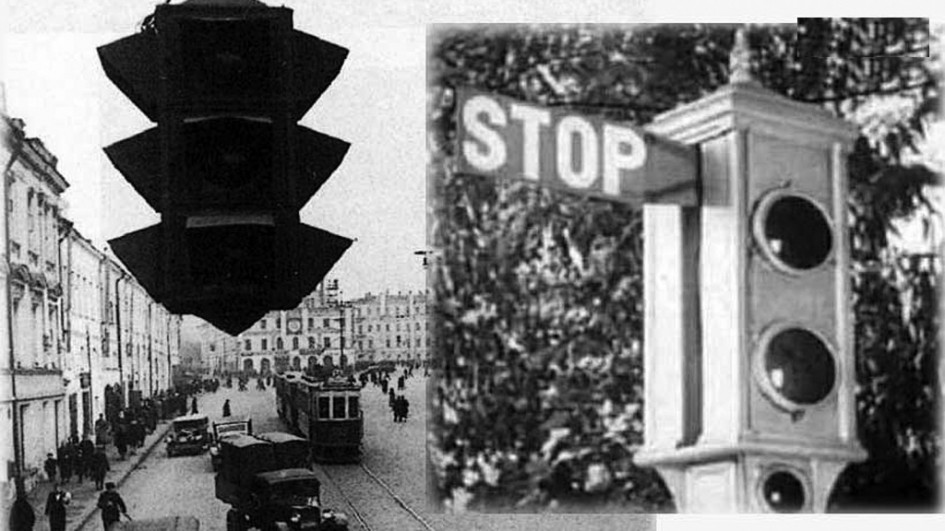
One of the most famous inventors who made a significant contribution to the development of the three-position traffic light was the American inventor Garrett Morgan. In 1923, he received a patent for his own traffic signal system, which included not only “stop” and “go” but also a third position to warn drivers.
Morgan’s idea came to him after he witnessed a collision between a car and a horse-drawn carriage. He noticed a problem with the old systems: when one direction was signaled to stop, the other was almost immediately given the go-ahead to proceed. This made it difficult for drivers to react in time. The third signal gave drivers time to complete their maneuver and clear the intersection. It was this principle that became a crucial step toward how traffic lights work today.
How Traffic Lights Changed Cities
In the early days of the automobile era, roads were much more chaotic than they are today. Cars, bicycles, horse-drawn carriages, trams, and pedestrians could all be moving simultaneously on a single street. There were no clear rules for all road users yet, and the number of vehicles was growing rapidly. Traffic lights became one way to manage this flow. They allowed different directions to take turns having the right of way and made traffic at intersections more predictable.
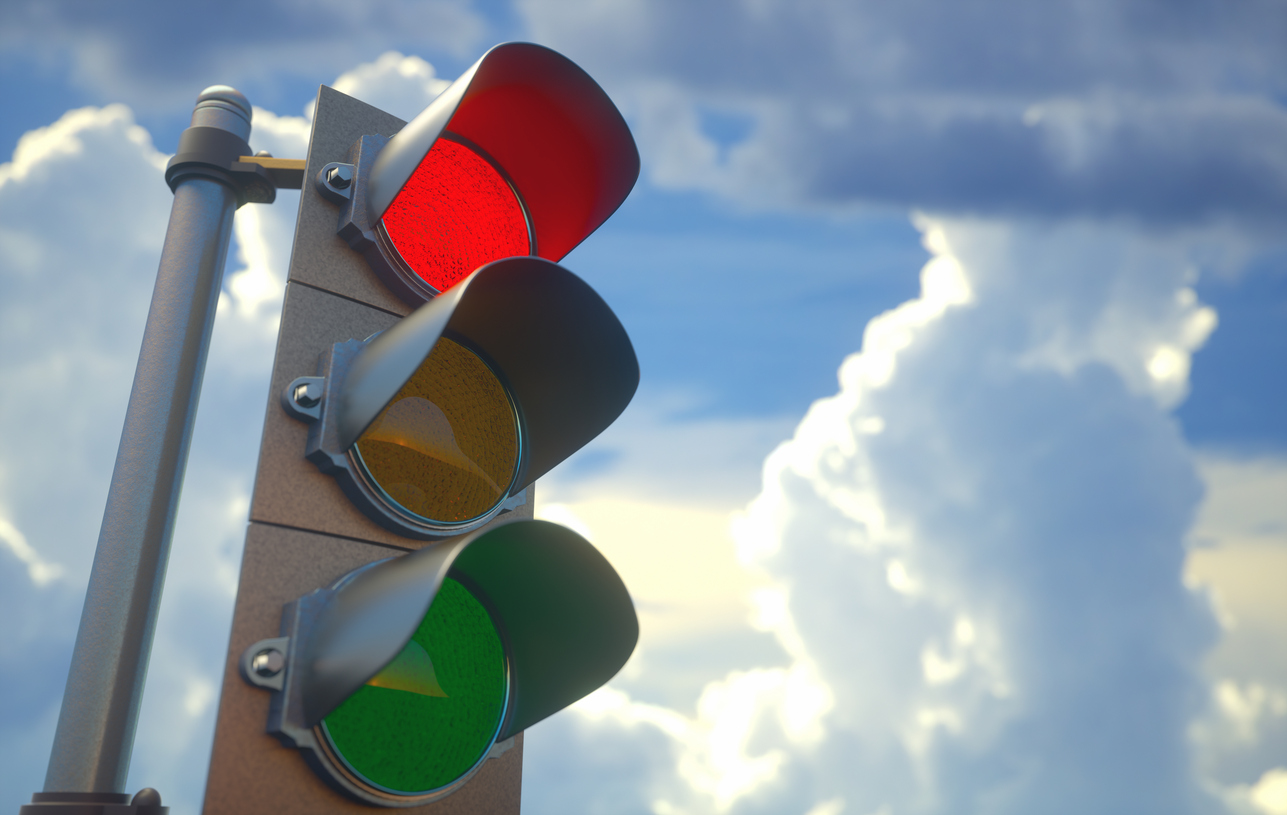
Gradually, the systems became automated. Instead of a person manually switching the signals, timers, electronics, and later—sensors and computer systems—began to be used. Today, traffic lights can operate in much more complex ways than simply cycling through phases at regular intervals. Modern systems can take into account traffic volume, line lengths, time of day, and other parameters. Some cities use adaptive systems that adjust signal patterns based on road conditions.
Interesting Facts About Traffic Lights
The first traffic light predated the automotive era. The London device appeared in 1868, when mass automobile traffic did not yet exist. It was created primarily to regulate horse-drawn carriages and traffic near Parliament.
The first electric traffic light appeared in Cleveland. On August 5, 1914, a system using red and green lights began operating there. It was controlled manually but was already powered by electricity.

Garrett Morgan was not the inventor of the first traffic light. His contribution lay elsewhere: in 1923, he patented an important three-position system that included an intermediate signal and made traffic control safer.
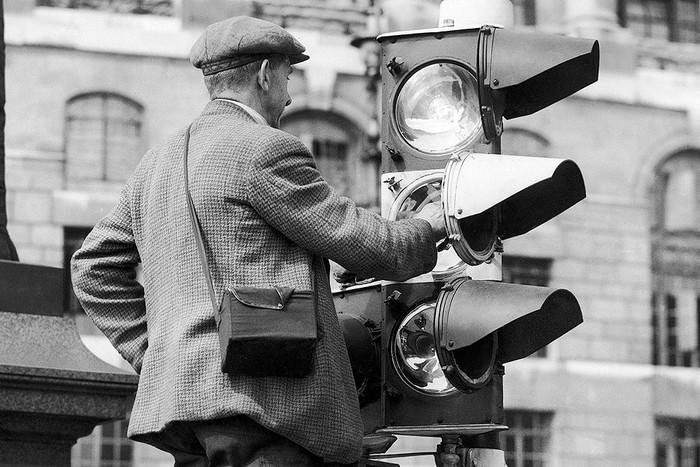
Early traffic lights could be dangerous. The 1868 London system used gas lighting, and an accident involving a gas lamp resulted in the death of the police officer who was operating it.
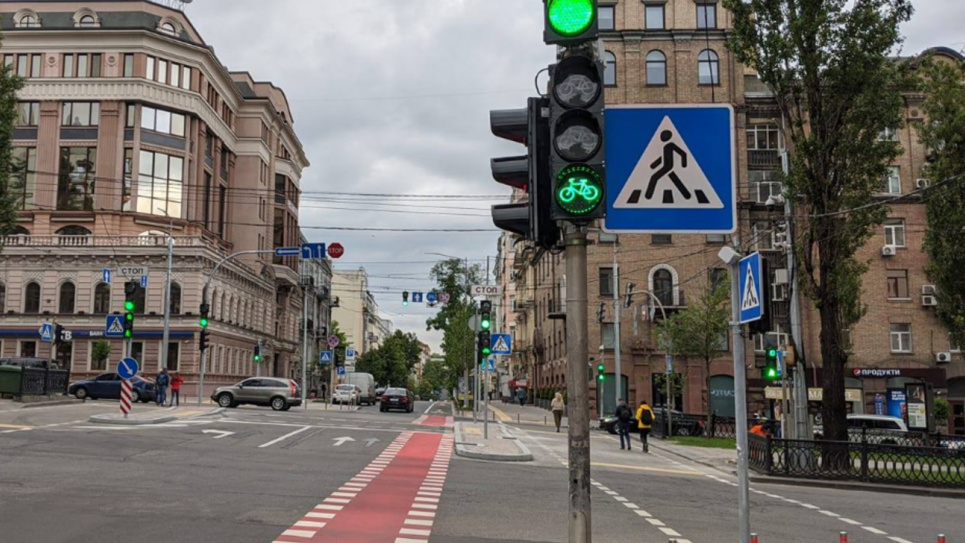
Traffic lights aren’t just for cars. In modern cities, they regulate the flow of pedestrians, cyclists, public transportation, and cars. To do this, they use separate sections, arrows, audible signals, and timers.
A traffic light can be part of an entire system. Several traffic lights on a single street can be synchronized. This creates what is known as a “green wave,” where a driver traveling at the right speed can pass through several intersections in a row on green lights.
Why It’s Important to Obey Traffic Signals
Traffic lights were not invented simply to make drivers wait. Their main purpose is to make traffic predictable and reduce the risk of collisions. When all road users see the same signal and obey it, drivers know when they’re allowed to move, and pedestrians know when it’s safe to cross the street. Problems arise when someone decides to ignore the signal.
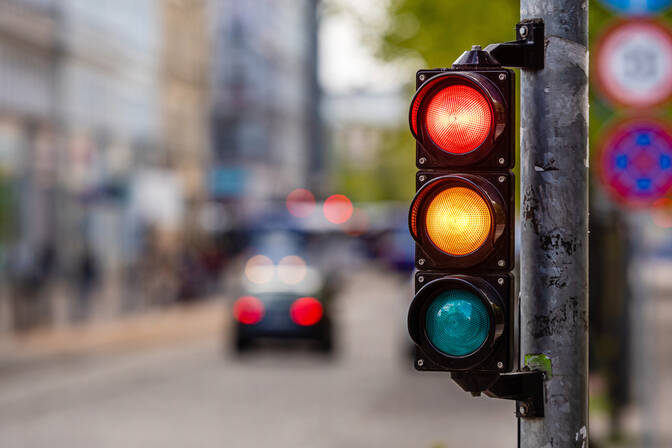
Running a red light is particularly dangerous. Even if the intersection seems empty, another car or pedestrian could appear there in a matter of seconds. Therefore, waiting a few seconds at a red light is a much smaller price to pay than the consequences of an accident.
How Traffic Light Day Is Observed
Traffic Light Day is not an official public holiday with a standard celebration program. It is more of an informational observance that serves as an opportunity to remind people about the history of road traffic and safety rules. Schools and preschools may hold themed lessons, quizzes, and contests on this day. Children are taught the meaning of the three colors and how to cross the street safely. For the youngest children, this is often done in the form of a game to make the rules easier to remember.

Cities and educational institutions may also hold road safety campaigns. Drivers are reminded to obey traffic light signals, and pedestrians are reminded not to cross the street when the light is red—even if there are no cars nearby. So, on August 5, you can celebrate Traffic Light Day very simply: reflect on the history of this invention, tell your children about it, and once again draw attention to the rules of the road.
After all, the familiar three colors we see every day have come a long way—from gas lamps in London to complex electronic systems. And although we hardly notice traffic lights today, they are what help millions of people get around cities more safely every day.


