
The global economy is under pressure from the war in the Middle East
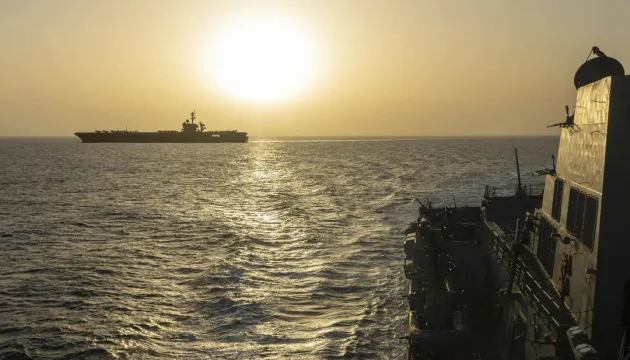
Global business has already lost tens of billions of dollars due to the conflict between the U.S. and Iran, which has destabilized the oil market and disrupted logistics worldwide. The aviation, manufacturing, and retail supply chains have been hit hardest, and companies are being forced to raise prices and cut costs. This is according to an analysis by Reuters.
The global economy has once again taken a severe blow—this time due to the sharp escalation of the conflict between the U.S. and Iran, which, according to Reuters, has already cost companies worldwide at least $25 billion, and this figure continues to rise as the conflict has effectively disrupted energy and trade routes.
Following the blockade of the Strait of Hormuz, oil prices soared above $100 per barrel—a rise of more than 50% compared to pre-war levels— and this immediately impacted the entire supply chain—from jet fuel to raw materials for the chemical and food industries, as well as fertilizers, polyethylene, aluminum, and helium. According to analysts’ estimates, at least 279 companies worldwide have already directly cited the war as the cause of their financial losses and are forced to either raise prices, cut production, or even temporarily suspend payments to investors in order to stay afloat amid a sharp rise in costs.
Airlines have been hit the hardest, collectively losing nearly $15 billion due to soaring jet fuel prices, while some giants are already openly discussing multibillion-dollar losses: Toyota is warning of $4.3 billion in losses, Procter & Gamble estimates a loss of $1 billion, and even consumer goods and tire manufacturers are forced to revise their business plans.
McDonald’s has already stated that rising fuel costs are directly impacting demand among low-income consumers, as “higher gas prices are the main problem we’re facing right now,” and this effect is gradually spreading across the entire consumer market.
At the same time, industrial and chemical companies are seeing a new wave of costs and warning of price hikes, as their dependence on petrochemical raw materials from the Middle East makes them particularly vulnerable to any disruptions in the region. Financial analysts emphasize that even small fluctuations in oil prices have a direct impact: according to Newell Brands’ CFO, every additional $5 per barrel adds about $5 million in costs, which quickly adds up on a global scale.
The situation is further complicated by the fact that companies have already lost over $35 billion due to U.S. trade tariffs, and the new conflict only exacerbates the effect of “cumulative crises” following the COVID-19 pandemic and Russia’s war against Ukraine, which have already changed the rules of the game for the global economy.
Reuters analysts note that there are no signs of a quick de-escalation on the horizon, which means businesses will have to cope longer with high energy costs, supply disruptions, and volatile markets.
The U.S. has demanded that Iran hand over enriched uranium
Iran is introducing a fee for internet traffic transiting through the Strait of Hormuz




