
World Bank estimates annual $12 billion need for irrigation
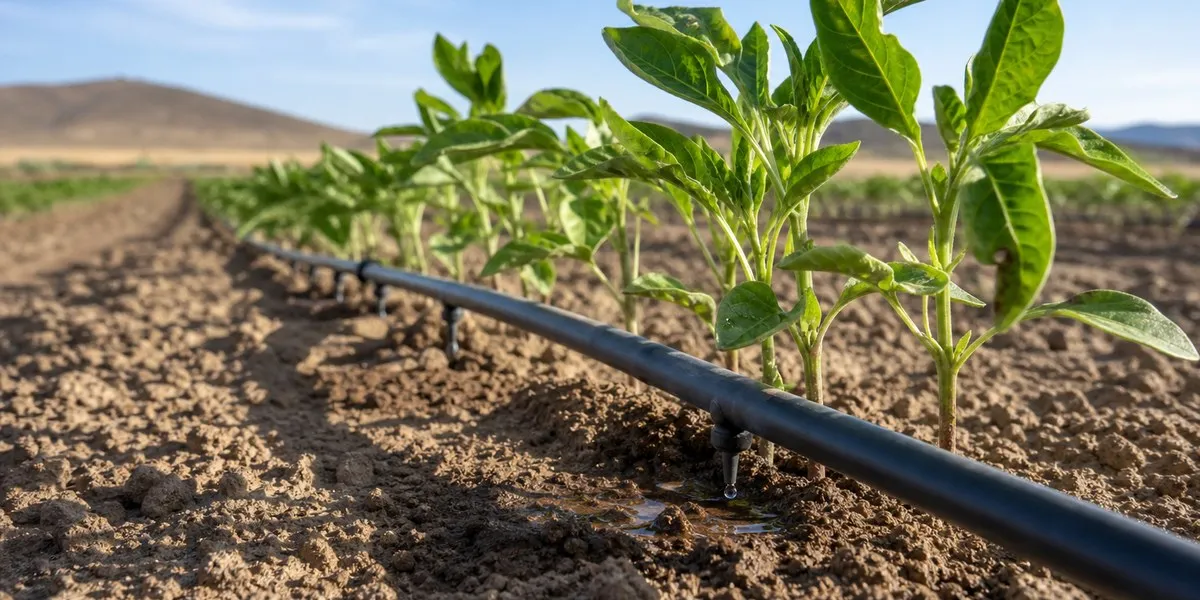
Countries in the Middle East, North Africa, Afghanistan and Pakistan need about $12 billion in additional investment annually to develop efficient irrigation and agricultural innovation, the World Bank believes. Usman Dione, the bank’s vice president for the Middle East, North Africa, Afghanistan and Pakistan region, said this in an interview with Asharq Al-Awsat.
According to the World Bank’s assessment, more than 142 million people in the region face food insecurity, while 42% of the population cannot afford a healthy diet. At the same time, food demand is expected to increase by about 67% by 2050.
Water and technology
Agriculture consumes about 87% of the region’s water resources. In some countries, per capita water availability is already below 500 cubic meters per year, indicating acute water scarcity.
Dione stressed that the response to the problem lies not only in finding new water sources, but also in changing the model of water use. This includes collecting, treating and reusing wastewater in agriculture, industry and other relevant sectors, as well as reducing losses in water supply and irrigation networks.
More current news is available on the UA.News Telegram channel Telegram.
Among the technologies that can increase agricultural production efficiency, he named drip irrigation, reducing water leaks and losses, artificial intelligence and data analysis. Such solutions can help determine crops’ water needs, select plants for specific climate conditions and optimize production cycles.
Trade, logistics and jobs
The World Bank also notes that food imports do not necessarily mean weak food security. In some cases, it is more economically and environmentally appropriate to import water-intensive crops than to grow them in countries with limited water reserves. At the same time, states need to diversify suppliers and transport routes, increase storage capacity and build strategic reserves.
About one-third of food in the region is lost or wasted at various stages of the supply chain, from production and storage to transportation, processing, distribution and consumption. Therefore, investment is needed not only directly in the agricultural sector, but also in cold chains, grain elevators, packaging, processing, transport and logistics.
The World Bank estimates that about 63 million jobs in the region are linked to agri-food systems. Further development of these systems could potentially create another 5 million jobs by 2050.


