
UK launches AI boot camps for unemployed young people
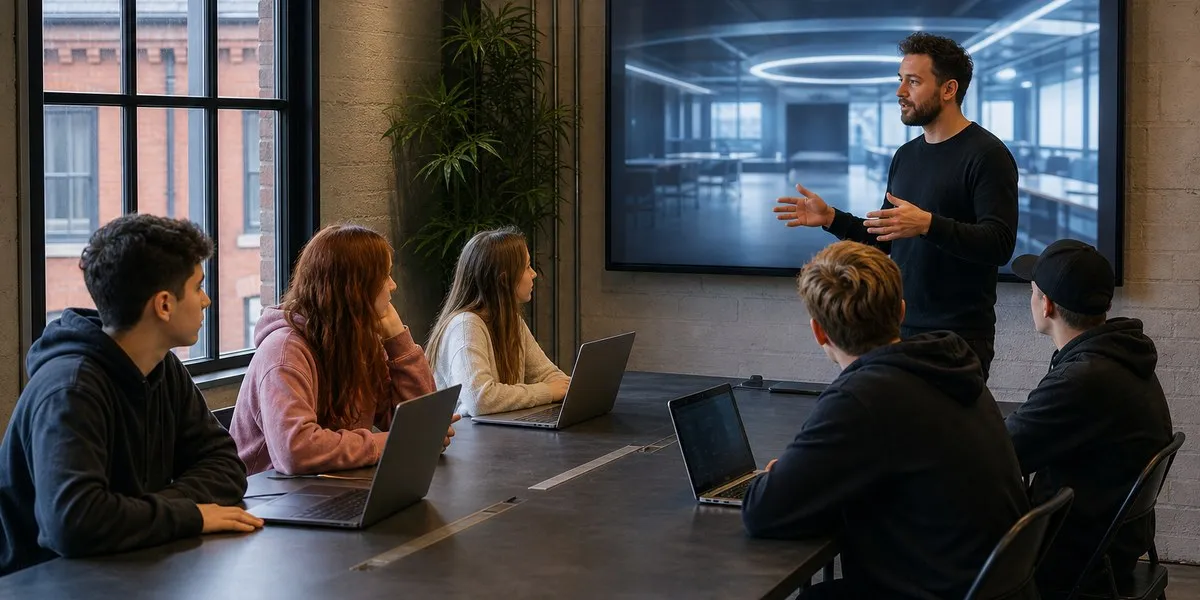
Pilot three-week artificial intelligence boot camps have been launched in Preston, UK, for people aged 16 to 24 who are not in education, employment or training, or are at risk of falling into this category. The programme is designed for 70 participants.
As The Guardian reports, the classes are held at the recently opened Vault community centre, located opposite Preston bus station. Participants are taught to create artificial intelligence-based tools, understand how businesses use this technology, and use it responsibly.
Training and vocational programmes
The boot camps are funded by taxpayers and are part of a pilot project in north-west England. After completing the course, participants will be able to apply for vocational training programmes at partner companies, including JD Sports, Heinz and IT company Agilysys.
Two tracks are available: one for aspiring content creators who may become AI marketing specialists, and another for work in IT support services, where artificial intelligence knowledge is required. Lauren Monks, a representative of contractor IN4 Group, said the project could help increase productivity and introduce AI in organisations.
More current news is available on the UA.News Telegram channel Telegram.
Seventeen-year-old participant Remi Simms, who is interested in the content creator track, said the course had changed his view of artificial intelligence and given him a better understanding of how it works.
The NEET problem
In the United Kingdom, nearly one million young people belong to the NEET category — meaning they are not in education, employment or training. This is slightly more than one in 10 people in the relevant age group.
Bouke Klein Teeselink, a researcher of AI and the future of work at King's College London, noted that the impact of artificial intelligence on the labour market for people without higher education remains insufficiently studied. In his view, the programme's effectiveness should be assessed by the quality of training and whether its participants help increase employers' productivity.
Chris Golden, deputy chief executive of Youth Futures Organisation, believes that the rise in the number of NEETs after the COVID-19 pandemic is more related to mental health problems and a slowing economy than to AI. At the same time, he stressed that teaching young people to work with artificial intelligence is part of preparing for the future labour market.




