
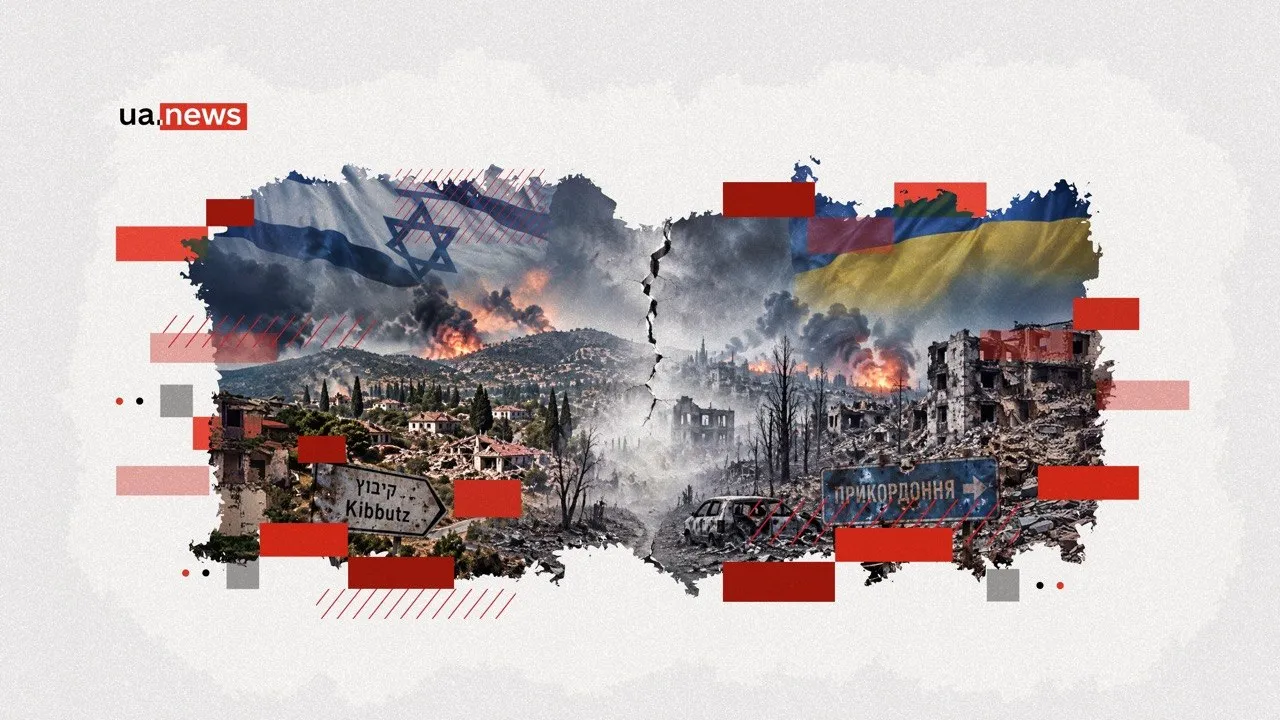
What does an enemy need to destroy an entire region? Tank column breakthroughs, the seizure of municipal administrations, and flags flying in central squares? Hezbollah did not have to carry out its invasion plan, which called for thousands of militants to infiltrate Israeli communities. Rocket attacks and the threat of an assault were enough to force tens of thousands of people to flee their homes.
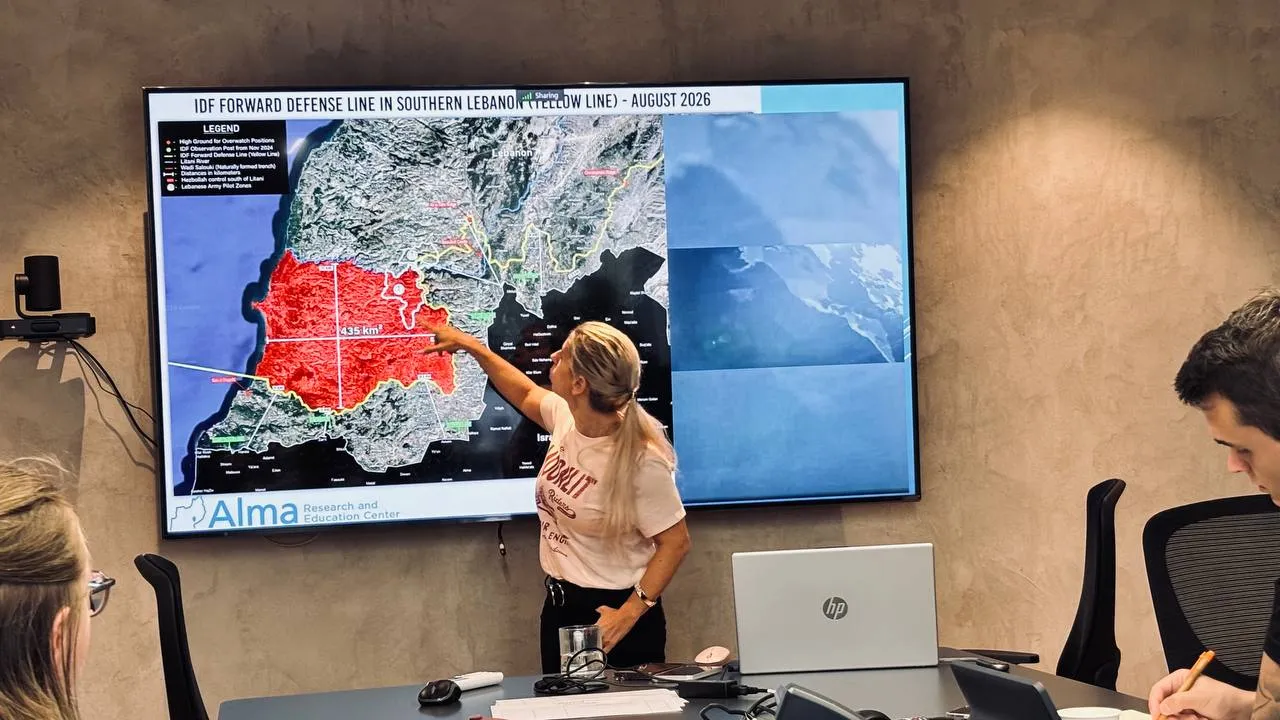
Ten kilometers from the Lebanese border, Sarit Zehavi, founder and director of the ALMA research center, explains to Ukrainian journalists how much time a person has to take cover after a siren sounds. About 15 seconds. And in communities located closer to the border, the warning left no time to react at all. Outside the window, the mountain landscapes and Lebanese villages seem like peaceful backdrops, but the slides show the reality of empty streets.
This report is based on a press tour to Israel’s northern border organized by the Israeli Ministry of Foreign Affairs and the Embassy of the State of Israel in Ukraine.
More than 60,000 residents of northern Israel were forcibly displaced from their homes. Hezbollah militants didn’t even cross the border to achieve these “accomplishments.” They didn’t need a ground invasion or a single tank. Constant psychological pressure, the threat of attacks by elite units, anti-tank missiles, and cheap $300 FPV drones—which shot at civilian cars on open roads and flew into the windows of residential buildings — all of this proved enough to depopulate 43 border communities for a year and a half. Without businesses, agriculture, tourism, or schools. Ghost villages.
For years, Israel has invested billions in high-tech defense and powerful interception systems. But the “Iron Dome” is virtually powerless against direct-fire missiles and quadcopters right at the border. The result is devastating: without direct occupation, the enemy has paralyzed the economy and forced an entire country to live in a state of constant defensive turmoil.
It’s a mirror-image déjà vu for Ukrainians living under daily terror in every city—not just those near the front lines. Russia is doing the exact same thing today—scorching lives with missiles and drones to make daily life impossible for civilians.
The Israeli case serves as a brutally honest warning for Ukraine: an aggressor can achieve its strategic goals without capturing a single meter of new territory. The formula “victory means only holding onto or regaining territory” no longer works. Military superiority or the presence of modern air defense systems near major cities alone will not bring people back to the border regions if the enemy is capable of striking them with low-cost fire.
Even after active hostilities cease or the enemy is pushed back to the borders, living next to an aggressive regime can keep our regions in a state of “gray zone uninhabitable” for years. The main task for the future is not simply to drive out the enemy, but to learn how to defend and restore normalcy, and to give people back a sense of security in places where the enemy seeks to leave nothing but a scorched wasteland.
For reference: Alma Research and Education Center. A non-profit, bipartisan think tank that studies security challenges on Israel’s northern border (with Lebanon and Syria), Hezbollah’s activities, Iranian influence, and military capabilities in the region.
Founder: Sarit Zehavi, a reserve lieutenant colonel and former member of the IDF’s military intelligence.

Fifteen Seconds to Shelter
The road north climbs steeply, winding through the hills of the Upper Galilee. Outside the window are the green slopes and light-colored houses of Lebanese villages. From here, on Har Adir Hill, where the ALMA Research Center’s briefing room is located, the border seems like nothing more than a symbolic line—and even then, only in appearance.
The center’s founder and director, Sarit Zehavi, begins her conversation with Ukrainian journalists by showing them photographs taken directly from the window of her colleague’s house in the village of Kfar Vradim, not far from here.
“In the morning, when they opened the window, they saw Hezbollah militants, their flags, and posters of Nasrallah,” says Sarit Zehavi. “All of this was a violation of Resolution 1701, which clearly stated that the territory from the border all the way to the Litani River must be completely free of any Hezbollah activity.” UNIFIL and the Lebanese Army were supposed to monitor this. But they acted with complete impunity. On our side, Israel knew about this but adhered to a policy of restraint: we don’t attack unless they attack us. We knew they were preparing, but we did nothing. And then October 7 happened, and on October 8, “Hezbollah” joined the war.”
The location where the briefing is taking place is about ten kilometers from the border with Lebanon. Zehavi pauses and moves on to the harsh reality of survival along the border:
“If a siren sounds warning of rockets or missiles, you have about 15 seconds. That’s all the time you have to find shelter. In this building, the shelter is on the same floor. If you think you’ll make it there in time—good luck.”
For communities located even closer to the demarcation line, there’s simply no such countdown.
“People who lived five kilometers from the border were in a worse situation,” the analyst emphasizes. “They had absolutely no warning. If a siren sounded, the explosion happened almost immediately. In other words, they had absolutely no chance to protect themselves.”
But in the first days of October 2023, another threat loomed over these towns and kibbutzim—a ground invasion that the enemy had been preparing for years.
How to Win Without Crossing the Border
Footage appears on the screen in the briefing room, striking in its detail: a promotional video by “Hezbollah” itself, released in 2014. It shows a meticulously planned operation to capture the Israeli border towns of Shlomi and Nahariya by 5,000 fighters from the elite “Radwan” unit.
“This video was released over ten years ago, and it looks exactly like what Hamas did on October 7,” comments Sarit Zehavi, pointing to the footage. “Back then, it was more of a psychological war against the civilian population, because everything was directed against communities, not military positions. But when the IDF launched a ground operation in the summer of 2024, they discovered near the border that everything had been prepared in advance to carry out this plan: transportation, uniforms, weapons, and food.”
“Hezbollah” never dared to launch a full-scale ground offensive in the first days of the war. Why didn’t the group attack simultaneously with Hamas, when the disaster could have been many times worse? According to Zehavi, there is no definitive answer, but the loss of the element of surprise and internal rivalry were key factors.
“They only found out about the Hamas attack half an hour before it began,” explains the head of the ALMA Center. “As soon as Hamas invaded in the south, people here in the north began evacuating immediately because they realized they would be next. Meanwhile, Hezbollah realized it had lost the element of surprise and did not want to carry out an attack that would be less successful than Hamas’s. Furthermore, Hamas is a Sunni organization, while Hezbollah is Shiite. For them, following in the Sunnis’ footsteps would have been humiliating. Ultimately, they decided to enter the war in a supporting role—using only rockets, missiles, and drones.”
And this is precisely where the main paradox of modern warfare lies, one that makes Israel’s experience eerily familiar to Ukraine. The aggressor did not need to deploy tanks to completely devastate civilian life in the region.
“They still achieved quite significant success,” Zehavi emphasizes. “The very fear of an invasion, as well as the rocket attacks, ultimately led to the evacuation of more than 60,000 people from the north of the country. Forty-three communities were evacuated. Since most of the north was evacuated, there were no businesses, schools, agriculture, or tourism left there. For a year and a half, everything there came to a standstill. Hezbollah used this in its propaganda: ‘Look,’ they said, ‘at what we were able to achieve without any invasion.’”
For Ukraine, this mechanism is painfully familiar. The Russian army employs exactly the same tactic of “creating a no-man’s-land”: constant, indiscriminate fire, landmines, and drones make daily life impossible for civilians, even if the front line remains stationary kilometers away. The enemy doesn’t necessarily need to occupy a house if it can make it uninhabitable.
Why the “Iron Dome” Doesn’t Solve All Problems
In the public consciousness, the “Iron Dome” has long been synonymous with absolute security. However, in the context of a border war against an asymmetric enemy, even this technological pride of Israel is reaching the limits of its capabilities.
“The ‘Iron Dome’ is very successful at intercepting targets flying along a ballistic trajectory,” Sarit Zehavi says, dispelling the illusion. “But against anti-tank missiles, which have a short range and fly directly toward the target, it is significantly less effective. The same applies to drones: they can change course, so the system is less effective against them.”
According to the analyst, the geography of the north itself complicates the situation. The “Iron Dome” is programmed not to waste expensive interceptor missiles on targets falling in uninhabited areas. But for a region with a well-developed road network, this has turned into a living hell.
“The terrain here is mostly open,” explains Zehavi. “Traveling on the local roads was extremely dangerous. There were no warnings, no intercepts, and no GPS at the time, since it was being jammed. People were dying while driving on the roads in these areas. That’s why we only stayed here when it was absolutely necessary.”
Noticing that its ballistic arsenal was being destroyed by airstrikes, “Hezbollah” quickly changed tactics, opting for cheaper and simpler solutions.
“It’s shifting to less technologically advanced weapons,” says the head of ALMA. “We’re seeing drones—in many cases, FPV drones. These are the kind of things you can buy online for $300–400 and attach an RPG grenade to with duct tape. The drones controlled via fiber-optic cable are literally kites with a wire and a bomb. Of course, this isn’t a strategic threat, but such weapons kill people and achieve the terrorists’ main goal—spreading fear and disrupting normal life. So while we’re investing billions of dollars in sophisticated, high-tech air defense systems, they’re buying a device for a few hundred dollars,” Zehavi emphasizes. — They’ve come to the conclusion that it’s not worth investing in sophisticated weapons if they can inflict damage using much cheaper means. We’re moving up the tech ladder, while they’re moving down to simpler technologies. Defense is always more expensive than offense.”
“Hezbollah” makes no secret of its methods; on its social media accounts, the group openly posts videos from makeshift workshops where militants assemble FPV drones.Sarit Zehavi agrees: the militants are acquiring expertise through Iran and Russia. But the learning process is a two-way street. Israel’s defense industry is now forced to seek quick fixes: from conventional anti-drone nets over vehicles to the development of the latest laser systems. And, according to Zehavi, Israeli experts are closely studying Ukraine’s experience in combating small UAVs, while Ukrainian consultants have already helped Gulf countries build defenses against Iranian drone attacks.
Destroying the weapon does not mean eliminating the threat
The scale of the losses suffered by “Hezbollah” over the past few years is also striking. In September 2024, as a result of the Israeli special operation “Apache” (the detonation of pagers and radios), the group’s communications system was paralyzed and thousands of militants were neutralized. This was followed by a series of precision airstrikes that killed longtime leader Hassan Nasrallah, and a week later, his likely successor. However, analysts warn against false hopes: the elimination of the leadership and arsenals does not mean the automatic dissolution of the organization.
“The main significance of the pager operation lay in its psychological impact,” explains Sarit Zehavi. “Of course, quite a few commanders were killed, but what was more important was that the enemy realized: Israel can easily infiltrate their structures. Nasrallah’s elimination also dealt a serious blow. But they have Plans B, C, D, and so on. They always have a replacement. The organization isn’t going to go home and shut its doors just because Nasrallah is dead.”
According to estimates by ALMA researchers, prior to the escalation on October 7, 2023, Hezbollah’s arsenal consisted of approximately 150,000 rockets and missiles. Today, after hundreds of IDF airstrikes, the group still has about 15,000 rockets and tens of thousands of drones at its disposal. In addition, its core fighting force still consists of about 40,000 active-duty personnel, plus a mobilization reserve.
“Today, it is a completely different organization,” Zehavi emphasizes. “It has suffered very serious blows to its arsenal, commanders, and infrastructure and has undergone a transformation. It is now a less centralized, more disorganized structure that is largely under Iran’s direct control. The new leader, Naim Qassem, lacks the charisma and authority that Nasrallah possessed. While Nasrallah could say ‘no’ to the Iranians, Qassem effectively carries out Tehran’s orders.”
The ideological narrative has also undergone a transformation. Instead of a cult of personality, the group has shifted to a “cult of legacy and martyrs.” Fallen leaders are turned into martyrs, and continuing the fight is now required simply to honor their memory.
“This is the main challenge: it’s not enough to simply destroy weapons to disarm Hezbollah,” the head of ALMA concludes. “The problem lies in the people, in the ideas, in the ideology that sustains the existence of such an organization. They may lose a significant portion of their arsenal, but as long as they retain the loyalty of their people and faith in this ideology, they will find new ways to sustain their existence.”
“A State Within a State”: The Source of Hezbollah’s Resilience
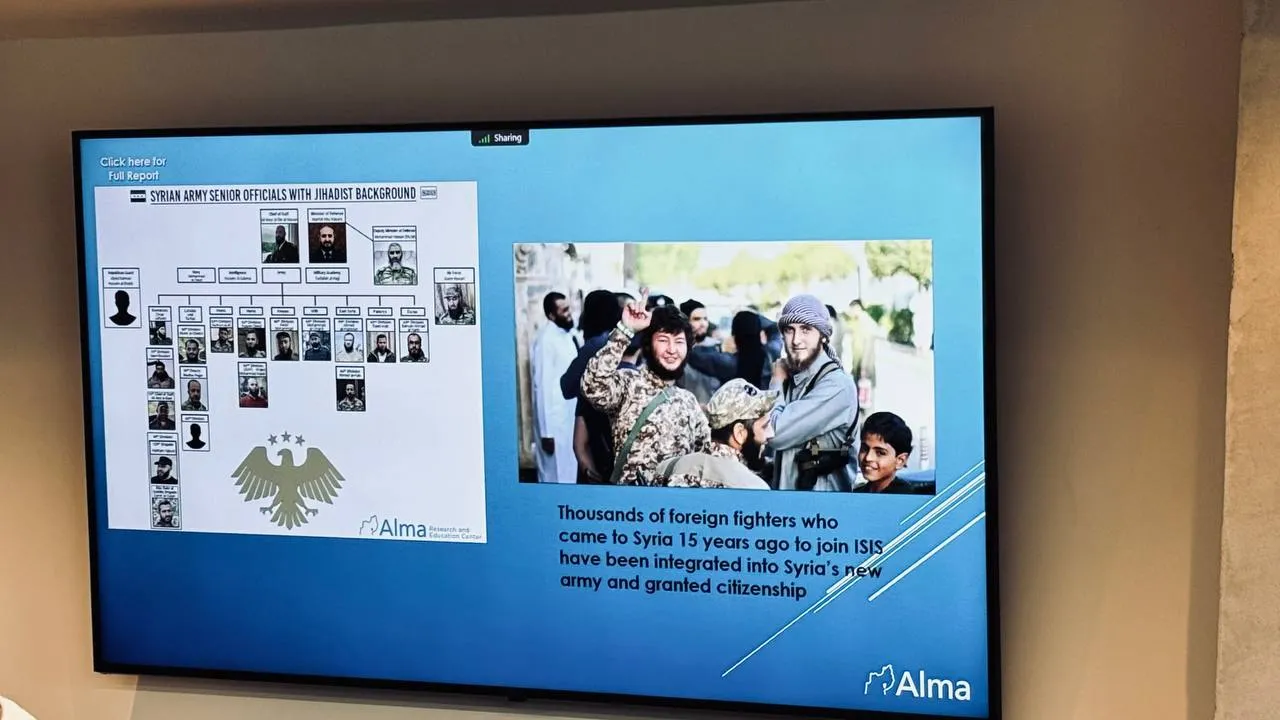
The answer to why southern Lebanese communities do not turn away from “Hezbollah” even after their villages have been reduced to ruins and more than a million people have become refugees lies far beyond the purely military realm. Over the course of a decade, the group has built a parallel social reality, replacing the weak and corrupt Lebanese state.
“Hezbollah is not just a terrorist organization,” explains Sarit Zehavi. “It is a social movement and a political party. It provides Lebanon’s Shia communities with all the services the Lebanese government fails to provide: schools, hospitals, gas, electricity, food, housing, and banking services. If you get electricity from the government, it’s only for a couple of hours a day. If it comes from Hezbollah, it’s available most of the day. If you’re a Hezbollah fighter, you earn a higher salary than a soldier in the Lebanese army.”
This complete socioeconomic dependence is firmly reinforced by ideological indoctrination starting in early childhood. “Hezbollah” has its own extensive scout movement, a network of private schools and religious institutions where children are instilled from an early age with a “culture of death”—a concept in which dying in the struggle against Israel is the highest purpose in life.
During the briefing, Sarit Zehavi cites shocking examples of this mentality and quotes statements made by the residents themselves. Parents in these communities aspire to something for their children that is entirely at odds with what is customary in the civilized world: they do not want their sons and daughters to grow up to be doctors or lawyers, but rather to become martyrs and die.
“In one of the videos, a father and mother openly talk about how proud they would be if their children died for this cause,” the analyst emphasizes. “They say outright that they would like to have even more children so they could sacrifice them. The mother says how happy she would be if she had more children who would die and become shahids. In another, more recent video, a grandmother holds her three-year-old grandson in her arms during the funeral of his father, a militant, and tells the boy that one day he will follow in his father’s footsteps and also die as a shahid. The grandmother is essentially wishing death upon her own three-year-old grandson shortly after her son’s death. Such is this mentality. And that is precisely why it is so difficult to defeat an enemy who thinks this way.”
For religious fanatics and their sponsors in Tehran, suffering and destruction themselves are interpreted as the highest manifestation of resilience—and thus as victory.
“No matter how much they suffer, for them, the suffering itself becomes a victory,” notes the head of ALMA. “They suffer, but they continue to exist. They can still wage war against Israel. Even if they’re now only capable of launching a single drone, for them that means they’re holding their ground and winning. No matter how hard you strike them, they’ll still perceive it as their own victory, because they view self-sacrifice as a victory.”
That’s why standard notions of military logic crumble to nothing here. The assumption that the enemy will become exhausted, reassess the cost of their losses, and eventually raise the white flag remains nothing more than an illusion.
“That won’t happen,” Sarit Zehavi emphasizes. “After all, the harder you hit them, the more they consider themselves victors, as long as they’re able to withstand the blow and continue to exist in any form.”
This same ideology also justifies the “human shield” tactic. Footage from the liberated villages in southern Lebanon shows underground tunnels running directly beneath children’s bedrooms, as well as launchers mounted inside private homes or ambulances.
“In every house in Shiite communities, you can find something connected to ‘Hezbollah’: weapons, a launch pad, a tunnel under the floor,” Zehavi emphasizes. “They themselves claim that the distinction between civilians and militants is nonsense, that they are all part of ‘Hezbollah.’ And when Israel strikes a launch pad in a residential building, the enemy uses this to accuse Israel of violating humanitarian law.”
This vacuum of effective state authority, combined with a fanatical ideology of self-sacrifice and financial support from Iran, makes the group extremely resilient. Attempts to disarm “Hezbollah” through diplomatic agreements have reached a dead end: the Lebanese army, about half of whose personnel are Shiites themselves, simply refuses to enter homes and forcibly confiscate weapons, fearing the outbreak of a new civil war.
Why People Are Not Returning Home
Even after the elimination of Hezbollah’s leadership, the IDF’s ground operation, and the signing of yet another ceasefire agreement, the northern regions of Israel are recovering very slowly. Despite the government’s appeals and the army’s assurances, a significant portion of the evacuated residents simply refuse to return.
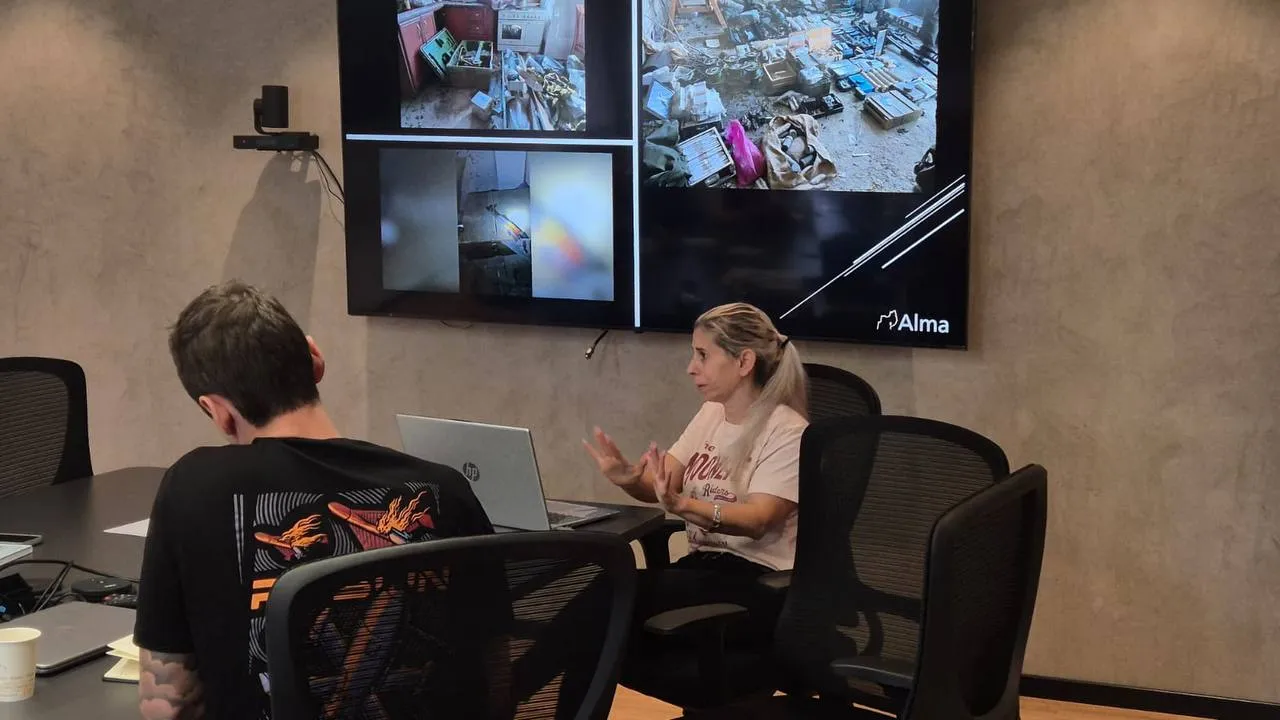
“For each person, this is a very personal decision,” Sarit Zehavi emphasizes at the end of the briefing. “Right now, the northern region is in the recovery phase: we need to repair the infrastructure and rebuild homes. But there are communities where only about 40, 50, or 60 percent of the population has returned. Some homes still stand empty. After what Hamas did on October 7, people can no longer return to life near the border if they know that militants are still on the other side and know what might happen.”
In Israel’s harrowing experience, Ukraine may recognize its own, grim post-war reality. Military superiority, the presence of powerful air defense systems, and even the successful de-occupation of territories do not guarantee an automatic return to normal life. If an aggressive enemy remains on the other side of the border and is able to strike civilian communities with cheap, haphazard attacks, the border region risks being stuck for years in a state of a desolate “gray zone.”
The harsh reality in Israel is that it is not enough to simply defend the border or hold the front line. Victory in modern warfare is determined not by the absence of enemy tanks in a city, but by a person’s ability to sleep peacefully in their own home. This will be the main task once active hostilities have ended: to restore people’s sense of security, without which no community, no business, and no region can recover.




