
IWC to discuss threats to whales in Hobart — ABC News Australia
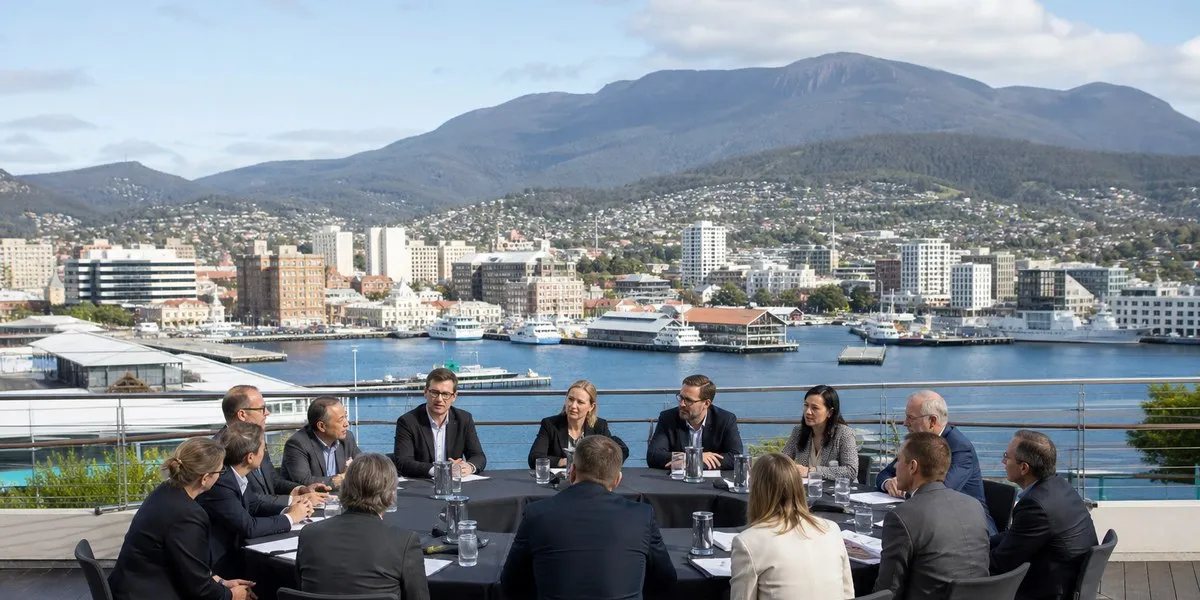
The 70th meeting of the International Whaling Commission (IWC) will take place this week in Hobart, Australia, where participants will consider current threats to whales and the creation of a sanctuary in the South Atlantic. Around 300 delegates from 63 countries — government representatives, scientists and observers — will take part in the meeting, ABC News Australia reports.
The meeting coincides with two anniversaries: the 80th anniversary of the IWC, founded in 1946 after the signing of the International Convention for the Regulation of Whaling, and the 40th anniversary of the moratorium on commercial whaling. A significant decline in populations prompted the commission to introduce whale protection measures in the 1960s, and a complete ban on commercial whaling took effect in 1986.
New risks to populations
IWC Chair Nick Gales said that the ban on whaling had helped some populations that had previously been close to extinction recover. At the same time, whales now face other human-caused risks: bycatch in fisheries, vessel collisions, entanglement in nets and ocean noise pollution.
More current news is available on the UA.News Telegram channel Telegram.
According to Gales, modern whaling accounts for less than 1% of the scale of industrial whaling in the past. At the same time, threats to whales remain serious because of radical changes to the ocean caused by human activity.
Sanctuary and krill fishing
Delegates will also consider an initiative by South and Central American countries to establish a South Atlantic Whale Sanctuary. The proposal has been advanced for 25 years. The planned area would cover waters east of South America and connect with the existing Southern Ocean Sanctuary around Antarctica. Its approval requires the support of three-quarters of delegates, as it would require an amendment to the whaling convention.
Scientist Vanessa Pirotta named climate change, human activity and industrial krill fishing in Antarctica among the key challenges. The IWC will discuss efforts to manage the krill fishery, on which whales feed. According to Gales, the IWC Scientific Committee is cooperating with the Convention on the Conservation of Antarctic Marine Living Resources, which is responsible for managing the krill fishery. Japan left the IWC in 2019 to resume commercial whaling.




