
China simulates F-35 detection at 61.5 km — South China Morning Post
Chinese researchers have created a computer model of a missile-mounted single-photon lidar that, under ideal conditions, can detect and track the US stealth F-35C fighter at a range of up to 61.5 km at night. During the day, the maximum simulated range was 27.7 km, the South China Morning Post reports.
Calculations for a missile system
The study was led by Li Zhiyuan of the Chinese Academy of Airborne Missiles, which specializes in air-to-air missiles. The paper was published on September 18 in the peer-reviewed Chinese journal Aero Weaponry.
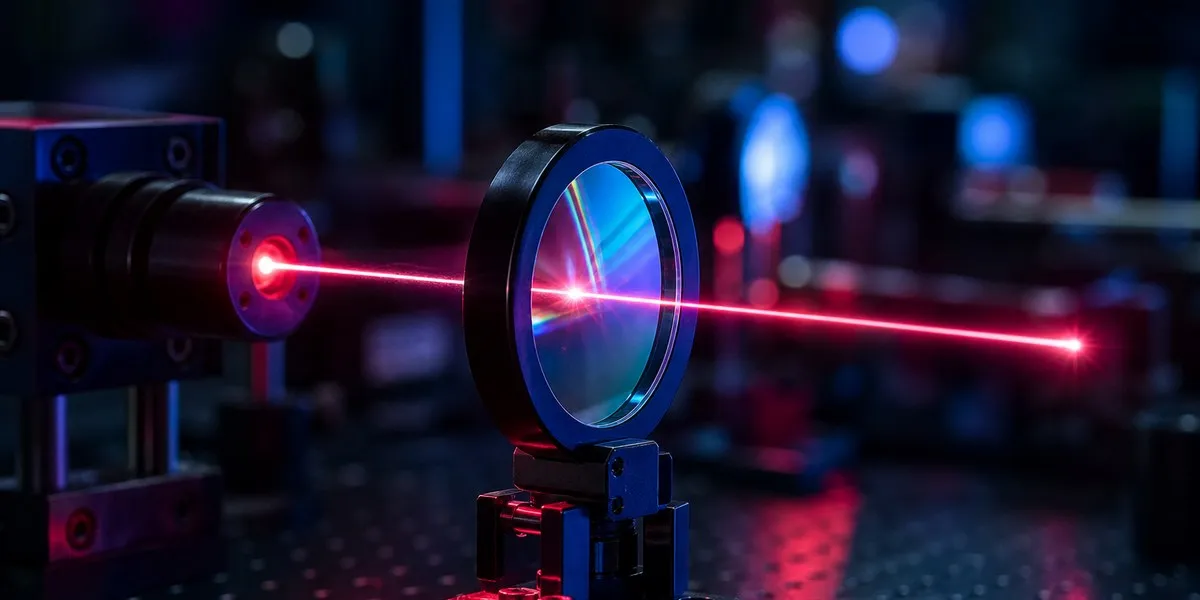
The model examined a single-photon lidar mounted on a missile and operating at a wavelength of 1,064 nanometres. Unlike radar, which uses radio waves, lidar detects reflected laser light and is designed to register an extremely small number of photons returning from a target.
The calculations accounted for sensor recovery between detections, atmospheric transmission over a distance of 15 km, background sky radiation, atmospheric backscatter, and the detector's intrinsic noise. For a system constrained by a missile's size and power consumption, laser pulses with an energy of 1 millijoule and a 100 mm aperture were used.
More current news is available on the UA.News Telegram channel Telegram.
Range and caveats
According to the authors' estimate, the system required a signal-to-noise ratio of 8.8 decibels to acquire an F-35C — at least 9.4 registered reflected photons. At a distance of 27.7 km, the model provided depth determination with an accuracy of up to 20 cm and transverse resolution of up to 50 cm.
The authors chose a wavelength of 1,064 nanometres because, in their assessment, stealth aircraft have fewer specialized countermeasures against active laser detection than against radar or infrared surveillance. At the same time, the study does not confirm that such a system has already been built, flight-tested, or integrated into a missile.
An anonymous military analyst doubted that a narrow laser beam could serve as a means of early target search in a wide airspace. According to the analyst, at the initial stage such a system is more likely to be a rangefinder. Li Zhiyuan said further work would focus on optimizing photon-related parameters and more accurate methods of detecting stealth targets.




