
In the Congo, locals set fire to a medical center over the body of a man who died of Ebola — AP
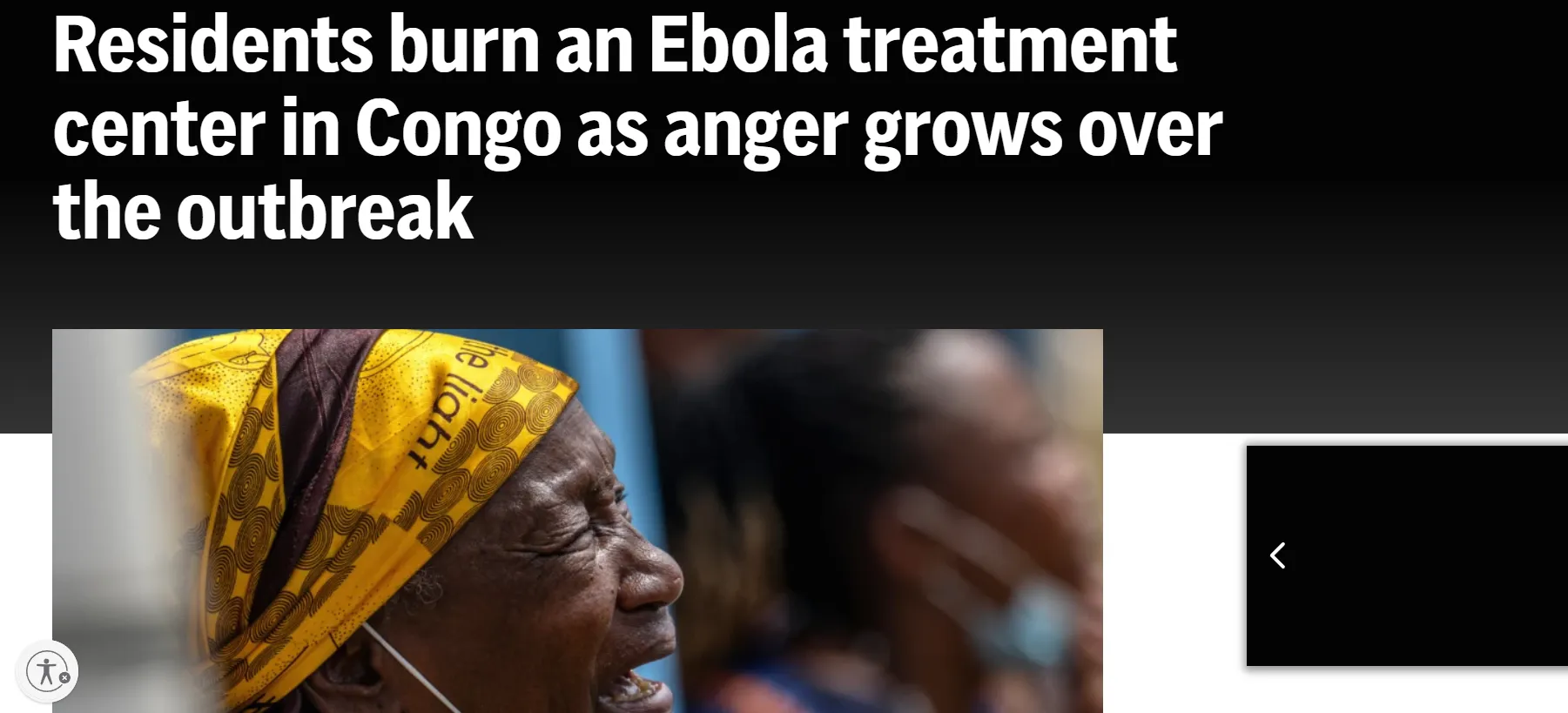
In the town of Rwampari in eastern Democratic Republic of the Congo, local residents set fire to an Ebola treatment center.
This was reported by the Associated Press.
The conflict arose due to strict quarantine restrictions that conflict with traditional burial rites.
This happened after medical staff and law enforcement officers prevented relatives from taking the body of a man who had likely died from the deadly virus.
Strict safety regulations, particularly regarding the burial of the deceased, often clash with local traditions.
The bodies of Ebola victims remain highly contagious even after death, so authorities insist on special burial procedures, which often provoke outrage among the relatives and friends of the deceased.
According to eyewitnesses, a group of young people tried to take the body of their friend to hold a funeral at home, but the police did not allow them to do so.
After a failed attempt to calm the crowd, the young men stormed the center and set the building on fire.
The aggressive crowd caused significant damage to the medical facility, destroying critical infrastructure.
Journalists witnessed the attackers smashing equipment and setting fire to items inside, as well as the body of one of the suspected Ebola victims.
Humanitarian workers were forced to evacuate the area immediately to save their own lives. According to law enforcement officials, people did not understand the requirements for safe burial during the epidemic. At
the same time, representatives of the humanitarian organization Alima stated that the situation was eventually brought under control, and medical teams resumed their work.
Ebola is an acute, highly contagious viral disease of natural origin characterized by often severe progression, high mortality, severe intoxication, dehydration, and damage to the blood vessels of many organs, leading to the development of severe hemorrhagic syndrome.
It is included in the list of diseases that can seriously affect public health and can spread rapidly on an international scale.
According to official data from the Congolese authorities, 671 suspected cases of infection and 160 deaths have been recorded in two provinces.
However, the World Health Organization believes that the actual scale of the epidemic may be significantly larger.
In the DRC, the death toll from Ebola has risen to 131
Earlier reports indicated that the 17th Ebola outbreak had been recorded in the Democratic Republic of the Congo, claiming the lives of 80 people. This time, the disease was likely caused by the little-studied Bundibugyo ebolavirus strain, rather than the more common Zaire ebolavirus.
Ethiopia has recorded its first outbreak of the Marburg virus, which is clinically similar to Ebola. The pathogen is capable of spreading rapidly, but there are no vaccines against it.


