
The Ministry of Foreign Affairs of Ukraine Responded to the New U.S. Sanctions
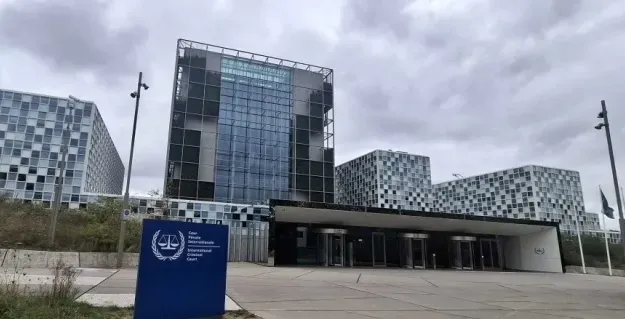
The Presidium of the Assembly of States Parties to the Rome Statute expressed deep concern over new U.S. sanctions against officials of the International Criminal Court. The restrictions apply to ICC President Tomoko Akane and Senior Counsel Abdoulaye Seye. The Assembly stated that such actions could hinder the Court’s work and called on member states to remain united in defending international justice.
The Bureau of the Assembly of States Parties to the Rome Statute responded to the expansion of U.S. sanctions against representatives of the International Criminal Court. In a statement published on the ICC’s website, Assembly representatives expressed deep regret over the new restrictions. They concern the Court’s President, Tomoko Akane, and Senior Counsel Abdoulaye Seye.
“The Bureau of the Assembly of States Parties expressed deep regret over the expansion of U.S. sanctions against the ICC President and Court staff,” the statement reads. The Assembly believes that the sanctions place additional pressure on the international judicial institution and its staff.
The sanctions build on previous restrictions
The new U.S. restrictions are not the first U.S. sanctions against officials of the International Criminal Court. As noted by the Assembly, they supplement previously imposed sanctions against the leadership of the ICC Office of the Prosecutor and eight judges of the Court. U.S. authorities have previously imposed restrictions on ICC officials due to the Court’s activities concerning citizens of the United States and other countries.
In particular, the U.S. has opposed ICC decisions and actions that Washington considers to exceed the Court’s jurisdiction. The ICC itself insists on the independence of its work and its right to conduct investigations in accordance with the Rome Statute. Now, new Court officials have been added to the list of individuals subject to U.S. restrictions.
The Assembly Expresses Concern Over Pressure on the Court
Representatives of member states stated that the sanctions could complicate the ICC’s work. The Assembly called such actions “regrettable attempts to obstruct the work of the Court and its staff.” This refers to their duties to investigate and adjudicate cases involving the most serious international crimes. “Such actions undermine the principles of the rule of law, the fight against impunity, and a rules-based international order,” the Assembly emphasized.
The Assembly also stated that ICC officials must be able to carry out their work free from political pressure. This is crucial for the Court, as its activities involve investigating war crimes, crimes against humanity, genocide, and other particularly serious crimes.
The Assembly Expressed Support for the International Criminal Court
Following the imposition of new sanctions, the Presidium reaffirmed its full support for the International Criminal Court, its officials, and its staff. Representatives of the Assembly called on the States Parties to the Rome Statute to remain united and to defend the principles of international justice. In essence, this means that countries that recognize the ICC’s jurisdiction must ensure the Court can operate independently.
This issue is of particular importance for countries that rely on the ICC to investigate international crimes. The Court can gather evidence, conduct investigations, and issue arrest warrants for suspects accused of the most serious crimes. The Assembly emphasizes that political pressure on Court staff must not influence these processes.
What Is the Assembly of States Parties?
The Assembly of States Parties is the body responsible for the governance, oversight, and legislative matters of the International Criminal Court. It is composed of representatives of states that have ratified or acceded to the Rome Statute. The Rome Statute is the international treaty upon which the ICC was established. It defines the Court’s powers and the crimes that fall under its jurisdiction.
In particular, the Assembly participates in resolving the Court’s administrative and budgetary matters, as well as in the selection of certain officials. Therefore, its reaction to U.S. sanctions carries political and institutional significance. Representatives of the member states effectively stated that they consider the independence of the ICC to be an essential condition for the functioning of the international justice system.
Why This Is Important for International Justice
The ICC was established to try cases involving the most serious crimes, such as genocide, crimes against humanity, and war crimes. The Court does not operate like a typical national court. It adjudicates cases under international law and has the authority to prosecute individuals suspected of committing the most serious crimes. That is why any pressure on its judges, prosecutors, or other staff members provokes a broad international reaction.
The Assembly believes that sanctions against ICC officials could set a dangerous precedent. If staff members of international judicial institutions fear political or economic repercussions for their decisions, this could undermine their independence. At the same time, the U.S. sanctions themselves are part of the American government’s stance on the ICC’s jurisdiction. The United States is not a state party to the Rome Statute and does not recognize the Court’s universal jurisdiction over U.S. citizens.
The ICC called on states to remain united
Following the expansion of sanctions, the Assembly called on States Parties to the Rome Statute to prevent any weakening of the international mechanism for accountability for the most serious crimes. “The Bureau reaffirmed its full support for the International Criminal Court, its officials, and staff,” the statement noted.
The issue of U.S. sanctions against ICC officials now remains part of a broader debate over the limits of international justice and its independence. For the states parties to the Rome Statute, the primary task remains ensuring conditions under which the Court can continue to investigate and adjudicate cases without external pressure. The statement was published on the ICC’s website.
The European Union expressed deep regret over the United States’ decision to impose sanctions against Tomoko Akane, President of the International Criminal Court, and Abdoulaye Seye, Senior Counsel at the ICC. The EU emphasized the importance of the Court’s independence.


