
More than 21,500 borrowers blacklisted in Nepal — Kathmandu Post
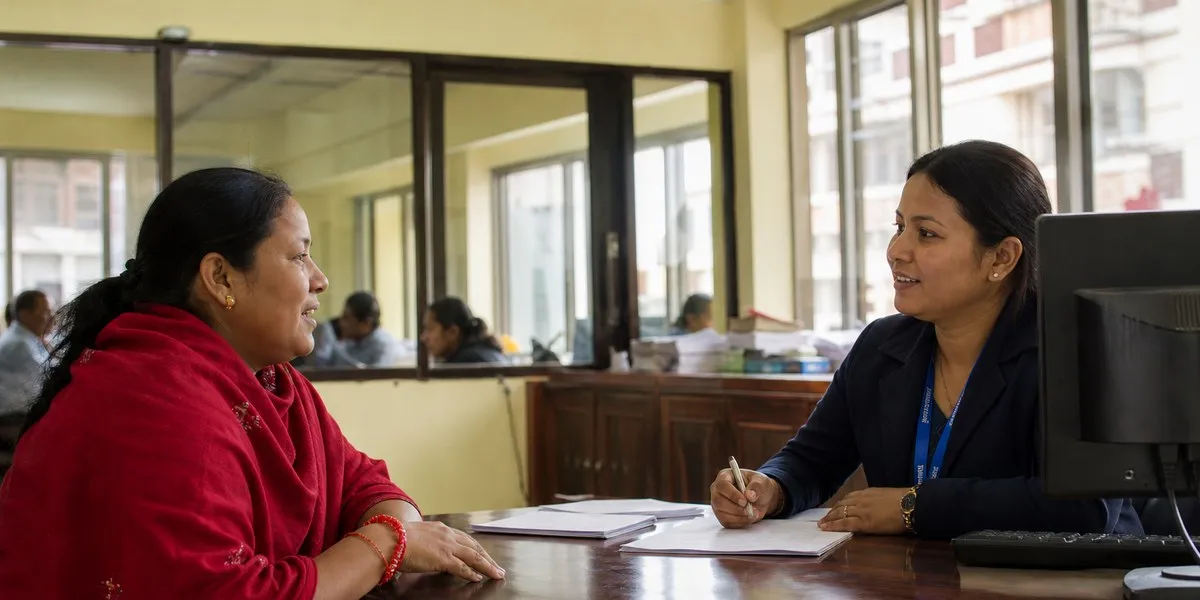
In Nepal, more than 21,500 borrowers were blacklisted during the 2025–2026 financial year for failing to repay microfinance loans. This accounts for about 36% of all borrowers added to such a list during the year, Kathmandu Post reports.
According to the Nepal Credit Information Centre, 170,000 people are currently blacklisted, including 31,797 clients of microfinance institutions. Over the past four years, the number of blacklisted microborrowers has risen from 710 in the 2022–2023 financial year to 3,600 in 2023–2024, 5,800 in 2024–2025, and about 21,600 in 2025–2026.
Reasons for rising debt
Experts link the situation to a decline in economic activity, falling incomes and demand, as well as restrictions imposed by Nepal's central bank on obtaining loans from multiple microfinance institutions. Current rules allow one borrower to take loans from a maximum of two such institutions.
Previously, some small entrepreneurs took out new loans to repay the principal and interest on earlier loans. After problems in the cooperative sector and the introduction of restrictions on multiple lending, this disrupted the cash flow on which small businesses depended.
More current news is available on the UA.News Telegram channel Telegram.
Former central bank executive director Prakash Kumar Shrestha said that during the period of rapid expansion, microfinance institutions aggressively increased lending to meet targets and did not always properly select borrowers in line with microfinance principles. According to him, lenders should also help clients run businesses, but such support was often absent.
Consequences for borrowers and lenders
A committee that studied the situation in the sector found cases in which one person received loans from 23 microfinance institutions. Another borrower had 22 loan accounts at 17 institutions and received a total of 5.217 million Nepalese rupees. At the same time, 81.8% of clients had a loan from only one institution, while 18.2%, or 418,722 people, had loans from two or more.
Borrower groups claim that 42 microfinance institutions continued lending to the same clients in violation of central bank directives. Industry representatives, for their part, say that repayment was affected by campaigns whose participants urged people not to pay their debts.
The problems also affected the lenders themselves: the share of non-performing loans in the sector, which was below 3% until 2022, reached an average of 10.42% by mid-July. At Matribhumi Microfinance, this figure reached a maximum of 26%, according to the central bank.




