
At least 33 Britons missing in Nepal and Tibet after floods
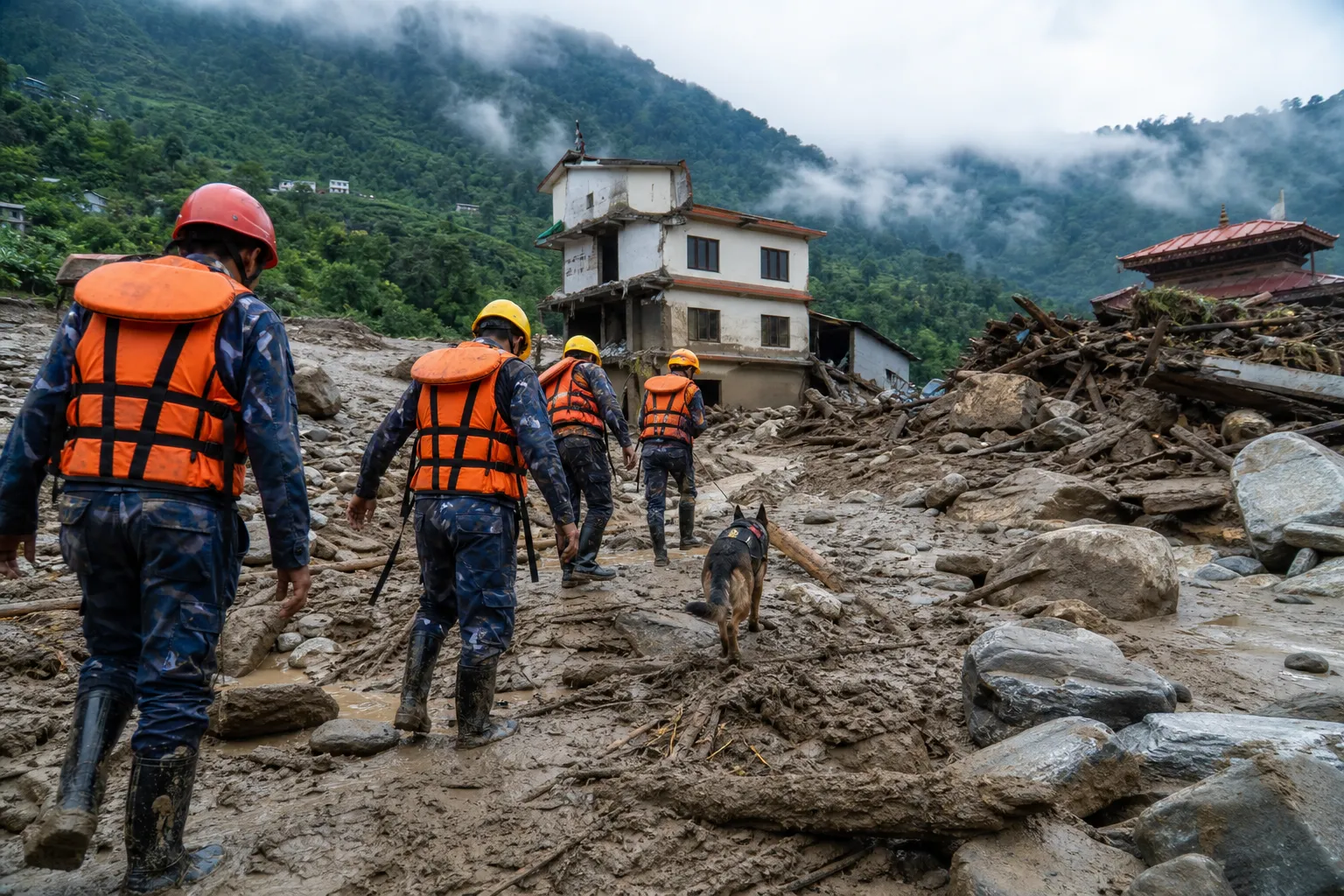
In Nepal, rescuers are searching for at least 33 British citizens who went missing after flash floods on the border with Tibet. According to The Guardian, updated figures indicate that at least 270 people have died and nearly 1,400 are missing, most of them tourists.
According to the publication, the destructive water flows were caused by a glacier collapse. Water swept through mountain valleys in Nepal and Tibet, destroying entire villages. Search operations are continuing in the mountainous Rasuwa district, which borders China’s Tibet Autonomous Region and is popular with tourists and pilgrims.
Missing foreign tourists
The publication also cites preliminary data from the National Disaster Risk Reduction and Management Authority, which reported 165 deaths and 826 people missing. The Nepal Tourism Board had previously stated that 466 foreigners, including 33 British citizens, were among 579 missing travelers in the affected area.
In Tibet, at least three people were killed, according to Chinese state television CCTV. Xinhua reported that 558 people were missing in the region.
More current news is available on the UA.News Telegram channel Telegram.
Tour company Kailash Journeys said it was unable to establish the whereabouts of seven British citizens traveling with it: five women and two men aged between 18 and 55. Operator Alpine Eco Trek reported that a 13-year-old British girl and two Irish citizens had gone missing. They were heading on a nine-day journey to Mount Kailash and were crossing the border from Nepal into Tibet when the floods struck.
United Kingdom’s response
UK government minister Pat McFadden said there is not yet a complete picture of the number of people missing. According to him, British authorities are working with the Nepalese side, while the families of those missing are receiving consular assistance.
Bishal Nath Upreti, president of the Nepal Disaster Management Centre, called the floods a “tsunami from the sky.” He said that after the 2015 earthquake, this was one of the country’s biggest disasters: by his estimate, the excess water in the river amounted to about 20 million cubic metres, and settlements along 40–50 kilometres were destroyed.


