In Germany, archaeologists have discovered a unique burial site dating back to the 5th century B.C. Gold jewelry and other valuable artifacts were found in the tomb, which likely belonged to a member of the Celtic nobility or a ruler. Scientists note that the discovery confirms the existence of an influential center of the Celtic elite in what is now Germany as early as the Iron Age.
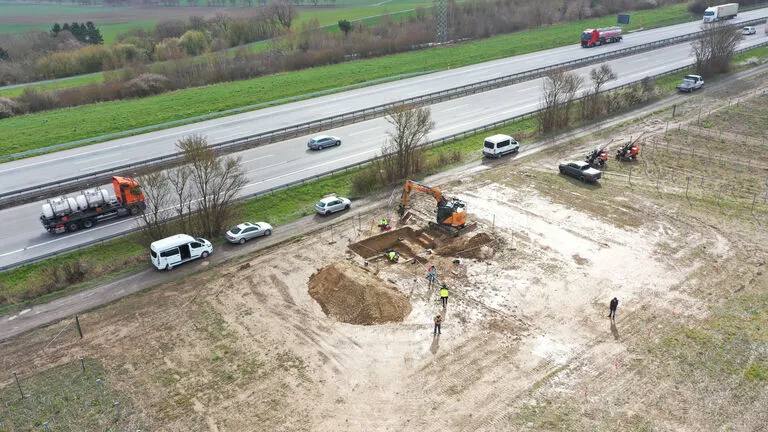
Archaeologists were conducting routine surveys along the main road in Bad Kamberg prior to the construction of a park. However, during the work, they discovered a burial site. “Even after a geophysical survey of the area designated for development, we suspected that there might be an elite Celtic burial site here. But no one expected that we would find not just a princely grave, but a burial site containing a chariot,” noted archaeologist Kai Mückenberger.
However, no human remains were found in the burial site. At the same time, the number of artifacts is sufficient to prove the existence of a Celtic elite during the Iron Age in the Bad Kumberg area.
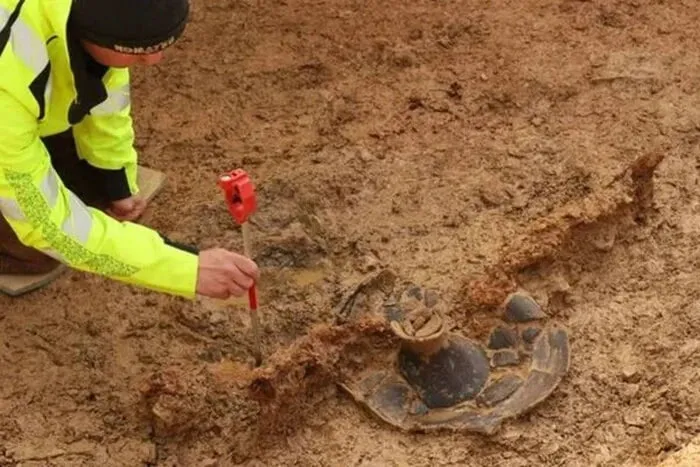
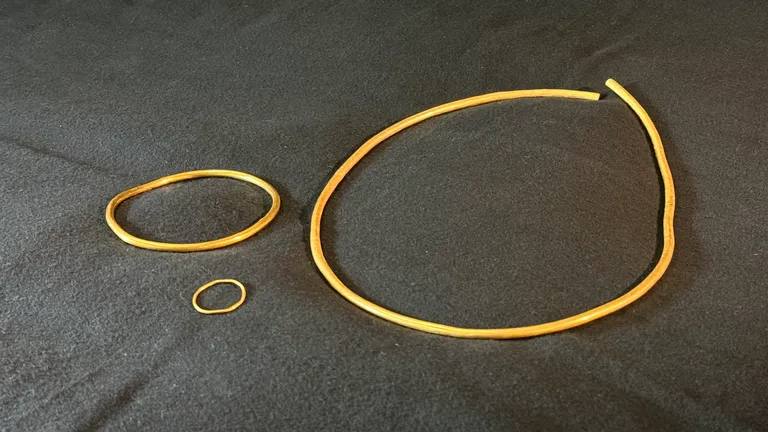
Therefore, even the absence of remains did not make the discovered burial any less valuable. During the two-week excavation, archaeologists uncovered a gold bracelet, a ring, and other items. They also found an Etruscan spouted jug in the grave, brought from the Mediterranean, as well as fragments of spearheads and a knife.
In addition, researchers discovered metal wheel hubs, axle caps, and iron rim parts. This indicates that a two-wheeled chariot was buried alongside the individual. According to experts, archaeologists had previously found only a few similar burials. Therefore, this discovery is considered unique.
Moreover, all the artifacts confirm that the grave belonged to a member of the Celtic nobility. “Thanks to the Early La Tène princely burial in Bad Kumberz, we can finally confirm the existence of a local Celtic elite, which had previously only been hypothesized. This burial and the opportunity to study it using the most advanced analytical methods are of immense importance for the study of the Iron Age in Hesse,” said Udo Recker, Hesse’s chief archaeologist.
Archaeologists are currently working on this find and say that new discoveries regarding this burial site lie ahead.
Archaeologists have discovered unique medieval artifacts near Halych.
As a reminder, the sunken ship “Delta I,” discovered near the coast of Cádiz in Spain, continues to reveal new secrets. Archaeologists have determined that the ship was carrying Swedish cannons and silver ingots from the territory of modern-day Bolivia, which may indicate large-scale smuggling in the Atlantic more than 300 years ago.