
New York calls for humanitarian truce in Sudan — Asharq Al-Awsat
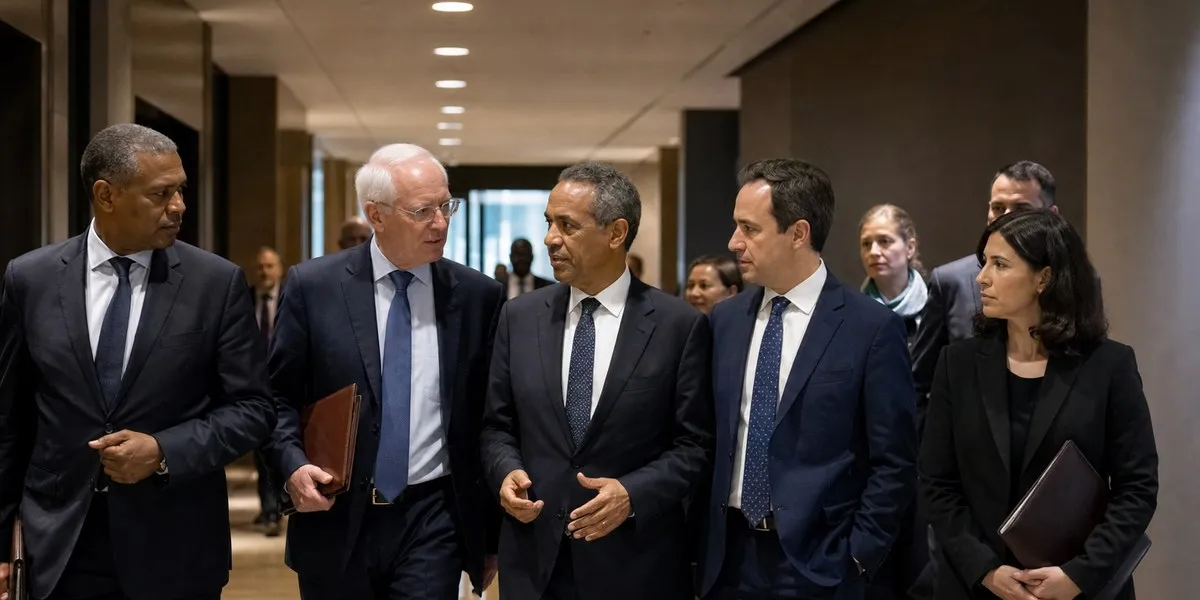
In New York, United States, on September 23, representatives of the Quartet and the Quintet held their first joint meeting on Sudan, co-chaired by the African Union and the United States. Participants called for a humanitarian truce and an end to hostilities, and also agreed to coordinate efforts to protect civilians and prepare mechanisms for monitoring and verifying compliance with a possible agreement, Asharq Al-Awsat reports.
At the same time, the statement issued after the meeting did not announce an agreement between the Sudanese army and the paramilitary Rapid Support Forces (RSF). Participants also did not name a date for possible talks between the parties to the conflict.
Differences over truce terms
According to Reuters, Sudan’s military-led government agreed with most provisions of the U.S. proposal for a 90-day truce. At the same time, it rejected a clause under which the RSF would withdraw only to designated areas, demanding that the force leave all captured cities.
Sudan’s Foreign Ministry said it rejects a negotiation process that, in its view, would legitimize the situation created by the RSF through force. The Rapid Support Forces responded favorably to the truce proposal, but hostilities continued.
More current news is available on the UA.News Telegram channel Telegram.
Previous talks failed to produce lasting results
In May 2023, in Jeddah, the Sudanese army and the RSF signed a declaration on the protection of civilians and later an agreement on a short-term ceasefire and humanitarian measures. The truce did not hold, and in June the army suspended its participation in the talks, accusing the RSF of violating the agreement.
In December 2023, the Intergovernmental Authority on Development (IGAD) reported that army commander Abdel Fattah al-Burhan and RSF leader Mohamed Hamdan Dagalo, known as Hemedti, had agreed to a personal meeting mediated by the organization. It never took place. In August 2024, direct ceasefire talks in Switzerland did not take place because one of the parties was absent.
Chatham House analysts linked the failures of the talks to both sides’ desire to achieve a military victory, as well as to the large number of mediation formats and weak coordination among them. In September 2025, the Quartet proposed starting with a three-month humanitarian truce, to be followed by a permanent ceasefire and a political transition, but this roadmap did not become an agreement between the warring parties.




