
Three dolphins washed ashore in South Africa over two weeks — Daily Maverick
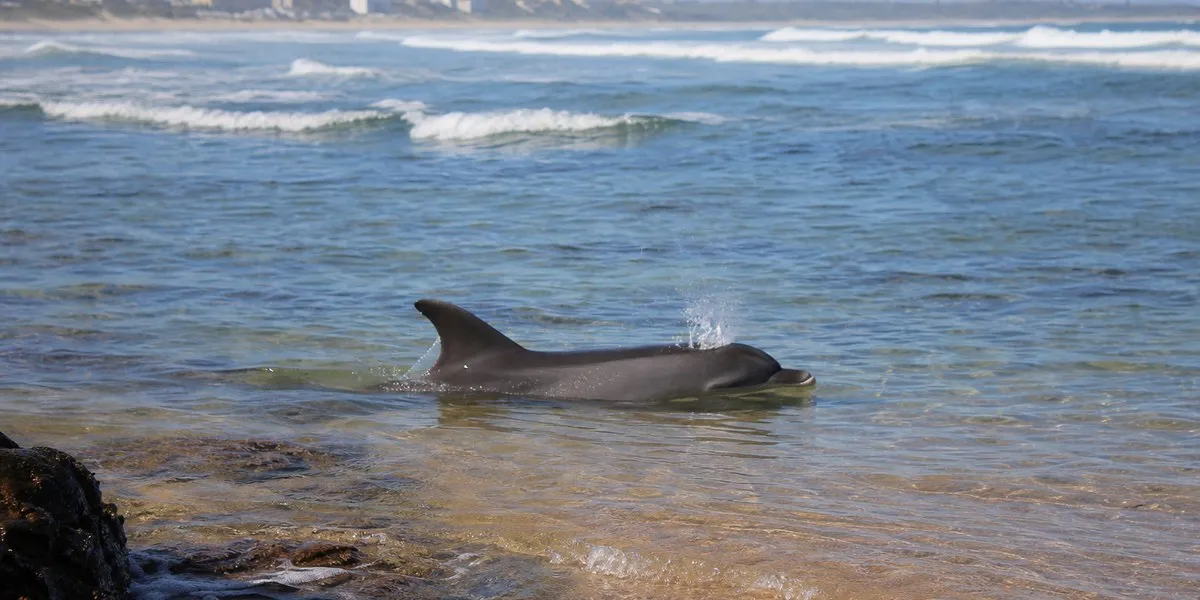
Three dolphins washed ashore in Nelson Mandela Bay, South Africa, over two weeks. Marine mammal specialists consider these cases isolated and currently see no cause for concern, Daily Maverick reports.
Two calves at Kings Beach
The first was a dead newborn bottlenose dolphin found on Kings Beach. According to Bayworld marine mammal collection curator Greg Hofmeyr, it is unclear whether the animal was already dead before it washed ashore or died on the beach. The carcass was preserved for a necropsy, which is expected to help establish the cause of death.
On Monday, another bottlenose dolphin calf, older than the first, was found along the same stretch of coastline. It was in an advanced state of decomposition and likely died at sea several days before ending up on the sand. Hofmeyr noted that the young dolphins may have become separated from their mothers and failed to survive on their own.
Death of a common dolphin
On Tuesday, September 15, an adult common dolphin stranded at Denville Beach. People tried to return it to the water, but the animal swam in circles for some time, ended up back on shore and died before the Bayworld team arrived.
More current news is available on the UA.News Telegram channel Telegram.
During the necropsy, marks resembling tooth cuts from other dolphins were found on the dolphin's side, as well as possible signs of a bladder infection. Hofmeyr assessed that the animal may have pursued prey too close to the beach and become disoriented, or may have been separated from its group.
No data linking the cases to sardine deaths
Experts currently have no data linking the dolphin deaths to an outbreak of pilchard herpesvirus, which has caused sardines to wash ashore in large numbers along the coasts of Namibia and South Africa in recent weeks. South Africa's Department of Forestry, Fisheries and the Environment reported that tests identified the virus as the most likely cause of the mass fish deaths, after which a temporary restriction on sardine fishing was introduced.
Hofmeyr stressed that the two young bottlenose dolphins were still feeding on milk and could not have consumed sardines, while no sardines were found in the common dolphin's intestines. He urged people who see a dolphin, whale or seal on shore not to try to return the animal to the sea themselves, but to monitor it from a distance and contact specialists.


