
Residents of a Melbourne suburb oppose removal of street trees
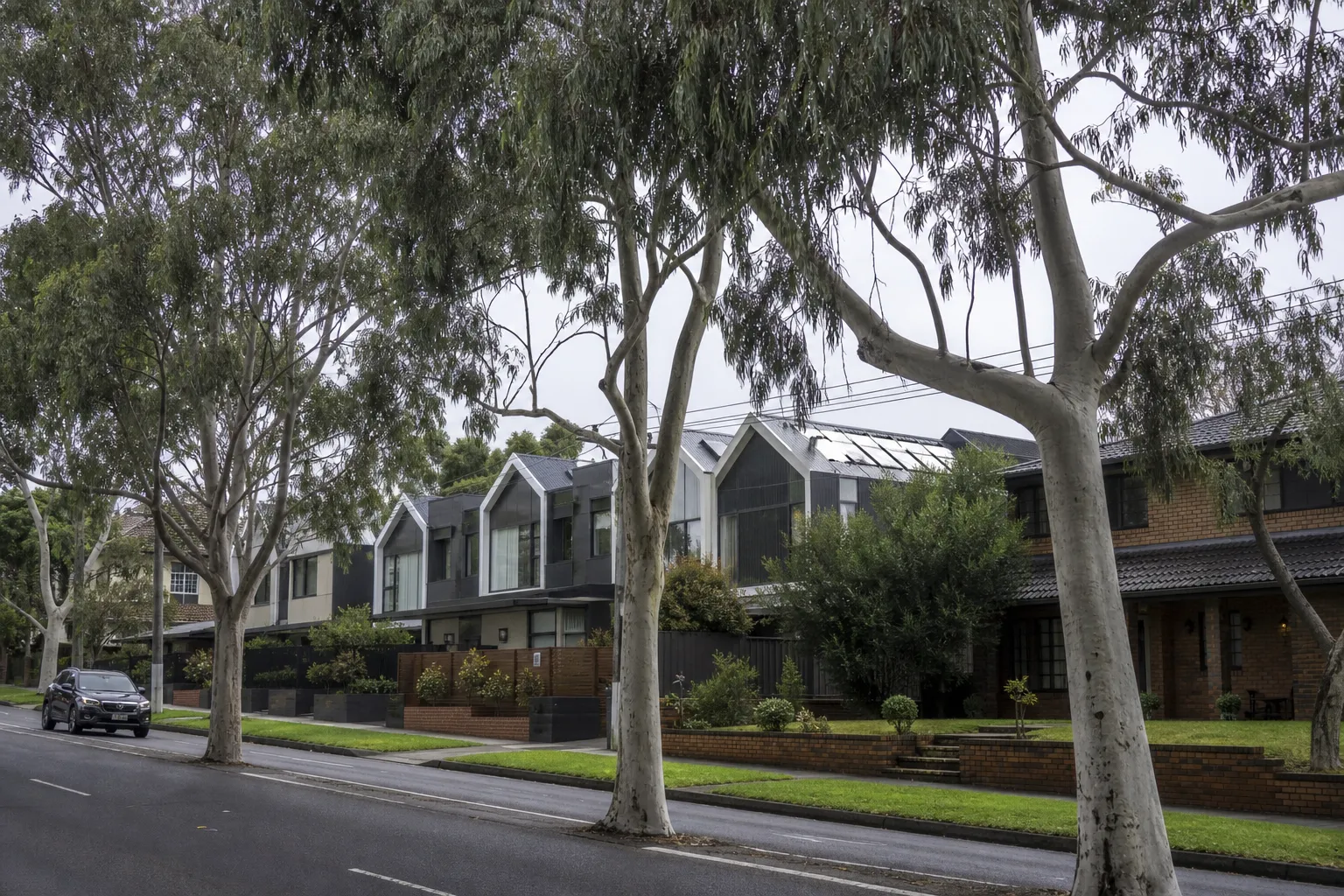
In the Melbourne suburb of Heidelberg, Australia, a group of residents is demanding that the Banyule Council review its approach to pruning and removing mature street trees. The Save Banyule’s Trees campaign is led by architect Nick Rogers, who became involved in activism after a red-flowering eucalyptus tree near his home was cut down.
As ABC News Australia reports, Rogers says the council has begun applying a rule requiring 4.5 metres of clearance above the road for branches. Banyule Council said its approach to managing street trees has not changed: trees are pruned and, as a last resort, removed to ensure clearance above any part of the road.
Tree canopy targets
In 2023, Banyule Council adopted an urban forest strategy. It provides for achieving 30% tree canopy cover in suburbs and 45% along footpaths and local roads by 2050. In areas where this figure is already higher, the strategy does not allow for a loss of canopy cover.
According to the council’s estimates, current tree canopy cover stands at 29%, but it is unevenly distributed: it reaches 40% in wealthier suburbs and about 15% in traditionally working-class areas. The council notes that more urbanised neighbourhoods lag behind areas with larger residential lots and established vegetation.
More current news is available on the UA.News Telegram channel Telegram.
If a mature street tree is removed, the council must plant at least one suitable tree to support long-term canopy goals. However, large trees need decades to reach maturity and provide comparable benefits. This period is referred to as “canopy debt.”
Housing densification and trees
Heidelberg is included on the list of 60 designated Melbourne activity centres. Some areas there have been rezoned for medium- and high-density housing ranging from six to 16 storeys. Rogers believes that development of large plots with private gardens could result in the loss of a significant share of large trees.
Banyule Council called Victoria’s simplified rules for townhouses and mid-rise buildings of up to six storeys a more significant problem for tree canopy cover. Last year, state authorities introduced rules under which removing large trees on private residential plots requires a permit and, in some cases, planting a replacement.
Researchers note that urban greenery can reduce the urban heat island effect, improve air quality, support biodiversity and help drain rainwater. Professor Joe Hurley of RMIT believes cities should not have to choose between housing and trees. Urban designer Leanne Hodyl, in turn, stresses that more flexible rules on building footprint can leave space on plots for permeable surfaces, soil and large trees.


