
Bengaluru protests use of part of parks for infrastructure — South China Morning Post
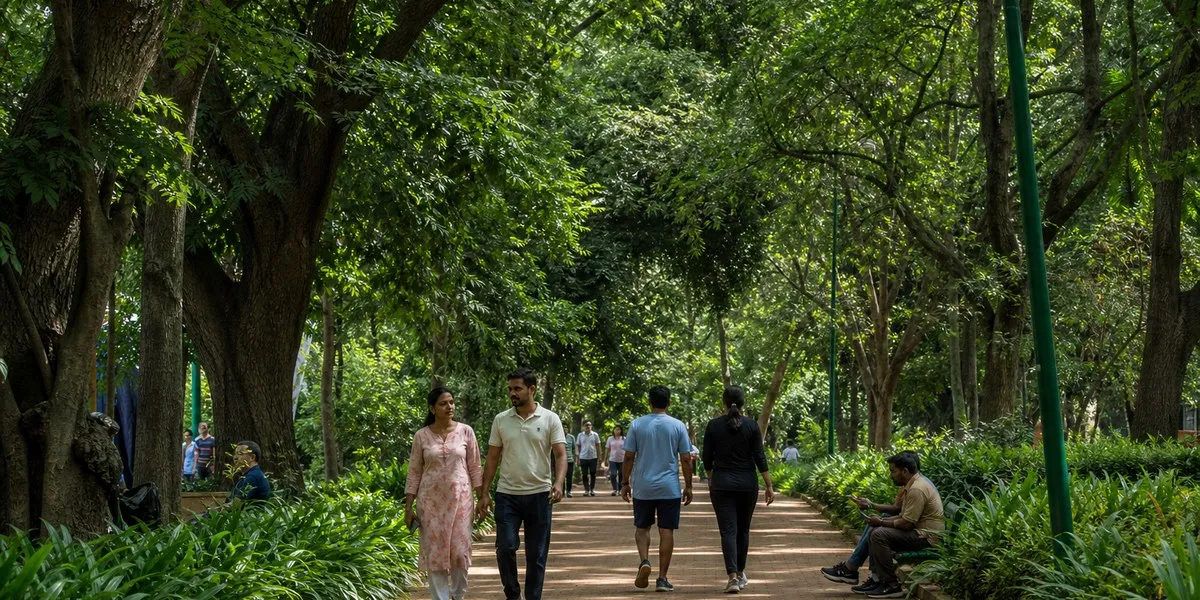
In Bengaluru, India, thousands of people gathered last month at the Lalbagh Botanical Garden to protest a Karnataka state law that allows up to 5% of protected park land to be used for public infrastructure. As the South China Morning Post reports, participants came with the slogan “Walk in Lalbagh. Walk for Lalbagh.”
The law could potentially open up to 12 acres of Lalbagh and up to 15 acres of the neighboring Cubbon Park for infrastructure projects. City residents also oppose a tunnel road project that, according to the publication, would pass through environmentally sensitive areas. Its implementation would involve cutting down about 900 mature trees.
Protecting green spaces
This is not the first campaign to protect Bengaluru’s urban parks: activists previously objected to plans to run a metro line through Lalbagh. The publication notes that the city’s vegetation cover has significantly declined since the 1970s, while land surface temperatures have risen sharply.
Similar disputes are taking place in other cities. In Mumbai, the Save Aarey movement has held weekly protests for nearly four years against development in the 1,300-hectare Aarey Colony urban forest. In Singapore, public outrage was sparked by a plan to clear two-thirds of the Maju Forest for public housing. In London, more than 50 parks and green spaces face serious threats from development and commercialization, according to a Campaign to Protect Rural England report published in January.
More current news is available on the UA.News Telegram channel Telegram.
Decline in green areas
According to UN-Habitat’s World Cities Report 2024, the average share of green spaces in the world’s cities fell from 19.5% in 1990 to 13.9% in 2020. In East and Southeast Asia, the figure declined from 32.5% to 18.6% over that period.
At the same time, Shanghai and Beijing are expanding urban green spaces. By the end of 2025, Shanghai had created 1,000 parks, and over the next ten years the city plans to add another 1,000, including by establishing small pocket parks. By 2035, Beijing intends to increase forest cover to more than 45% and ensure park access within 500 meters for more than 95% of residents.
Studies cited by the publication show the cooling effect of urban parks: trees can reduce air temperatures by 0.5–5.8 degrees Celsius and surface temperatures by 2–12 degrees. In ten large parks in Beijing, the average daytime cooling effect was about 1 degree, while the nighttime effect was 3.63 degrees.


