
September 13, 2026 — Day of Remembrance for the Victims of Fascism: Who Is Remembered on This Day?
September 13, 2026, marks the Day of Remembrance for the Victims of Fascism—a somber day dedicated to the millions of people who perished during World War II as a result of Nazi terror, military operations, famine, disease, mass executions, and imprisonment. This commemorative date has been observed on the second Sunday of September since 1962. Its main purpose is to preserve the memory of the victims and to remind us of the consequences that dictatorship, racism, hatred, and the ideology of violence can bring.
The Day of Remembrance for the Victims of Fascism falls on the second Sunday of September each year. In 2026, this date will be September 13. This commemorative day was established in 1962. September was chosen for a reason: it was in this month that World War II began and ended. On September 1, 1939, Nazi Germany invaded Poland, and on September 2, 1945, Japan signed the instrument of surrender, marking the end of the global conflict.

Therefore, the second Sunday in September has become the day to commemorate the victims of the largest war of the 20th century. This includes not only the soldiers who died on the front lines. Special emphasis is placed on civilians, children, the elderly, prisoners of war, concentration camp inmates, and those who were persecuted because of their origin, nationality, political views, or other characteristics.
At the same time, it is important to correctly understand the status of this date. Many sources refer to it as the “International Day of Remembrance for the Victims of Fascism” and link it to a 1962 UN resolution. However, the current UN calendar of official commemorative dates does not include a separate international day with that name. The UN has other official days of remembrance, including Holocaust Remembrance Day and days commemorating the victims of World War II.
How This Commemorative Date Came About
After the end of World War II, the world gradually came to realize the scale of the tragedy that humanity had endured. Millions of people were killed on the battlefields, in cities and villages, in concentration camps, and at sites of mass executions. Millions more died of starvation, disease, or exhaustion, or fell victim to forced labor. In the 1960s, there was active discussion in various countries about the need to preserve the memory of the victims of Nazism and to prevent the resurgence of Nazi ideology. It was in this context that, in 1962, the second Sunday in September was designated as the Day of Remembrance for the Victims of Fascism.

The date had not only a mournful but also a cautionary significance. Remembering the crimes of the past was intended to serve as a kind of safeguard against the recurrence of such events. After all, victory in war alone does not mean that dangerous ideologies automatically disappear. That is why on this day we speak not only of the dead, but also of the causes that made mass violence, the persecution of entire groups of people, and the extermination of the civilian population possible. It is a reminder of the price of indifference, propaganda, and hatred.
Who Is Remembered on This Day
Most often, the Day of Remembrance for the Victims of Fascism is associated with those who died during World War II. But the list of victims is much broader than just the soldiers who died in battle. Among them were millions of civilians. People died during the bombing of cities, punitive operations, mass shootings, and blockades. Many died of starvation and disease as a result of the war or their time in camps.
The victims of Nazi persecution included Jews, Roma, people with disabilities, prisoners of war, political opponents of the Nazi regime, members of resistance movements, and representatives of other groups. The Holocaust—the systematic extermination of European Jews by Nazi Germany and its allies and collaborators—was a tragedy in its own right. Therefore, this day should not be viewed merely as a reminder of numbers in a history textbook. Behind every number was a real person—a child, a mother, a father, a brother, a sister, a friend, or an entire family. It is precisely the human dimension of this tragedy that is one of the main reasons why the memory of the victims remains important decades after the end of the war.
World War II was a tragedy for the entire world
World War II engulfed a vast portion of the planet. Dozens of countries took part in it, and hostilities took place not only on the European continent but also in Asia, Africa, the Pacific Islands, and at sea. The exact death toll still depends on the counting methodology and sources. Different studies cite different figures, but we are talking about tens of millions of human lives. That is why World War II is considered the largest armed conflict in human history.
The war redrew national borders, destroyed cities, caused mass population displacements, and left millions of people with injuries and trauma. The consequences of the fighting were felt for many years after the Axis powers’ surrender. It is also important to remember the crimes that took place far from the front lines. In the occupied territories, a system of terror, deportations, forced labor, punitive operations, and mass killings was in place. That is precisely why the Day of Remembrance for the Victims of Fascism is not merely about the history of military campaigns. It is, above all, a commemoration of the people who became hostages of war and the criminal policies of a totalitarian regime.
Ukraine suffered enormous losses
For Ukraine, this commemorative date holds special significance. Ukrainian lands became one of the main theaters of combat during World War II, and the population endured occupation, mass killings, deportations, forced labor, famine, and widespread destruction. According to the Ukrainian Institute of National Remembrance, Ukraine’s direct human losses in World War II are estimated at over 8 million people. Among them were both military personnel and civilians. The Ukrainian Institute of National Remembrance also notes that as a result of the war and occupation, approximately 700 cities and 28,000 villages were damaged or destroyed. Nearly 2 million people from Ukraine were taken to Nazi Germany for forced labor.
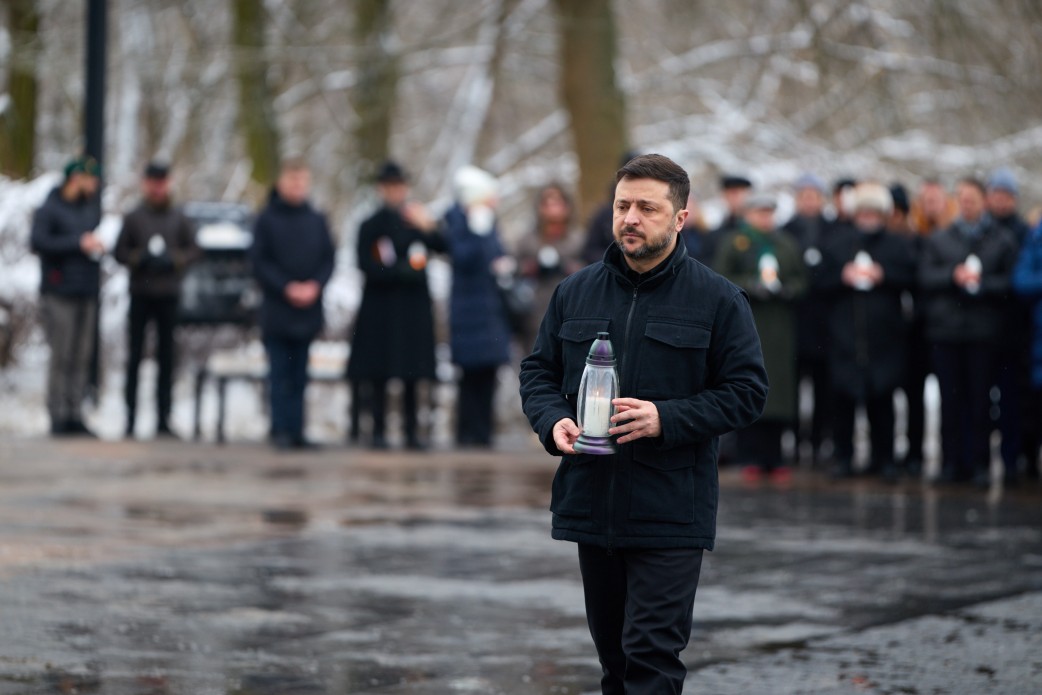
Nazi terror affected virtually all regions of Ukraine. Mass executions, punitive operations, the burning of settlements, deportations, and the persecution of the civilian population took place here. At the same time, Ukraine’s history during World War II was far more complex than the simple “front–rear” dichotomy. Ukrainians fought in various armies, participated in the resistance movement, the underground, and the struggle for liberation. Therefore, the memory of the war in Ukraine is viewed much more broadly today than it was during the Soviet era.
Babi Yar as a Symbol of Nazi Terror
One of the most famous memorial sites in Ukraine is Babi Yar in Kyiv. It was here, in September 1941, that the Nazi occupiers carried out one of the largest mass shootings of Jews during World War II. On September 29 and 30, 1941, 33,771 Jews were killed in Babyn Yar. The Nazi occupation forces themselves reported this figure in a report sent to their superiors. But the killings did not stop there. Over the next two years, the Nazis and their collaborators continued to kill Jews, Roma, prisoners of war, patients at a psychiatric hospital, and others in Babyn Yar. The total number of people killed in Babyn Yar during the years of occupation is estimated at approximately 100,000.
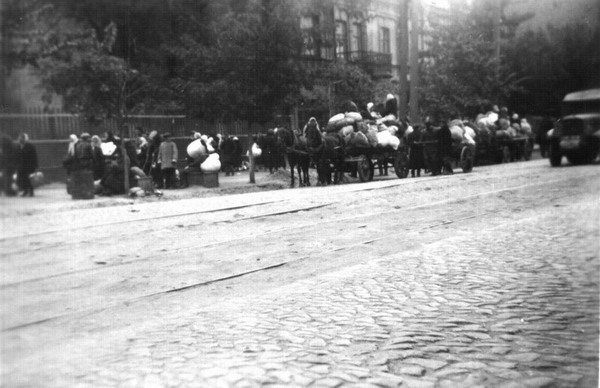
Babi Yar has become one of the symbols of the Holocaust and Nazi mass terror in Eastern Europe. Today, this site serves as a reminder that crimes against humanity do not begin with mass graves, but with the deprivation of individual groups of people of their rights, dignity, and right to life. Therefore, mentioning Babyn Yar in the context of this day is not merely a historical reference. It is an example of where an ideology that declares some people “worse” than others ultimately leads.
Why It Is Important to Talk About Memory
Remembrance is not meant to keep us constantly returning to the past and living in it. Its purpose is to help society understand what happened and prevent the worst-case scenarios from recurring. When history is simplified or distorted, understanding of the causes of the tragedy gradually disappears. People may know the date the war began, but they may not understand how propaganda, discrimination, and political repression gradually created the conditions for mass violence.
That is precisely why it is important to talk about the war through the stories of specific people—about families who were separated, about children who died, about those who were taken away for forced labor, and about people who hid the persecuted or resisted the occupiers. “Remembering” in this context means more than just lighting a candle or laying flowers. It means knowing history, calling crimes by their proper names, and refusing to allow the tragedy to be turned into a tool of political propaganda.
How the Day of Remembrance for the Victims of Fascism Is Observed
This is not a joyful holiday, nor is it a day for loud entertainment events. On this day, various countries hold commemorative ceremonies, lay flowers at memorials, light candles, and honor the dead with a moment of silence. Schools, libraries, museums, and educational institutions may hold themed lessons, lectures, and exhibitions of documents and photographs. People are taught about World War II, the Holocaust, Nazi concentration camps, and the fates of those who survived the occupation.
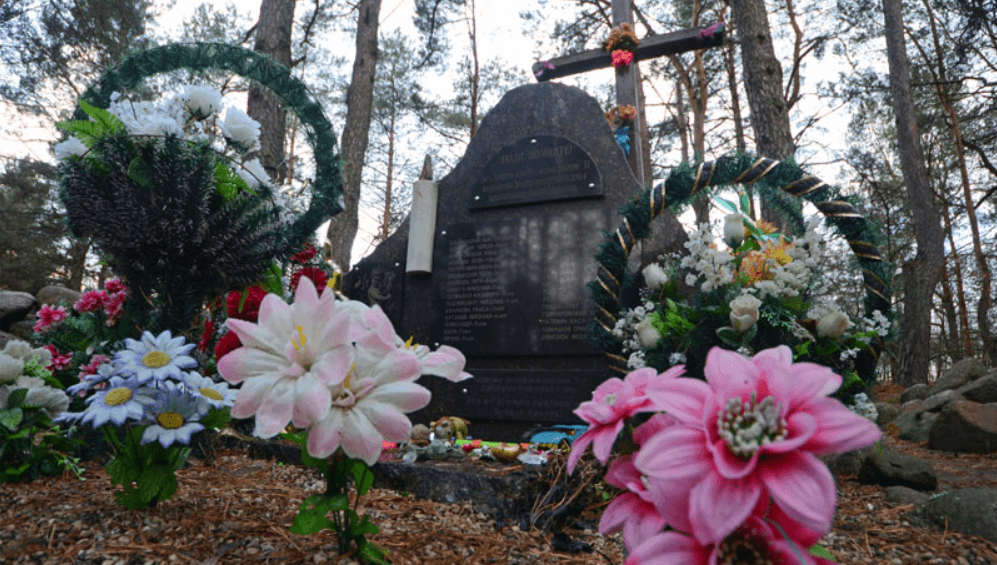
Another important way to mark this day is to visit a memorial or a military cemetery. You can tend to a grave, tidy up a memorial site, or simply lay flowers at a monument. In some communities, public events are organized with the participation of historians, veterans, relatives of the deceased, and eyewitnesses to the war. Such gatherings help keep the memory alive, as the number of people who directly experienced World War II continues to dwindle with each passing year. At the same time, you can honor the victims even without an official ceremony. Reading historical documents, watching a documentary, talking with family members about your family’s history, or visiting a museum—all of these are also ways to keep the memory alive.
What You Can Do on This Day
On September 13, you can devote at least a little time to your family’s history. Many Ukrainians have relatives who lived through World War II—who fought, worked on the home front, survived the occupation, or were forced to leave their homes. You can record the memories of older family members, if they’re still with us. Sometimes a single story from a grandmother or grandfather about life during the war years proves more valuable than dozens of pages in a textbook.
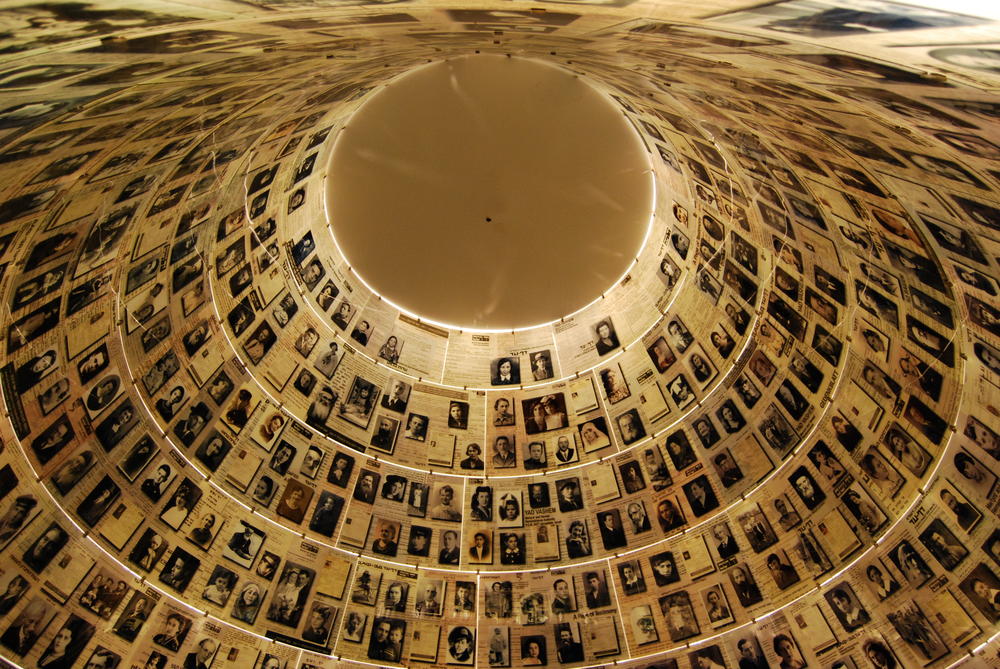
Another option is to find information about local monuments and burial sites. Many cities and villages have places associated with the events of World War II, but few people know about them. It’s also important to learn how to distinguish historical facts from myths and propaganda. This is especially relevant now, as Russia actively uses the topic of World War II to justify its own aggression against Ukraine.

Therefore, remembrance today also means taking a responsible approach to information. It’s important to verify sources and consult archival documents, historical research, and materials from professional academic institutions.
Interesting Facts About the Day of Remembrance for the Victims of Fascism
The date changes every year. The Day of Remembrance does not fall on a specific date but on the second Sunday in September. In 2025, it was September 14, and in 2026, it will be September 13.
The date is directly linked to World War II. September became a symbolic month because the Nazi invasion of Poland began on September 1, 1939, and Japan signed its surrender on September 2, 1945.
Ukraine suffered one of the war’s greatest demographic catastrophes. The Ukrainian Institute of National Remembrance estimates Ukraine’s direct human losses at over 8 million people.
Babi Yar became one of the largest sites of mass murder in Europe. On September 29–30, 1941, alone, 33,771 Jews were shot there. Mass killings at this site continued until 1943.
Jews were not the only victims of Nazi terror. The Nazis persecuted and killed Roma, prisoners of war, people with disabilities, political opponents, members of the resistance, and others whom the regime deemed undesirable.
The memory of the war has more than just a military dimension. World War II is also the story of civilians, deportations, forced labor, occupation, famine, concentration camps, and mass repression.
Why This Date Is Important Today
The Day of Remembrance for the Victims of Fascism has not remained merely a page in history. In today’s world, we are once again forced to speak out against aggressive ideologies, the cult of violence, hate propaganda, and attempts to justify crimes against the civilian population. For Ukraine, this topic is particularly painful. Russian aggression against Ukraine has shown that the lessons of the past do not automatically guarantee safety for future generations. That is precisely why the historical lessons of World War II resonate so strongly today.
The Ukrainian Institute of National Remembrance emphasizes that World War II resulted in over 8 million direct human casualties for Ukraine, and that Ukrainian lands became one of the main theaters of combat operations, occupation, and Nazi terror. Remembering these events is also important because Ukraine has its own complex experience of living between two totalitarian regimes. On Ukrainian soil, the crimes of the Nazi regime were compounded by those of the Soviet system, and millions of people fell victim to war and repression.
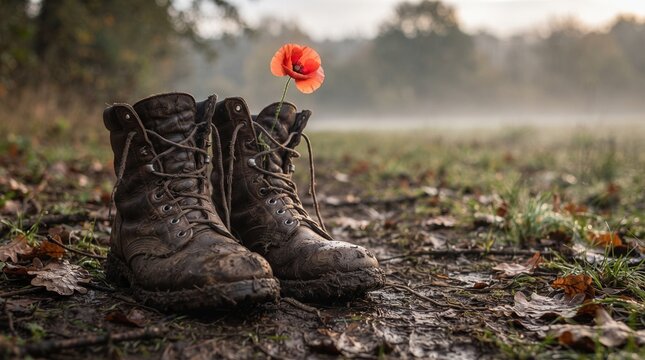
Therefore, September 13 is, above all, a day of silence and remembrance. It is an opportunity to remember those whose lives were taken by the war, to call the crimes of Nazism by their proper names, and to remind ourselves once again that human life cannot be a bargaining chip for political ambitions. Remembrance is necessary not only to know what happened in the past. It is necessary to recognize the dangers of today in time and to prevent history from repeating itself.


