
A 250-million-year-old creature has been discovered in Poland
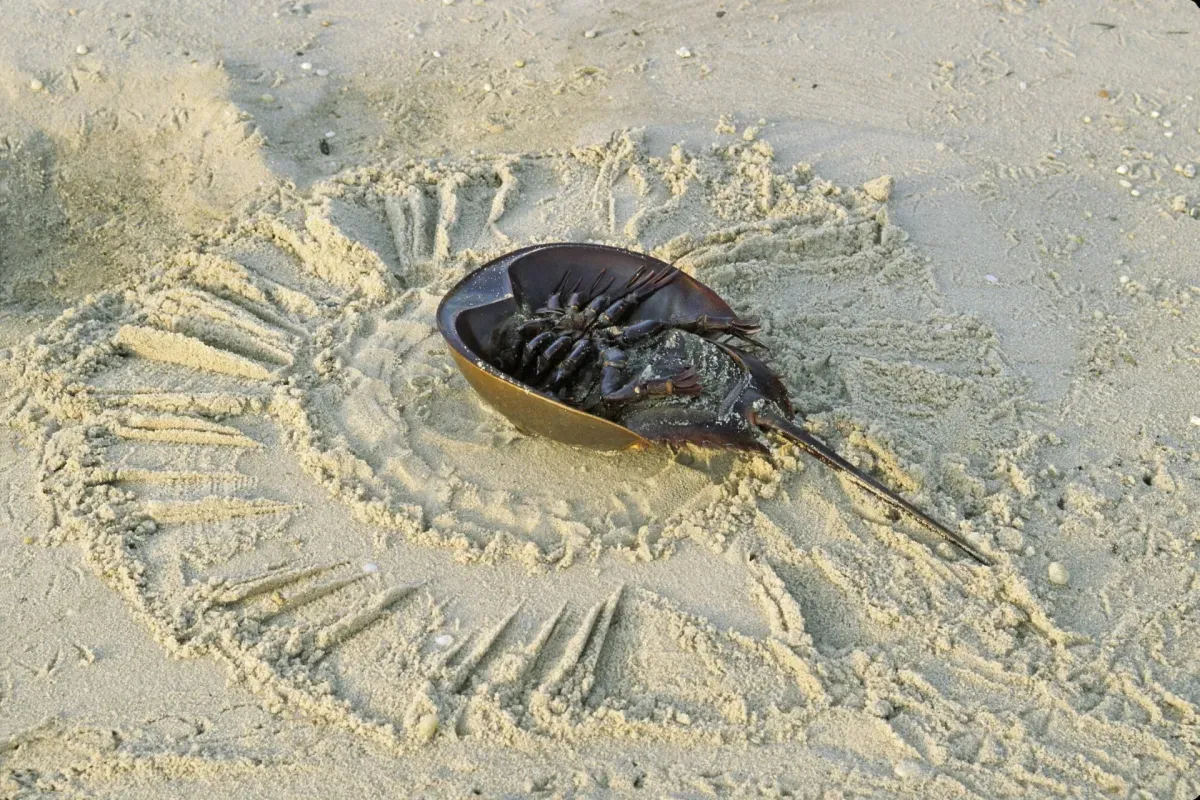
In Poland, during the construction of a highway, workers accidentally stumbled upon the fossils of a creature that lived approximately 250 million years ago. Scientists have determined that this is a new, previously unknown species of lancelet, and the discovery significantly changes our understanding of the diversity of ancient life, according to Interia.
During routine roadwork in the Świętokrzyskie Mountains, construction workers had no idea they were literally turning a page of prehistory that had lain buried underground for hundreds of millions of years, and it was only by chance that scientists were able to access the remains of a creature that lived as far back as the Early Triassic period.
This is a new species of ancient lobe-finned fish, which scientists have named Polonolimulus zaleziankensis, and which was described by researchers from the University of Warsaw together with an international team of paleobiologists after a detailed study of the fossils found during work on the S7 highway.
Experts note that this creature had an unusual body structure, including strongly elongated jaw spines and atypical proportions, which is why it was classified as one of the most exotic representatives of the extinct Austrolimulidae group, which existed on Earth approximately 250 million years ago. According to the researchers, the discovery site was temporary and was backfilled after construction was completed; however, one of the stone blocks bearing the creature’s imprint was preserved at the University of Warsaw, where it sat for years awaiting expert attention until paleobiologists examined it in greater detail.
“This discovery shows just how rich and diverse life was in the ancient oceans,” the scientists note, emphasizing that such finds allow for a better understanding of the evolution of marine arthropods and their place in the planet’s history. Modern swordtails, which are distant relatives of the discovered species, now inhabit the coasts of North and Central America, as well as the waters of the Pacific Ocean off Asia, and despite their appearance, have remained virtually unchanged for millions of years, serving as a kind of “living fossil.”
The biology of these creatures also caught the scientists’ attention: their blue blood carries oxygen thanks to hemocyanin, not hemoglobin as in humans, which is why swordtails are often called “ocean vacuum cleaners,” since they feed on everything they find on the seafloor, cleaning it in a natural way.
Scientists are convinced that such chance discoveries during infrastructure construction may well change our understanding of prehistoric life many times over, as a significant portion of fossils remains hidden beneath layers of earth, waiting for the right moment to be uncovered.
In Poland, starting in July 2026, minimum wages for healthcare workers—from junior medical staff to specialist doctors—will increase significantly.


