
People in Russia are beginning to have doubts about the war, said a former Polish minister
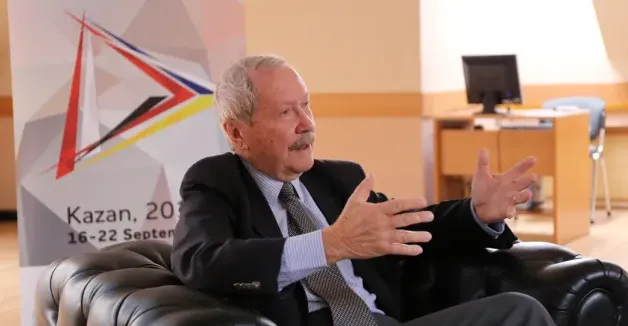
Ukraine is gradually gaining more leverage in the war with Russia, and it is becoming increasingly difficult for the Kremlin to maintain the narrative of a “special military operation.” This was stated by former Polish Minister of National Defense Janusz Onyszkiewicz, who noted that even in Russia, doubts are beginning to emerge about continuing the war.
Ukraine has increasingly powerful tools of influence in the war against Russia, and Russian President Vladimir Putin is gradually coming to realize this. This view was expressed by former Polish Minister of National Defense Janusz Onyszkiewicz in an interview with “Ukrinform.”
According to him, to use U.S. President Donald Trump’s terminology, Ukraine “holds the cards” in this war, and these cards are becoming increasingly strong. “To use President Trump’s terminology, Ukraine ‘holds the cards,’ and, as it turns out, very strong ones at that—a fact Putin is becoming increasingly convinced of,” Onyszkiewicz said.
According to the Polish politician, one of the factors changing perceptions of the war in Russia is the shift of hostilities closer to Russian territory. He explained that for a long time, the war remained a distant event for most Russians. The fighting took place mainly outside Russia and had no direct impact on the daily lives of many citizens. “For several years, the war had a ‘colonial’ character for most Russians, with hostilities taking place far from Russian territory and having almost no impact on the lives of its citizens,” the former minister noted.
However, he said, the situation is gradually changing. “It is now clear that this is a war that does, in fact, affect Russians. And the fact that Peskov is already beginning to refer to what is happening not as a ‘special military operation’ but as a ‘war’ also speaks volumes,” Onishkevich emphasized.
Anti-war sentiment may intensify in Russia
The former head of Poland’s Ministry of Defense believes that, over time, the Kremlin’s portrayal of the war as a so-called “historical mission” may lose traction in Russia. According to him, Russians may come to the conclusion that the war must be brought to an end, as has already been the case with other protracted conflicts. “Russians will come to the conclusion that this war must end—just as it did for the United States in Vietnam. The Vietnam War was lost not because the Vietnamese drove out the Americans, but simply because it proved impossible to continue it any longer,” Onyshkevych said.
He also cited the example of the Soviet Union’s war in Afghanistan, where Moscow was ultimately forced to withdraw its troops due to a shift in public sentiment within the country. Onyshkevych also noted that more critical assessments of the war have begun to emerge among some members of the Russian elite. “Putin certainly remains obsessed with his imperial policy. But an increasing number of influential Russians are beginning to question it,” he said.
According to him, this can be seen in the statements of certain representatives of the Russian authorities, particularly the leadership of the Central Bank of the Russian Federation and some military officials. “Criticism of this war is beginning to take shape in Russia, and let’s hope that it will only grow stronger,” the former minister added.
Crimea Has Become a Problem for Russia
Separately, Janusz Onyszkiewicz mentioned the situation with occupied Crimea, which the Kremlin has used for many years as a symbol of its “victory.” According to him, the peninsula is now increasingly becoming a problem for Russia. “Crimea, which was supposed to be the ‘jewel in the Russian crown,’ is now a burden and a hindrance for Russia,” he said.
Onyszkiewicz noted that the image of Russia’s supposed great success following the annexation of Crimea and the start of the war is gradually losing its luster. “The aura of ‘incredible success’—which the annexation of Crimea and this entire war were supposed to represent—is beginning to fade and recede into the past,” concluded the former Polish defense minister.
In his assessment, the further course of events will depend not only on the situation on the battlefield but also on internal processes within Russia itself, where an increasing number of people may begin to question the cost of continuing the war. This view was expressed by former Polish Minister of National Defense Janusz Onyszkiewicz in an interview with Ukrinform.
In Russia, there has been a sharp increase in the number of people who believe their financial situation will worsen in the near future. According to sociologists, such Russians now account for 22% of the population—the highest figure in the last 11 years. Against the backdrop of rising prices and economic problems, optimism among the population is dwindling.


