
G20 ministers in the US fail to agree on overcapacity — France 24
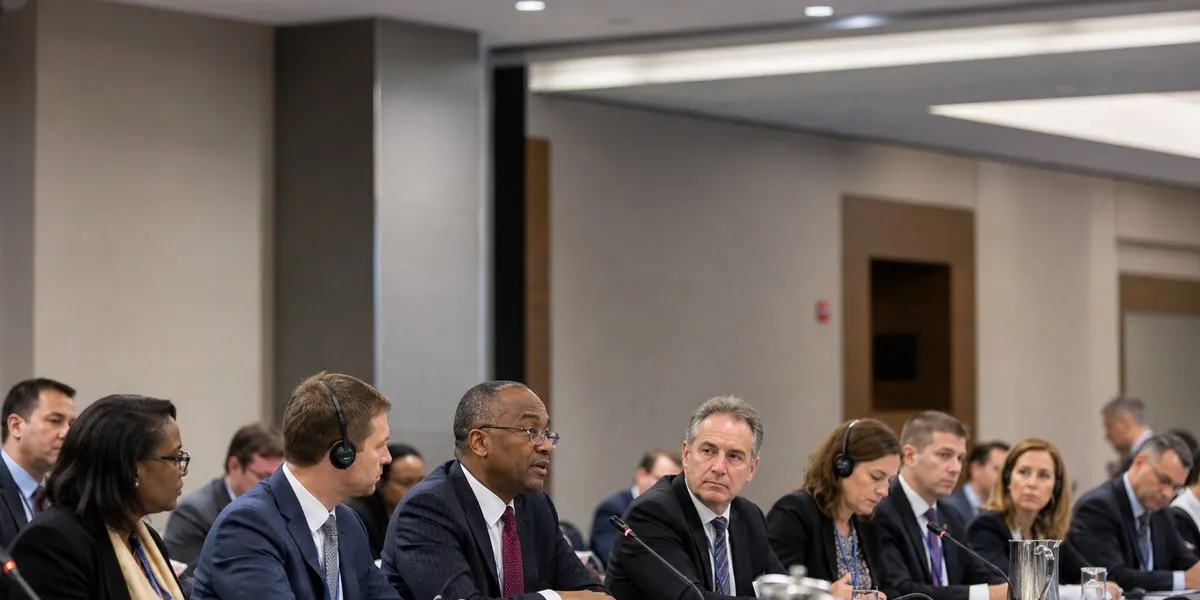
G20 trade ministers at a meeting in Milwaukee, United States, failed to reach an agreement on countering excess industrial capacity and eliminating forced labor in supply chains. This was stated by US Trade Representative Jamieson Greer, France 24 reports.
According to Greer, almost all participants agreed that the problem of excess production capacity requires a response. He also stated that existing trade defense or response mechanisms do not make it possible to resolve it, which, in his view, justifies unilateral US action.
US investigation
The United States is investigating excess capacity in 16 economies, including China, the European Union, Japan and India. Excess production capacity is considered a factor that may unfairly lower prices. Criticism in this regard is often directed at China, which rejects it.
Greer also said that G20 countries failed to agree on a position on eliminating forced labor in supply chains. US President Donald Trump recently imposed tariffs on 60 trading partners over allegations related to forced labor.
More current news is available on the UA.News Telegram channel Telegram.
Consensus on food
At the same time, G20 countries agreed that using food as an instrument of coercion through trade actions is unacceptable. During the two-day meeting, European representatives criticized Russian attacks affecting Ukrainian grain exports.
Russia, the aggressor state, was represented in the talks by Economic Development Minister Maxim Reshetnikov. French Minister Delegate for Foreign Trade Nicolas Forissier said that representatives of France, Germany and the United Kingdom raised the issue of Russian aggression against Ukraine and its impact on food exports.
Separately, Canada discussed bilateral trade arrangements with India, Turkey, Saudi Arabia and the EU in the field of digital trade on the sidelines of the meeting. A Mexican official said there had been progress in talks with the United States on a possible reduction of tariffs on steel, automobiles and aluminum.




