
A bill on aid to Ukraine and sanctions against Russia has been introduced in the U.S. — The Hill
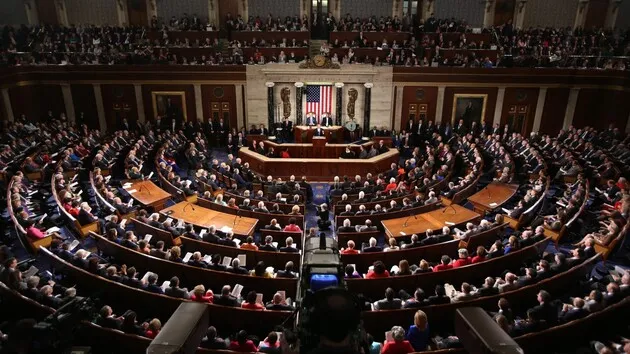
On June 3, in the U.S. House of Representatives, a group of Republicans joined Democrats in supporting further consideration of a bill on military aid to Ukraine and the strengthening of sanctions against Russia. The vote served as a clear sign of divisions within the U.S. political camp regarding support for Kyiv.
“This vote is not a procedural vote; it is a statement on whether this Congress and all its members support Ukraine and the Ukrainian people, their struggle for freedom, democracy, and independence,” said the bill’s sponsor, U.S. Representative Gregory Meeks.
According to Republican U.S. Representative Don Bacon, the House voted 218 to 204 to continue consideration of the relevant resolution.
“The House just voted 218-204 to advance the resolution to provide military aid to Ukraine and impose tough sanctions against Russia. The House will vote on final passage tomorrow (June 4 – ed.). This is our Churchill moment, and we must pass this test,” Bacon wrote on social media.
The bill, in particular, provides for $8 billion in military financing loans to Ukraine and extends the Ukraine Security Assistance Initiative (USAI) through 2027, allowing for the direct supply of weapons from Pentagon stockpiles. Among the bill’s other provisions is the imposition of additional sanctions against Russia.
The bill was first introduced in April 2025 but remained “stalled because Republicans, led by Trump, blocked efforts to provide additional support to Ukraine.” The White House chief called U.S. aid to Kyiv “a waste of money and made a series of failed attempts to force Putin to end the war,” the publication adds.
In July 2025, the bill’s sponsor, Gregory Meeks, filed a motion to bring the bill to a vote in order to secure its passage in the Senate. However, the situation only broke the deadlock in May, when California Representative Kevin Kiley—a Republican who became an independent after his district was eliminated due to redistricting— — provided the 218th signature needed to bring the bill to a vote.
At that point, two Republicans had signed the petition: Rep. Brian Fitzpatrick of Pennsylvania and Rep. Don Bacon of Nebraska. The rest of the Republican “hawks” who supported Ukraine did not risk opposing the position of the president or Speaker Mike Johnson, The Hill adds.
“However, Ukraine’s supporters view the vote on the Mix bill as a strong signal of U.S. support for Ukraine at a time when Russia is intensifying its devastating strikes on the country, and Ukrainian President Volodymyr Zelenskyy has publicly called on Trump to provide Patriot interceptors to defend against ballistic missiles,” the publication adds.
As a reminder, the European Union is considering adding about 20 additional tankers from Russia’s shadow fleet to the upcoming 21st package of restrictive measures to reduce Moscow’s oil revenues. The new sanctions are also planned to be extended to vessels transporting liquefied natural gas to prevent the Kremlin from creating a similar shadow fleet for LNG.
Ukraine has introduced a new package of sanctions against Russian commanders who directed missile strikes on Ukrainian cities, as well as against vessels providing military logistics for Russia.
Ukraine has rejected the idea of “associated” EU membership without voting rights, which had been discussed in European political circles. Volodymyr Zelenskyy stated that such a format is unfair and does not correspond to Ukraine’s role in European security.
The European Union has moved to the practical stage of preparing Montenegro’s accession treaty. The country continues on its path toward EU integration and has declared its intention to become a member by 2028.
Ukraine hopes that the European Union will open all six negotiation chapters on the country’s accession this year and anticipates the possibility of closing at least one of them by the end of the year.
Ukraine may temporarily forego some of the benefits of EU membership to accelerate the accession process. Taras Kachka noted that such a step would help the country integrate into the EU more quickly.


