
In the US, a priest agrees to become standby guardian for 29 migrant children — TIME
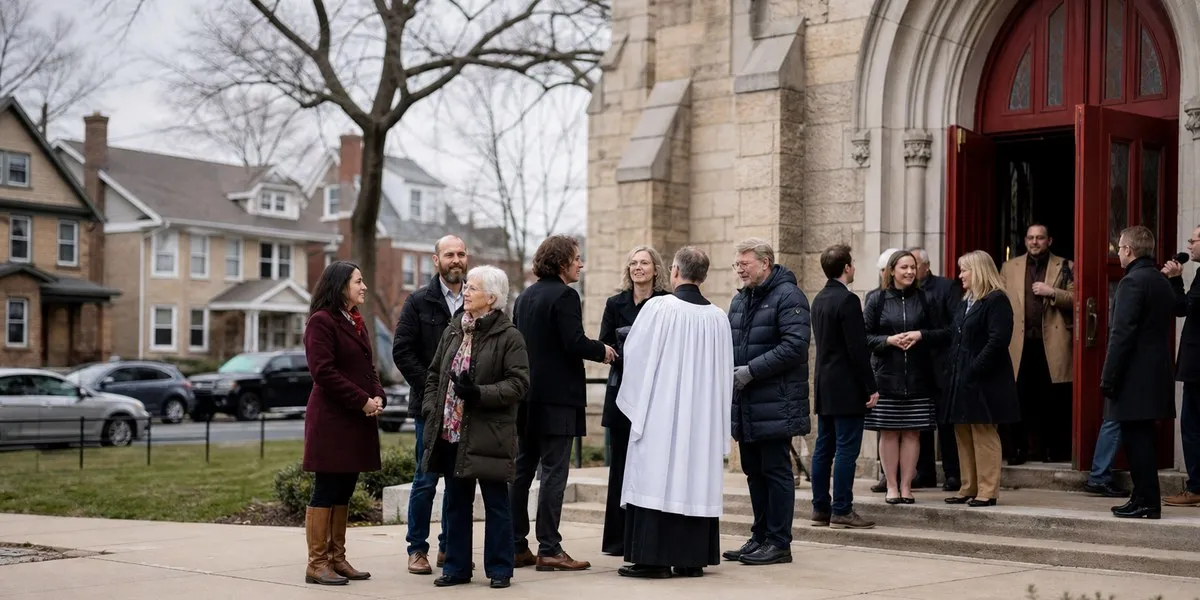
In Hyattsville, Maryland, Episcopal priest Vidal Rivas has agreed to serve as a standby guardian for 29 children whose migrant parents could be detained by US immigration authorities. Two more families, he said, are arranging similar agreements with him. TIME reports.
The 62-year-old Rivas has served at St. Matthew’s Episcopal Church in a Washington suburb for nearly 20 years. He began urging parishioners to appoint a standby guardian last year, after President Donald Trump returned to power. Nearly all the parents who approached him are Salvadorans, as is the priest himself. Rivas said he feels great responsibility and a heavy burden.
Experience caring for two children
Earlier this year, Rivas had already cared for children aged one and four while their mother was in US Immigration and Customs Enforcement custody for four months. After the woman was released, the children initially did not recognize their mother. Rivas’s wife slept beside them to comfort them, and when she fell ill, the priest took on most of the care.
Under Maryland law, parents may appoint a standby guardian in the event they are detained by immigration authorities. In that case, the designated person automatically becomes the child’s legal guardian for six months; a judge may extend the term. State law was changed so that children of detained or deported migrants would not enter the foster care system.
More current news is available on the UA.News Telegram channel Telegram.
Uncertainty over TPS
Families fear the possible termination of Temporary Protected Status, or TPS, for Salvadorans. The US Congress created the program in 1990 to protect foreigners who cannot safely return to their country because of armed conflict, natural disasters, or other extraordinary circumstances. According to TIME, more than 170,000 Salvadorans have received TPS since 1990.
In early September, hours before TPS for Salvadorans was set to expire, the US Department of Homeland Security said they would retain protection for the time being, including work authorization. At the same time, the agency said that a decision on the program’s future would be announced “at an appropriate time.” Rivas said that because of fear and uncertainty, some parishioners had moved to other cities, while others had returned to El Salvador.
The priest acknowledges that caring for a large number of children at the same time would be extremely difficult. At the same time, he calls helping families his moral duty and is counting on support from other churches and immigration organizations.




