
US scientists identify four signs of tropical cyclone alignment — ScienceDaily
In the United States, scientists at the University of Miami, together with specialists from the U.S. National Oceanic and Atmospheric Administration (NOAA), identified four characteristics that may indicate the ability of a tilted tropical cyclone to vertically align and intensify. ScienceDaily reports on the study’s findings.
For significant intensification, a cyclone usually needs to become vertically organized: its circulation centers at different levels of the atmosphere must be positioned above one another. Strong winds in the upper atmosphere can displace the upper part of the circulation relative to the center near the ocean surface. Until these centers align, the storm usually cannot intensify significantly.
Four alignment factors
The researchers named a compact, well-organized circulation near the ocean surface as the first important characteristic. The second is a favorable orientation of the storm’s tilt relative to vertical wind shear, meaning a change in wind speed or direction with height.
Two more signs are stronger upward air currents and more intense precipitation near the lower circulation center, as well as a combination of warm ocean water, substantial atmospheric moisture, and relatively weak winds at mid-levels. According to the authors, thunderstorms near the cyclone’s lower center may not only be a sign of the system’s organization but also contribute to its vertical alignment.
More current news is available on the UA.News Telegram channel Telegram.
NOAA aircraft data
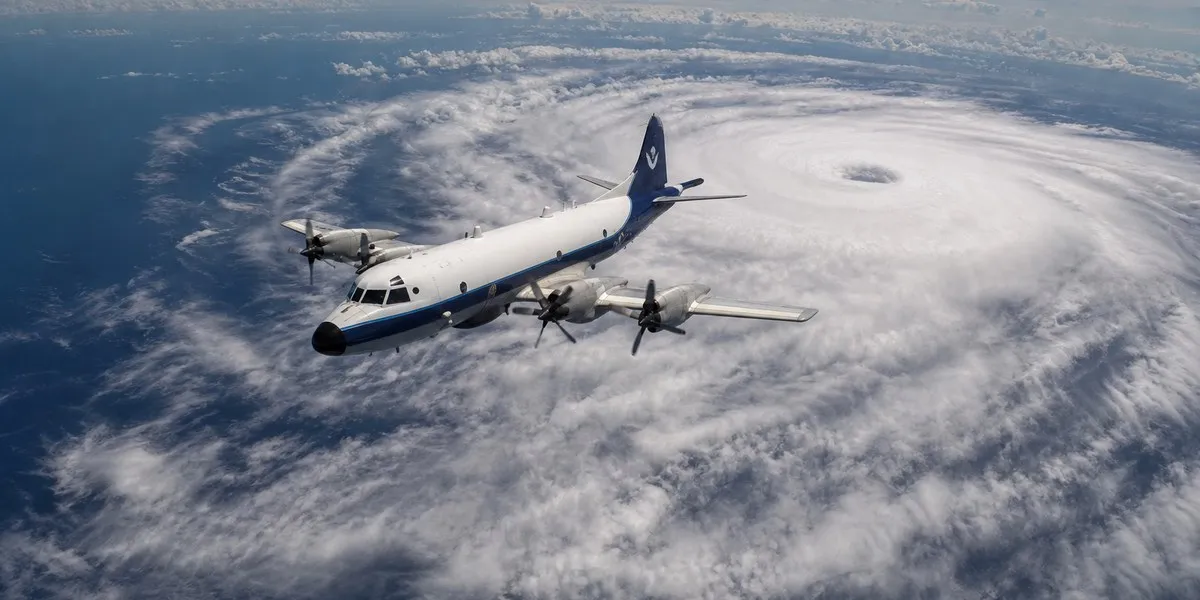
The team analyzed the TC-RADAR database, which contains 1,510 radar analyses collected by NOAA Hurricane Hunter aircraft over 28 hurricane seasons, from 1997 to 2024. This made it possible to compare cyclones that later vertically aligned with those that remained tilted.
According to the scientists’ observations, cyclones that managed to align already had stronger and more tightly rotating circulation near the surface and more widespread active thunderstorms near its center about a day beforehand. During operational flights, NOAA already measures wind strength at lower levels, storm size, thunderstorm area, and the direction of cyclone tilt. In the authors’ view, these data may help assess how well forecasting models reproduce the vertical alignment process, as well as identify earlier disorganized cyclones whose structure is becoming more favorable for intensification.
The study, titled To Align or Not to Align? That Is the Question, was published in the Journal of Geophysical Research: Atmospheres.


