
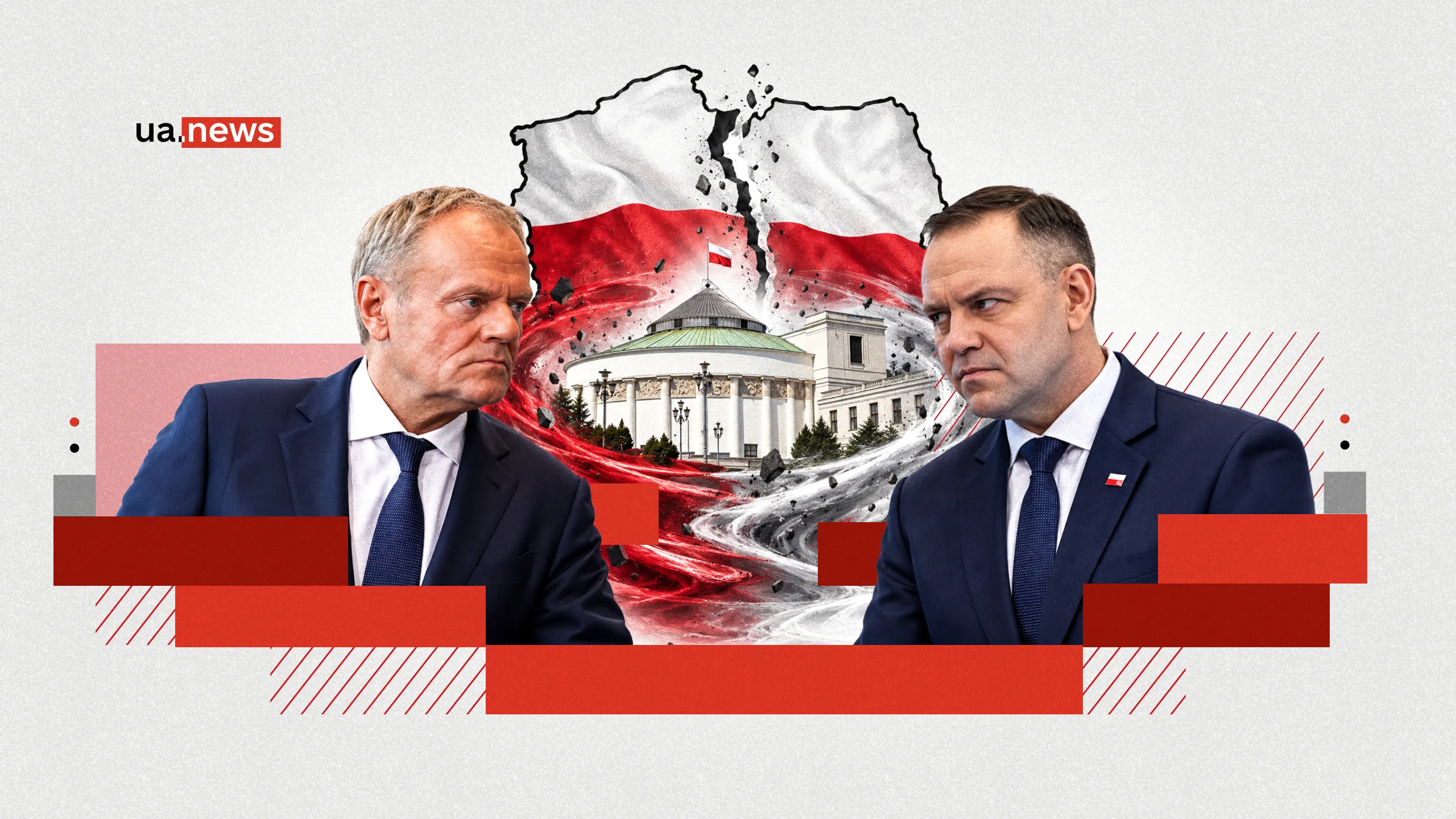
In Poland, the political standoff between Donald Tusk’s government and President Karol Nawrocki is intensifying. The conflict is linked to the upcoming 2027 parliamentary elections, in which Tusk’s and Nawrocki’s political coalitions are the main opponents.
One of the most recent episodes of the standoff took place on September 17 and essentially amounted to a public spat. On the anniversary of Poland’s defeat at the start of World War II, when it was occupied by the Wehrmacht and the Soviet Union, Nawrocki wrote on social media: “We are a people who may lose territory, but will never lose our souls; we may cede territory—but we will never surrender our homeland.” Tusk immediately criticized this statement: “Mr. President, I suggest you delete this post. We have no intention of ceding a single scrap of our territory.” In response, Navrotsky stated that he was referring specifically to historical events and advised the prime minister not to comment on social media posts but rather to “turn his attention as soon as possible to the bill on lowering fuel prices.”
Two weeks earlier, Polish media had already reported on a new phase in the political struggle between the Presidential Palace and the Prime Minister’s Office. They noted that the conflict is not the result of personal decisions by Tusk or Navrotsky, but has become a constant feature of domestic politics. Unfortunately, much of the attention in this standoff is focused not on domestic issues, but on historical ones—particularly those related to Ukraine.
UA.News asked Ukrainian experts on international relations at what stage of tension the political struggle in Poland currently stands, and, most importantly, how it will affect relations with Ukraine.

Yevhen Magda: Poland remains a strategic partner and a source
of support for us
“The political situation in Poland is defined by the fact that, since March of this year, the parliamentary election campaign has effectively begun in the country. In short, it can be described by the title of a well-known Polish black-and-white TV series, *The Stake Is Greater Than Life*,” says Yevhen Magda, director of the Institute of World Policy.
“The fact is that Poland today is characterized by a ‘duopoly’—a balance between the center-left and the far right, roughly 50/50. This is evidenced by the results of the 2020–2025 presidential elections and the current political situation. But it’s worth noting that in Polish political culture today, the exchange of public attacks has, I would say, taken on an exceptionally large scale.
The paradox of the situation lies in the fact that the parliamentary elections will not take place until the fall of 2027. In other words, the Polish parliamentary campaign has not even reached its halfway point yet. And I think there will be many, many more mutual jabs to come.
For Ukraine, this is, on the one hand, a challenge. This is because Ukrainian citizens residing in Poland—whether as labor migrants or military personnel—are highly visible. They are a significant factor influencing the socio-political situation in the country.
On the other hand, Poland remains a strategic partner and a strategic rear base for us. Any escalation or disputes involving Poland create a rather negative backdrop for Ukraine. Therefore, Ukraine should certainly not take sides or make any political concessions, despite the fact that Donald Tusk, so to speak, participated in the Carpathian Initiative summit in Bukovel in his official capacity.
We need to understand that Poland is important to us and try to develop a framework for a joint response to the problems that arise in Polish-Ukrainian relations. This is not easy. It will face resistance from various sides, but in my opinion, this is the only way forward at the moment.”
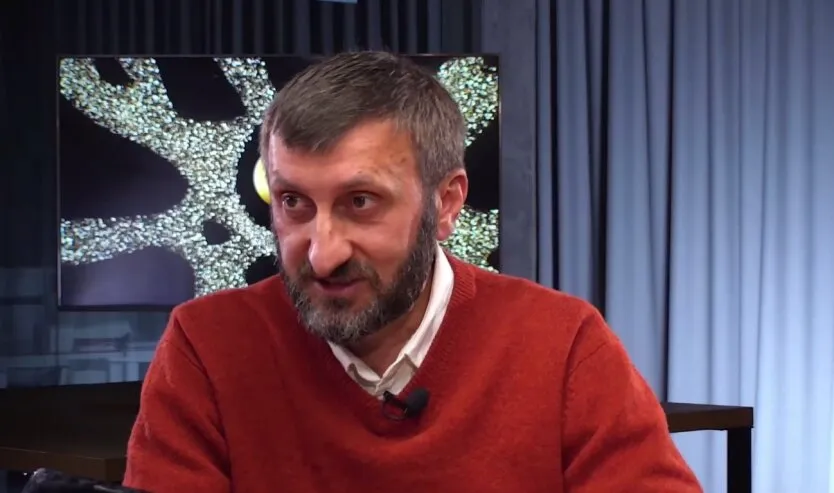
Vitaliy Kulyk: Extremists will demand more and more concessions
“The Ukrainian issue is one of the elements of Poland’s domestic political landscape and is being actively exploited. Even when Ukraine isn’t mentioned directly, it’s implied. The far right, such as the “Korona” party, is stoking its electoral prospects with anti-Ukrainian rhetoric. They’re trying to play the electoral card in such a way as to reap benefits by provoking rifts with Tusk and the centrists,” explains Vitaliy Kulik, director of the Center for Civil Society Studies.
“Some politicians in Poland seem to think that this exploitation of electoral xenophobia and the creation of dividing lines is under control. But in reality, they say that as soon as the cameras are turned off, the rhetoric regarding Ukraine changes: ‘We’re ready to talk rationally with you. We support everything. You’ll receive aid.’ As if to say, ‘This is just for the cameras—for the election, for political gain.’
But in reality, this is inflaming Polish society. Those who play this game hope that, once they’ve secured the votes, they’ll then be able to pursue their own policies without having to worry about voters with extreme, radical views. But in reality, it is the extremists who will demand ever more concessions for themselves—some kind of radical, clear “red lines” that the government cannot cross. And in this way, they will create not just historical misunderstandings between Poland and Ukraine, but entire zones where understanding is impossible, where rapprochement is impossible. Even in the face of a common enemy or a shared threat. And, in my view, this is dangerous for both Ukraine and Poland.
It is worth noting the asymmetry that exists in Ukrainian-Polish relations. The Ukrainian issue interests far more people in Polish society than the Polish issue does in Ukraine. In the kitchens of ordinary Poles, issues concerning Ukrainians—not just migrants, but also historical grievances—concern up to 70% of people who talk about it, relive it, read about it, and take an interest in it.
In Ukraine, if 10% of the conversation is about Polish relations, that’s considered good. And that’s because their relatives who left during the war live in Poland. Or perhaps someone happened to catch a story about a Ukrainian being beaten or some anti-Ukrainian pogroms in Poland. And that’s it. It’s not symmetrical.
Even when people like Leszek Miller or others—supposedly rational Polish politicians—talk about the existence of an anti-Polish faction within Zelenskyy’s inner circle, it seems pretty bizarre to a Ukrainian observer. Ukrainians don’t live and breathe Poland.
Ukrainians are interested in Poland in the context of joint cooperation against the Russian threat or European integration. Historical conflicts between Poland and Ukraine are of interest to historians and a small percentage of the population. But in Poland, the perspective is different.
This only deepens the rift and contradictions, stoking tensions in Polish society. As a result, certain decisions may be made. Sooner or later—or even now—for example, people who don’t just play at anti-Ukrainian rhetoric but genuinely live by it will gain support. Because I do not consider Grzegorz Braun to be someone who exploits anti-Ukrainian rhetoric. I believe that he lives by it—these are his views.
Accordingly, there are such people in Poland, and they’re now striving for power. People who were previously viewed as outrageous freaks who walked around in sterilized military uniforms from the 1920s. But in reality, these people are now popular. Their ideas resonate with the far-right electorate, which has expanded. And part of that is “friendship” with Russia—we need to turn the page and make an eternal peace with Russia, and our enemy is not Russia but Germany, for example. It all stems from there. This is dangerous for both Poland and Ukraine. That is
why Kyiv must be very vigilant. It must not create opportunities that the right—people like Nawrocki and others in Poland—can exploit to intensify anti-Ukrainian sentiment, which could create problems for Tusk and the centrists.”
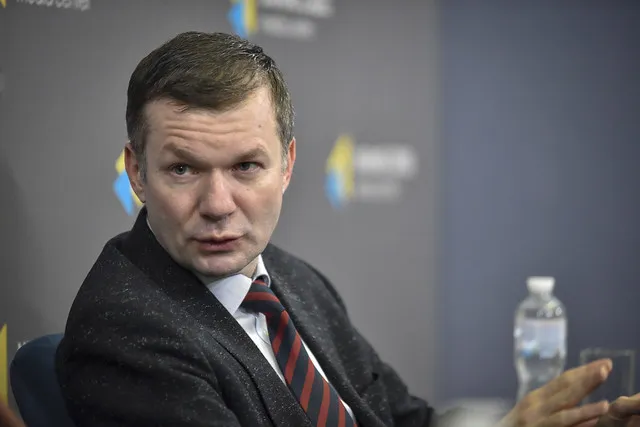
Ivan Us: Tactically, Ukraine Is Becoming a “Hostage” to the Electoral Race
“The intensification of the domestic political struggle in Poland between the right-wing conservative President Karol Navrotsky and the centrist Prime Minister Donald Tusk is directly affecting the stability of the strategic partnership with Ukraine. Although the general consensus among the Polish elite regarding the need to support Kyiv against Russian aggression remains, tactically, Ukraine is becoming a ‘hostage’ to the electoral race,” — says Ivan Us, chief consultant at the Center for Foreign Policy Studies of the National Institute for Strategic Studies
The main ways this standoff affects Ukraine are:
1. The crisis on the historical front and diplomatic maneuvers
Historical memory has become Navrotsky’s main tool for mobilizing the right-wing electorate;
• Scandals over awards: Karol Navrotsky’s decision to strip Volodymyr Zelenskyy of the Order of the White Eagle due to the naming of a Special Operations Forces unit after the Heroes of the UPA triggered a deep diplomatic crisis. This led to a chain reaction in which leading Ukrainian figures (former presidents, ministers) en masse renounced their Polish honors;
• Blocking European integration: There is a risk that the president’s inner circle will attempt to officially link Ukraine’s further progress toward the EU to Kyiv’s gradual concessions in historical disputes (exhumations, interpretation of the Volhynia tragedy).
2. Double-speak and the Erosion of International Unity
Due to political division, the Polish government is demonstrating two different approaches, which complicates communication with Ukraine:
• Karol Nawrocki’s position: Tough, uncompromising, and pragmatic, based on the “quid pro quo” principle, which is supported by a significant portion of Polish society. Political opponents within Poland accuse this approach of radical populism that plays into Moscow’s hands.
• Donald Tusk’s position: The prime minister is trying to act more flexibly, calling the conflict a “strategic mistake,” which shocks allies. However, Tusk is also forced to take domestic sentiment into account and state that he is waiting for Kyiv to make concessions. In addition, leaders constantly exchange barbs—for example, the recent public dispute between Tusk and Navrotsky over remarks about “territorial concessions” in the context of the anniversary of the events of 1939.
3. Security and Military Risks
Russia is actively exploiting internal Polish divisions to intensify its hybrid attacks.
• Hybrid threats and provocations: Against the backdrop of Russian shelling of Ukrainian border posts (for example, near Yagodyn) and the threat of drones entering NATO territory, the unity of Poland’s security apparatus is critical. Political disputes slow down decision-making, although Tusk assures that Poland remains a steadfast ally under NATO’s Article 5.
• Radicalization on the ground: Domestic tensions are fueling everyday anti-Ukrainian populism. Donald Tusk has already publicly called on the president to condemn acts of violence against Ukrainians in Poland, emphasizing that aggressive rhetoric from politicians legitimizes the actions of radicals.
Implications for Ukraine: The conflict between Tusk and Nawrocki will not halt arms deliveries or lead to border closures, as Poland’s security depends critically on the resilience of the Ukrainian Armed Forces. However, it significantly complicates the diplomatic track, creates information noise that Russian propaganda exploits, and slows Ukraine’s integration into European institutions.




