
UAE is developing an organic waste processing facility — The National
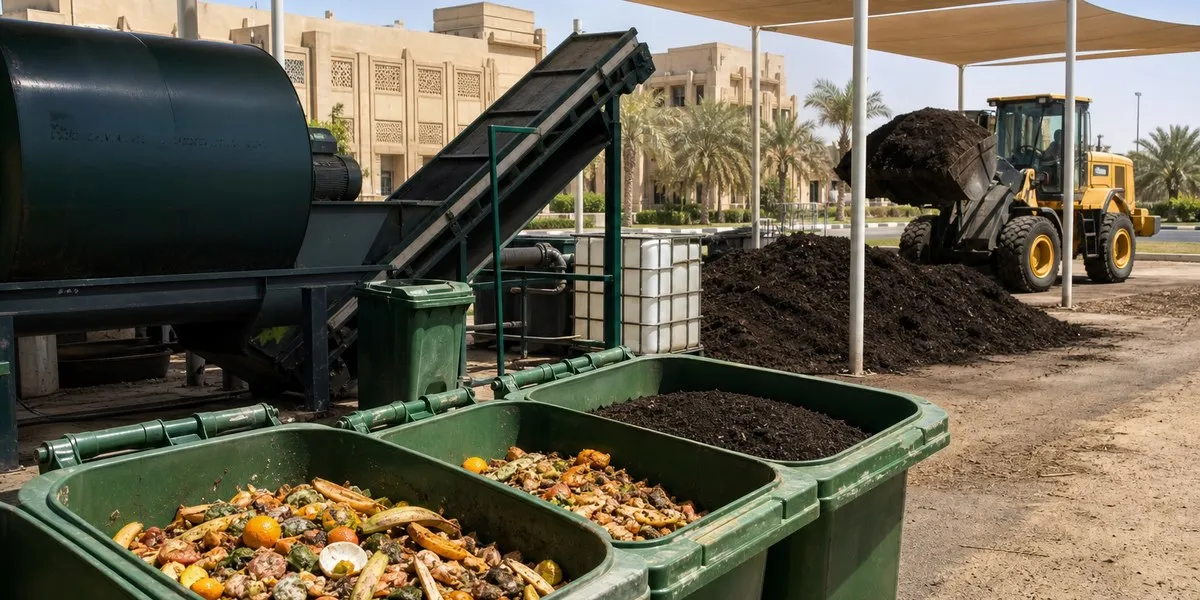
In Al Ain, UAE, the United Arab Emirates University and biotechnology company Emirates Biotech have launched a project for an organic waste processing facility. Once operational, it will be able to process up to 40 kg of organic material and produce renewable biogas and nutrient-rich compost from food scraps and compostable packaging.
Construction of the facility on a site near the university is expected to take from six to 12 months. As The National reports, the project is being described as the first of its kind in the Emirates.
Composting and soil fertility
Zafar Saeed Sher, an associate professor in the Department of Mechanical and Aerospace Engineering at the UAE University, said the team aims to develop a circular economy model. It envisages the reuse and recovery of resources, reducing waste sent to landfills, and strengthening self-sufficiency. If successful, the project is planned to be expanded across the region.
According to Sher, composting could eventually increase land fertility and contribute to food security. Emirates Biotech Chief Commercial Officer Francois de Bie said the country needs fertile soils to develop agriculture, and the compost produced could help improve them.
More current news is available on the UA.News Telegram channel Telegram.
The article notes that organic waste in landfills produces methane, which can be up to 28 times more harmful than carbon dioxide. According to the cited data, organic waste accounts for 40% of the total volume of waste generated in the UAE.
PLA production and government targets
Al Ain was selected for the project because of its agricultural history linked to the traditional falaj irrigation system. Organic waste is planned to be collected and mixed with polylactic acid (PLA) products to demonstrate their biodegradability.
Emirates Biotech is also building a polylactic acid production plant in the Kezad industrial zone with a capacity of 80,000 tonnes per year. The company expects to launch it by 2029 and plans to establish a materials recycling complex at the site.
The UAE is implementing the Nema programme, launched in 2022, which aims to reduce food loss and waste by 50% by 2030. The country has also set a target of achieving net-zero emissions by 2050 and reducing emissions by 18% by 2030.


